Rural organizations like Communities Unlimited have used creative strategies to increase access to capital for local contractors by helping them to get certified for specialized programs while preparing them to compete for various federal contracting opportunities.
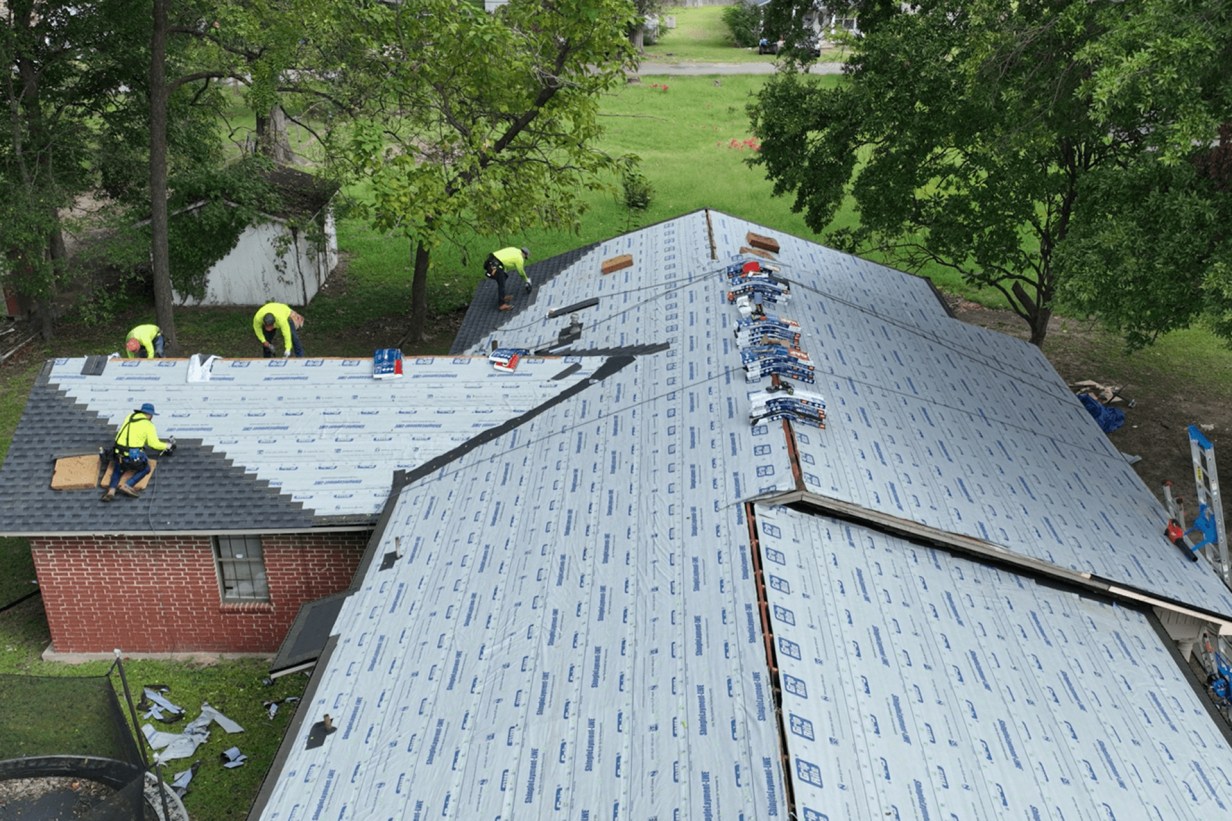
Communities Unlimited, a rural nonprofit and community development financial institution (CDFI) in the Mississippi Delta, needed certified contractors to build specialized roofs to help guard their housing against severe weather damage. They decided to do something unconventional. They addressed the immediate need to increase the supply of contractors available to do the construction work and created opportunities for the contractors to expand their businesses.
“There was one contractor in the entire state who had this certification and we knew that would not be enough to meet the needs in our rural community,” said Audra Butler, director of housing at Communities Unlimited. “We also knew that there were contractors who could do the work but didn’t have the certification. We saw an opportunity to not only increase the number of contractors but [also] to help them prepare to compete for additional federal projects.”
The program, Contractor Connect, connects contractors to lending resources, entrepreneurial resources, and contracting opportunities to help strengthen local capacity and expand business and funding opportunities through two-hour networking sessions. “Helping them get access to working capital, our entrepreneurship team, and lending products to make sure they’re capital ready means they can have a sustainable business that makes it easier to repair housing stock in those communities,” Butler said. Despite challenges, rural organizations like Communities Unlimited, focused on finding resources for the communities they serve, are finding innovative ways to access capital.
Recognizing limits around traditional capital sources in rural areas
A strong workforce, opportunities for entrepreneurship, and private-public investments help contribute to economic success in urban, suburban, and rural communities alike. But for rural communities and smaller towns, accessing investments and capital can be more difficult for several reasons.
“Rural communities often have a smaller financial base to start with, both in a municipal tax base, as well as in access to local and national philanthropy,” said Jason Smith, a senior community development advisor at the Richmond Fed.
Smaller populations and lower household incomes often limit rural areas’ tax base. In 2023, the nonmetropolitan area median household income of $60,459 fell below median income levels for the overall United States ($77,719) and metropolitan areas ($81,270), according to the US Department of Agriculture (USDA).
There’s also less physical and networking access to funding organizations. The USDA’s Rural Development Innovation Center reports that of the roughly 75,000 grantmaking organizations active in the US between 2014 and 2021, just 6,300, or 8%, were based in a rural community.
Losing access with fewer bank branches
Similarly, bank branch closures can limit access to traditional financial institutions in rural areas. A recent Philadelphia Fed analysis found that more than 1.1 million rural residents across the US lived in banking deserts—census tracts without a bank branch within 10 miles— in 2023. On average, those individuals were about 20 miles away from their nearest bank branch.
Small businesses, vital employers and key economic engines in rural communities, also have a harder time accessing needed capital the farther away they are from bank branches. While only about 15 percent of US small businesses are located in rural areas, these businesses were responsible for more than half of nonmetro area employment in 2025, as shown in this US Small Business Administration’s Rural Areas Profile.
According to the Federal Reserve’s 2024 Small Business Credit Survey, rural business stability was similar to that of urban businesses. Despite their stability as economic drivers and local employers, however, rural small businesses face poorer access to lending capital. Small businesses in rural banking deserts experienced lending declines of more than 10 percent between 2019 and 2023, according to a recent St. Louis Fed analysis.
“Understanding the funding requirements of government programs and knowing how to stack funding programs together can be extraordinarily difficult. You’ll often see rural communities walking away from funding opportunities because the juice isn’t worth the squeeze.”
Farah Ahmad, president, Partners for Rural Transformation

Navigating the funding maze and recognizing capacity constraints
Public funding can be an important source of capital for rural community initiatives. But navigating many different application systems, rules, and protocols can make these sources challenging to access. According to the Reimagining Rural Policy Initiative at Brookings, federal public policy programs for rural economic and community development are spread across more than 400 programs, 13 departments, and 50 offices and suboffices.
“Understanding the funding requirements of government programs and knowing how to stack funding programs together can be extraordinarily difficult,” said Farah Ahmad, president of the Partners for Rural Transformation, a collaborative of six CDFIs, including Communities Unlimited, that serve 75% of the country’s persistent-poverty counties across the US.
“You’ll often see rural communities walking away from funding opportunities because the juice isn’t worth the squeeze,” she added.
Capacity and available bandwidth for additional workload also can be a factor. In many rural communities, community leaders perform many roles, which can leave them stretched thin. Additionally, some local leaders may lack the expertise to navigate program funding processes and to negotiate with financial institutions.
“There can be one person in town who’s the economic development director and also the police chief,” Ahmad said. “There’s lots of good leadership and smart economic development folks. But it’s unrealistic to expect that level of expertise in all areas of finance and economic development across the many rural small towns.”
Taken together, these capital and capacity challenges can limit rural areas’ ability to fund community needs using traditional capital sources and approaches. To overcome these barriers, some rural communities are getting creative. The public and private sectors are also leveraging opportunities to convene stakeholders, conduct research, and share best practices.
Fed initiatives focusing on rural communities
Recognizing the unique obstacles and opportunities that rural communities face, the Fed has developed resources and initiatives spotlighting rural access to capital. Examples include the following:
- The Richmond Fed’s Center for Rural Economies focuses on research, resources, and partnerships to help strengthen small-town and rural economies.
- Investing in Rural Prosperity, a resource produced by the St. Louis Fed in collaboration with the Federal Reserve Board of Governors, shares frameworks, stories, and opportunities to help rural communities be a part of a healthy economy.
- The Minneapolis Fed’s Center for Indian Country Development conducts research on access to credit and financing in Native communities, including those in rural areas.
- The Philadelphia Fed’s Rural Community Action Assembly is a forum highlighting actionable research and best practices to promote strong and equitable community, economic, and workforce development in rural Pennsylvania.
Capitalizing on community assets and brand
Smith of the Richmond Fed noted that three key best practices around rural capital access have emerged in the Fed’s work: leveraging community assets and brand; building local capacity over outsourcing when possible; and creating a local cross-sector team.
Though lower populations and fewer resources could be viewed as a disadvantage, rural communities have assets that can attract capital. For example, the Kansas City Fed shows how small towns have successfully benefited from route-based tourism as a valuable economic development strategy in “The Byways Report: The Scenic Route to Rural Prosperity.”
The report focuses on the historic byway of Route 66, which crosses eight states from Chicago to Los Angeles. Route 66 is just one byway. The report shares stories about how residents have utilized their heritage and cultural locations for economic development. It also includes technical resources that can help states, regions, and towns leverage route-based tourism for economic benefit.
The report also notes that according to the National Travel Center, a byway can feasibly generate between $250,000 and $450,000 per mile per year in visitor spending. To achieve this, a byway should feature heritage and cultural locations with plenty of places to visit, opportunities to spend money, destination-distinctive accommodations and local cuisine.
Increasing local capacity
When community leaders are already stretched thin over multiple responsibilities, it may seem easier to outsource project proposal work. But building relationships with skilled partners can have a lasting positive impact.
“Rural leaders gain expertise by continuously engaging with intermediaries that can walk them through a project,” said Jarrod Ellwell, an outreach manager at the Richmond Fed. “Once they do that multiple times, they gain more knowledge about what’s needed to access capital.”
The Richmond Fed’s Rural Investment Collaborative (RIC) provides this training to community leaders to help them develop investment-worthy ideas into investment-ready ones. During the training, participants learn about sources of capital and technical assistance, as described in “Intermediary connects projects, people, and dollars.” They also learn how to prepare financial projections and identify the right capital based on different investments, which are important in attracting capital.
“Through Contractor Connect and the Developer Academy, we’re building an ecosystem around contractors, developers, appraisers, and all of the subspecialties needed to address housing issues. We won’t be able to address the housing issues until those subspecialties have sustainable businesses and access to capital and credit.”
Audra Butler, director of housing, Communities Unlimited

Building a cross-sector team for systems change
Ahmad says Partners for Rural Transformation members have found the most success in focusing on work that can create systems change instead of fixing one issue. In addition to Contractor Connect, Communities Unlimited has leveraged Freddie Mac’s Develop the Developer Academy curriculum to work with emerging and small-scale emerging developers. During the one-week course focused on removing barriers to capital, developers get technical assistance to secure funding through various sources and connections to potential development opportunities.
“Through Contractor Connect and the Developer Academy, we’re building an ecosystem around contractors, developers, appraisers, and all of the subspecialties needed to address housing issues,” Butler said. “We won’t be able to address the housing issues until those subspecialties have sustainable businesses and access to capital and credit.”
Challenging assumptions to show opportunity for sound investment in rural communities
Initiatives like Contractor Connect, RIC, Partners for Rural Transformation, and byways tourism development aim to prove that there are many investable projects in rural communities waiting to happen.
“Despite the challenges, these communities have some of the most innovative financial tools and business models,” said Ahmad. “Because when you work in areas with persistent poverty, you’ve got to really roll up your sleeves and do the art of what’s possible to get deals done. I love that rural communities prove that it can be done.”
Acknowledgements
Special thank you to Philip Jones at the Federal Reserve Bank of Philadelphia for contributing expertise to this article.