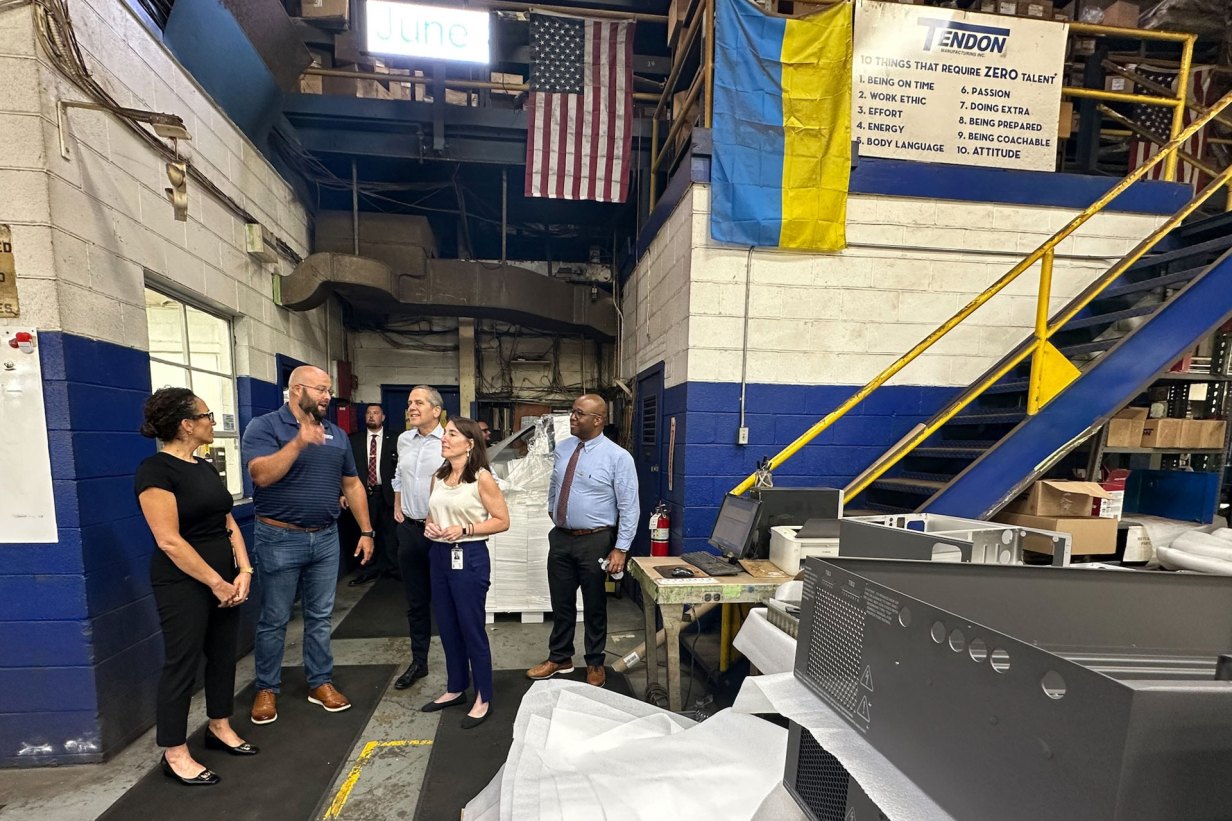
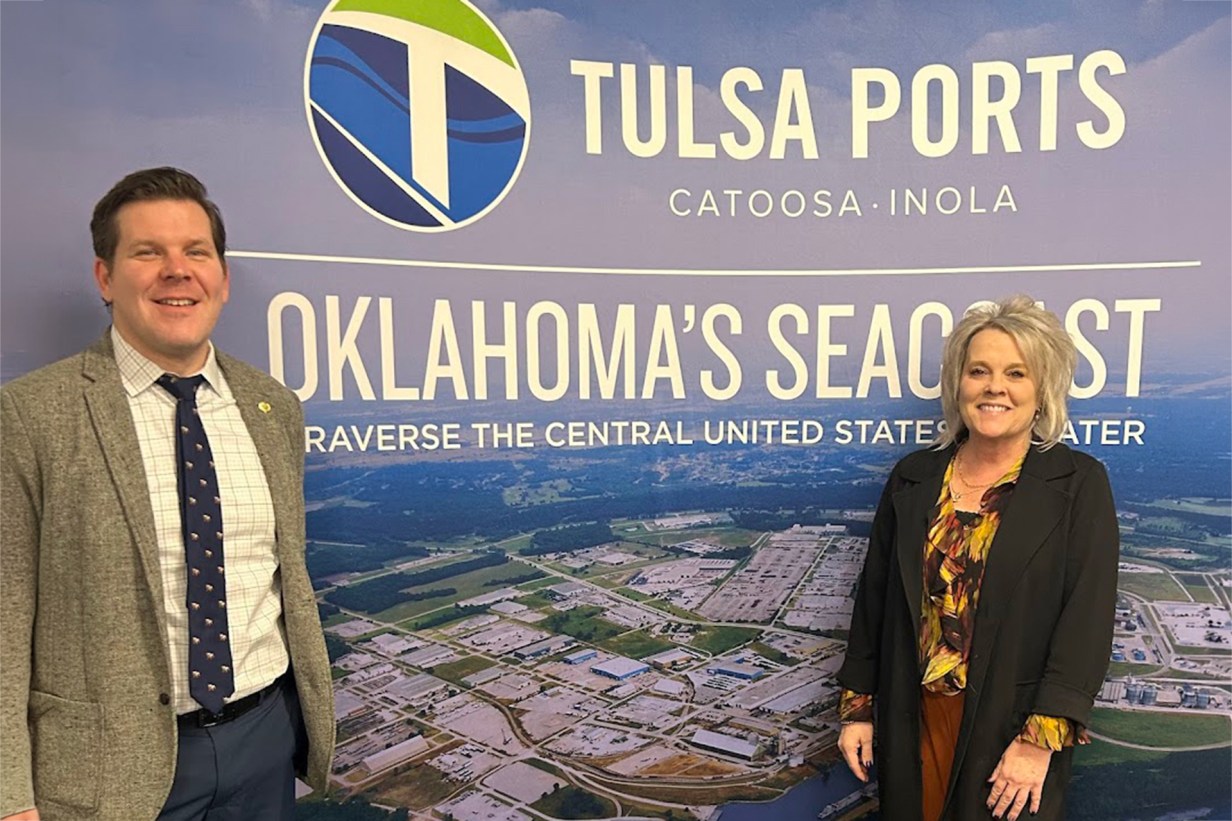
Discussions about tools like the OME and Benefits CLIFF have created opportunities for Fed staff to engage with regional organizations such as the Northeast Oklahoma Regional Alliance (NORA). The Cleveland Fed’s Kyle Fee (left), and Michelle Bish, (right), NORA’s executive director, attend a focus group around job quality and career development in Oklahoma.

An economic opportunity navigator.
Simply put, that’s how Kyle Fee, a developer of the Occupational Mobility Explorer (OME), and Theresa Dunne, who co-manages it, view their tool and how it helps people discover jobs they’re capable of getting with current and future skills.

“The OME is a great example of how community development outreach and research can support and inform the Fed’s maximum employment mandate.”

Kyle Fee
Federal Reserve Bank of Cleveland
“The OME lets people see what types of skills they have and how they can transfer to higher-paying occupations that may increase economic stability for themselves and their families,” said Dunne, a community development researcher at the Federal Reserve Bank of Philadelphia.
“The OME is a great example of how community development outreach and research can support and inform the Fed’s maximum employment mandate,” said Fee, a community development policy advisor at the Federal Reserve Bank of Cleveland who, working with Philadelphia Fed colleagues, helped create the tool in 2020.
Interactive discovery
The interactive, web-based tool can help users see how the job skills used at a current or recent job can transfer to one with higher income potential in the same geographical area. It can also help workforce development practitioners show job seekers the options and skills needed for certain careers.
The OME taps into the power of skills-based hiring. When employers hire based on skills instead of titles and credentials, workers can experience greater economic mobility, and employers can draw on a broader pool of talent, Fee said.
“While employers weren’t intended to be the initial audience for this tool, it’s great to reach people who are hiring for positions and can use the skills-based information that the OME provides,” Dunne said.

“The OME lets people see what types of skills they have and how they can transfer to higher-paying occupations that may increase economic stability for themselves and their families.”
Theresa Dunne
Federal Reserve Bank of Philadelphia
Inspired beginnings
Two things inspired work leading to the explorer, Fee said.
One was Fed research in 2020 that showed defining occupations by their required skills could expand opportunities for economic mobility. The Philadelphia and Cleveland Feds analyzed millions of online job advertisements in the 33 largest metro areas. They found similarities between the skills employers seek when filling lower-wage jobs and the skills needed for opportunity occupations—positions paying above the national annual median wage without requiring a bachelor’s degree. The research also demonstrated that more than half of lower-wage jobs have at least one occupation with very similar skills that pays 10% more.
A second inspiration, Fee said, came from conversations with people in the community who asked, “How can I find a job that pays me a livable wage and provides me with a decent way to make a living in this economy?”
So, the Fed used the research data to create the OME, producing a web-based resource that individuals could use to explore career mobility. The tool currently uses 2023 wage data, which includes nearly 600 job titles and covers more than 500 regions across the country. Fee and Dunne are working to update the data for release later this year.

“We’ve talked a lot about the Benefits CLIFF work,” Shepelwich said. “When I saw how the OME works, I thought it would fit together nicely with our Benefits CLIFF trainings. Using these tools together has helped communities think more broadly about job quality.”
Steve Shepelwich
Federal Reserve Bank of Kansas City
The partnerships
Workforce development stakeholders have come to appreciate the OME’s capabilities. The Fed produced an OME Workforce Development Practitioner’s Toolkit to demonstrate how the tool can assist practitioners’ work with job seekers and employers. The step-by-step video guide gives instructions on how to use the OME, applicable cases, and links to additional resources.
Rework America Alliance (RAA), a coalition of nonprofits, employers, educators, and other workforce development entities, helps low-wage workers attain living wage jobs and benefits. Under the leadership of national workforce intermediary Jobs for the Future, RAA has adopted the OME as part of its training curriculum and shares the tool through its network’s five national partners.
“Momentum continues to build around skills-based hiring,” Fee said. “We’ve seen a wide variety of partners with interest in the OME. We’re very pleased to provide resources to help people think about skills-based hiring and how to incorporate these practices in their work.”
More connections
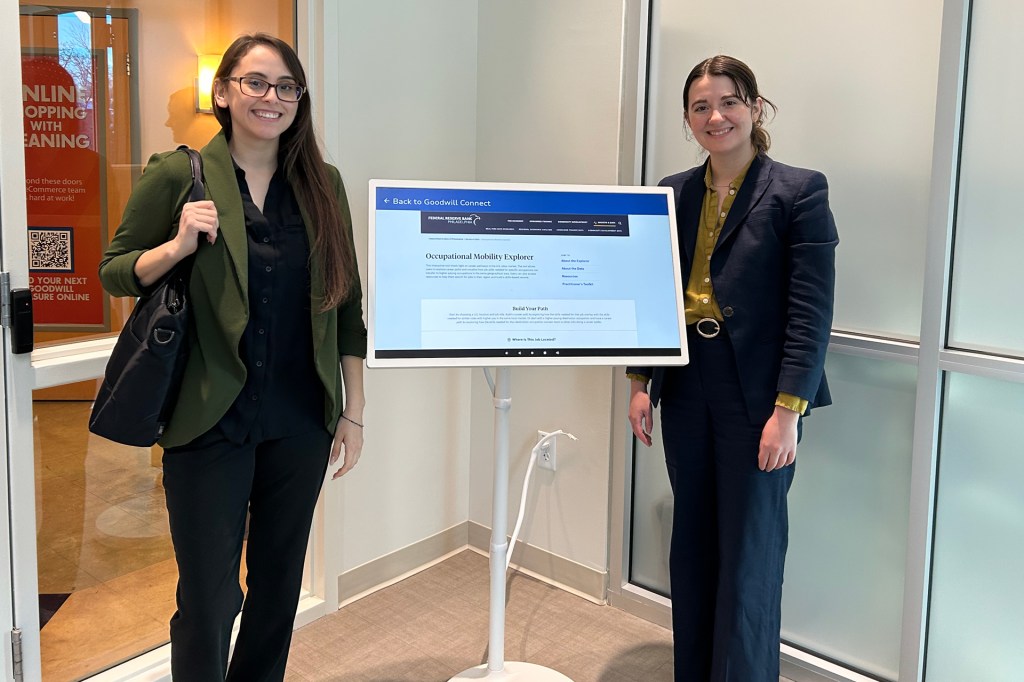
The regional nonprofit, Goodwill of Delaware and Delaware County (Goodwill), has also leveraged the OME in its services. “While Goodwill is often viewed as a place where people donate and shop for household goods, the organization’s mission is to improve the quality of life for people facing barriers to self-sufficiency through the power of work,” said Colleen Morrone, Goodwill of Delaware and Delaware County’s president and chief executive officer.
The OME was added to Goodwill of Delaware & Delaware County’s interactive Goodwill Connect platform in 2025. Goodwill Connect was made possible by a US Congressionally Directed Funding award and deployed in 2024 as an online resource available via internet connected devices and via kiosks in Goodwill stores throughout Delaware. Goodwill Connect helps individuals access various statewide services, including social supports and workforce development resources. The self-service kiosks, which predate the OME platform, are in high-traffic areas of Goodwill’s Delaware stores and can be a one-stop shop for those looking for job-training resources, Morrone said.
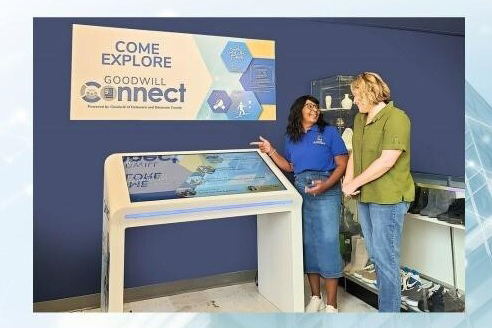
Morrone further shared that the collaboration grew naturally from an existing relationship with the Federal Reserve. “When we introduced the Goodwill Connect platform, there was immediate alignment around the value of integrating the Occupational Mobility Explorer,” she said. “Together, we recognized its potential to help individuals map clear, achievable career pathways, from where they are today to where they want to go, and identify the skills needed along the way. By embedding this tool into Goodwill Connect, we’ve expanded access so individuals can explore these opportunities anytime, from anywhere.”
Collaborative power
In addition to workforce development stakeholders, the Fed’s community development staff across the System are also finding ways to incorporate the OME into other Fed projects.
For workers receiving public assistance, higher-paying jobs can often negatively impact household finances. The Federal Reserve Bank of Atlanta’s Career Ladder Identifier and Financial Forecaster (CLIFF) is a suite of tools that simulates the interaction of public benefits, taxes, and tax credits with career advancement. By using the OME with the CLIFF tools, users can better forecast and plan for how potential higher-paying jobs will affect their public benefits and finances overall.
Steve Shepelwich, a lead community development advisor at the Federal Reserve Bank of Kansas City, shared the collective power of these tools during multiple focus group discussions with the Northeast Oklahoma Regional Alliance. The group includes community and economic development leaders who serve 15 counties to create growth, prosperity, and vitality in the region.
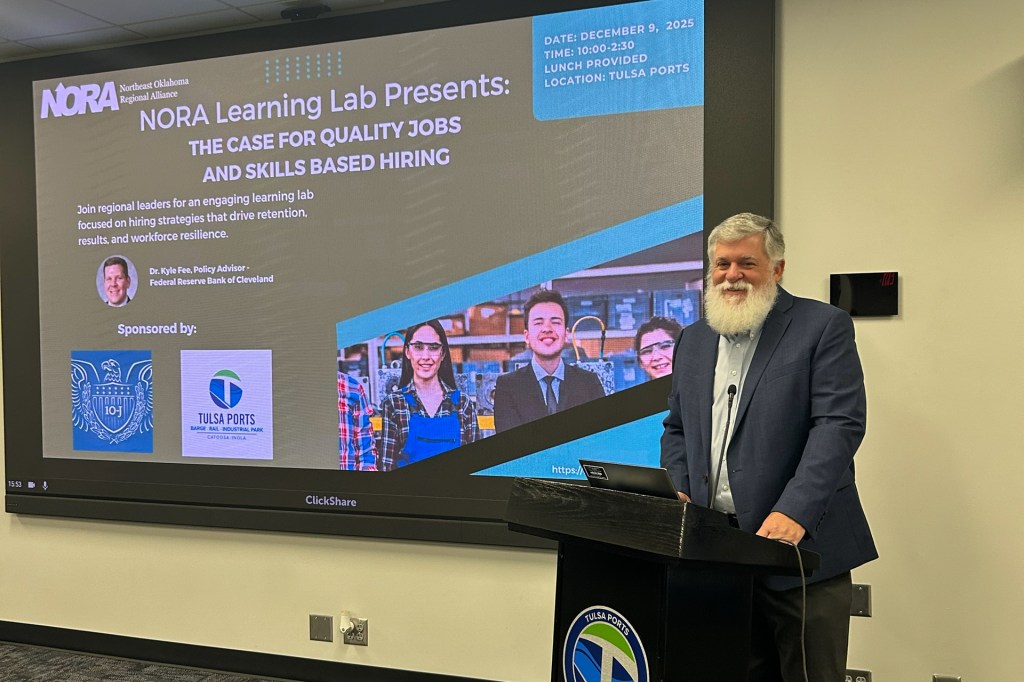
“We’ve talked a lot about the Benefits CLIFF work,” Shepelwich said. “When I saw how the OME works, I thought it would fit together nicely with our Benefits CLIFF trainings. Using these tools together has helped communities think more broadly about job quality.”
In the convenings, Shepelwich says the tools are used to help employers think about employment challenges and find prospects. Sharing the resources can help employers find candidates who possess the most needed skills and are well-positioned for upskilling opportunities. Using the tools also provides the mutual benefits of creating career pipelines, and addressing the needs of employers, job seekers, and workforce development organizations.

“We appreciate the Fed reaching out to better understand what different organizations and providers are doing. Having that connection and learning about the Fed’s work helps service providers like us better understand how resources like the OME can be beneficial to what we provide and do.”
Colleen Morrone
Goodwill of Delaware and Delaware County
New uses
Dunne and Fee say they are encouraged by how the tool is being used within and outside the Fed. They next plan to focus on additional data updates and continuing to spread the word about OME through outreach. Surprisingly, Fee said, the resource is even assisting career exploration in education. “There are high schools and community colleges using it that way,” he said. “It speaks to the wide applications of the OME.”
“We appreciate the Fed reaching out to better understand what different organizations and providers are doing,” said Morrone. “Having that connection and learning about the Fed’s work helps service providers like us better understand how resources like the OME can be beneficial to what we provide and do.”
![[Watch] How Fed Data Tools Can Inform Economic Mobility](https://fedcommunities.org/wp-content/uploads/2025/12/connecting-communities-ome-bc-data-tools.jpg?w=1232)