
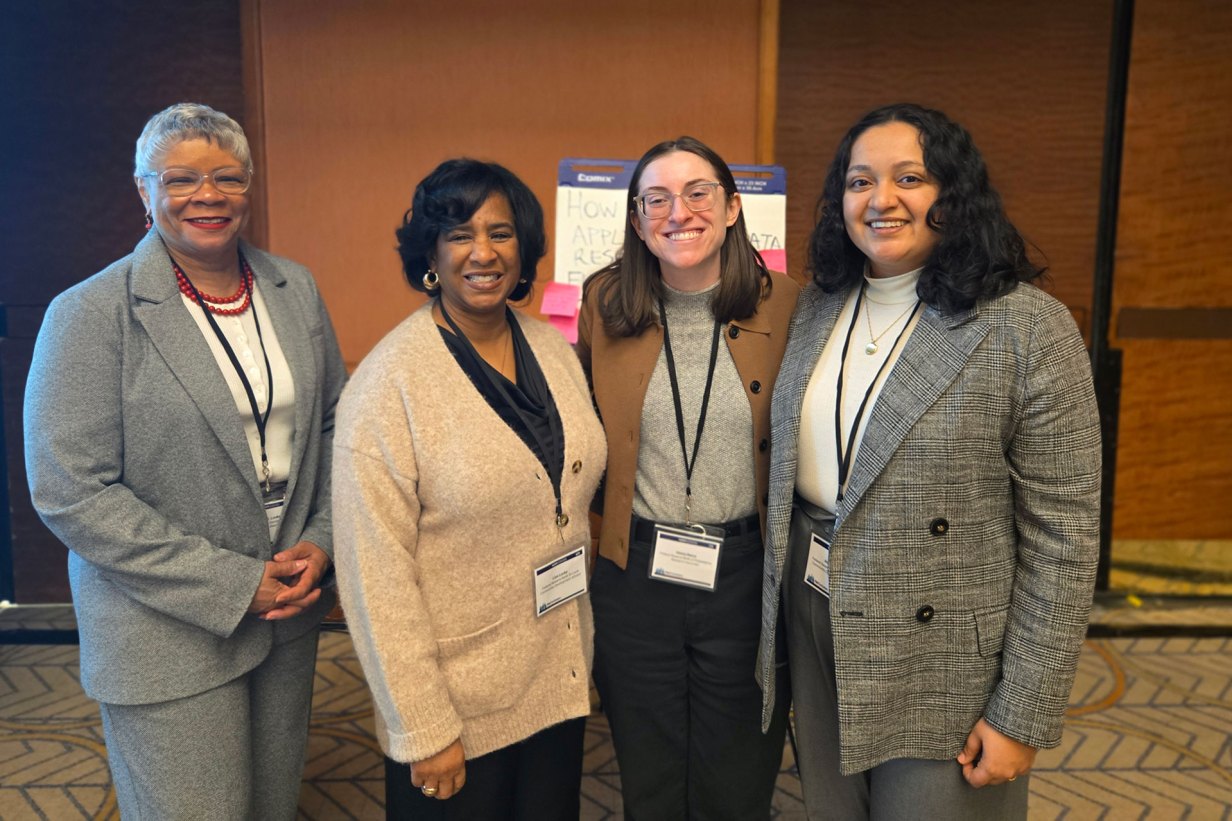
From left to right: Venus R. Lockett, Lisa Locke, Alaina Barca, and Ambika Nair. Together they presented Federal Reserve resources and data on financial access during a workshop at Net Inclusion 2026.
Digital access has become inseparable from financial access, yet the digital divide (or the gap between those who have safe and reliable access to the internet and those who do not) threatens to deepen existing inequalities. As banks close physical branches and move services online, individuals without reliable internet service, smartphones, or digital skills encounter new barriers.
Low- and moderate-income (LMI) households with bank accounts but no dependable internet connection may struggle to avoid overdraft fees through real-time account monitoring or to easily access digital tools that make financial management more efficient and less costly. For the millions of Americans navigating both barriers simultaneously (4.2 percent of Americans are unbanked and five percent lack access to the internet), these challenges are interconnected obstacles to economic stability.
However, digital access also offers transformative opportunities for building financial well-being, such as mobile banking that reaches underserved rural communities, budgeting apps that help people save automatically, and online credit options to smooth costs and address financial emergencies.
Digital access: Connectivity, costs, and what it means to be online
Digital access, which is a household’s ability to fully participate in the modern economy through the use of digital technologies, is an important facet of community well-being. Digital access is essential to connecting families to broader socioeconomic opportunities, but it depends on four dimensions: the availability of providers, the speed and quality of internet service, the affordability of services, and the digital skills of the user. Research by the New York Fed has shown that rural populations, LMI communities, tribal communities, and aging populations are the least likely to live in a neighborhood with access to three or more providers offering speeds of at least 100/20 Mbps (download data at 100 megabits per second and upload data at 20 megabits per second).
Other research shows that the affordability of a broadband connection can be another barrier to internet access for LMI households. LMI communities pay a notably higher share of their income for broadband and are more likely to use slower or lower-quality plans. In areas with the least affordable broadband, 26.7 percent of households rely solely on mobile devices. Although mobile access suffices for everyday banking and initial job searches, the lack of a computer and broadband restricts participation in resume building, online education, remote professional work, and long-term financial management.
Financial access: What it means to be bankable
Financial access, or what’s referred to as being “bankable” in today’s economy, encompasses access to a full spectrum of financial services that address unexpected shocks, enable economic stability, and promote wealth building.
Digital financial access, then, is the ability to access these services digitally. For some key populations, digital financial access is especially challenging:
- Unbanked: Individuals or households that do not have a checking or savings account.
- Underbanked: Individuals or households that do have a checking or savings account but still rely on expensive, non-bank alternative financial services (like payday loans or check cashing services) for day-to-day transactions and credit needs.
- Credit invisible: Individuals or households without a credit score or sufficient credit history to obtain credit.
- Credit constrained: Individuals or households with existing credit constraints such as a deep subprime credit score or delinquent payment history.
While digital access and financial access remain largely separate issues, practitioners and policy makers working to bridge the digital and financial services providers have significant opportunity to collaborate. Community organizations regularly encounter constituents whose primary motivation for getting online is to open a bank account, apply for a loan, or access government benefits. Yet practitioners working in the digital access space do not always understand the depth of financial need in their communities, the range of safe and affordable banking options available, or which community organizations they could connect clients with to set and achieve digital financial goals beyond simply establishing internet access.
Data and tools show the value of being bankable
Below, we summarize some of the resources that stakeholders and community organizations could use to connect data on digital access to information on financial access, including banking and credit ecosystems.

Banking Deserts Dashboard
The Banking Deserts Dashboard identifies census tracts that are banking deserts (no bank branches) or near-banking deserts (one bank branch away from becoming a banking desert). About 12.8 million Americans live in banking deserts, and another 11.6 million live in potential banking deserts. As the number of bank branches declines, communities with limited broadband access (which are overrepresented in banking deserts) lack both physical branches and the digital infrastructure (devices, broadband, digital skills) needed for online banking, which may push them to costly alternative financial services. Organizations can use this tool to identify where banking and broadband deserts overlap.

Bank On National Data Hub
The Bank On National Data (BOND) Hub is the national reporting platform for Bank On certified accounts. A Bank On certified account is a checking or savings account verified by the Cities for Financial Empowerment (CFE) Fund that is designed to help individuals enter or re-enter the mainstream financial system. Digital access practitioners can use local BOND Hub data alongside data on internet access to identify where unbanked populations may encounter barriers to online financial services.
Credit Insecurity Index
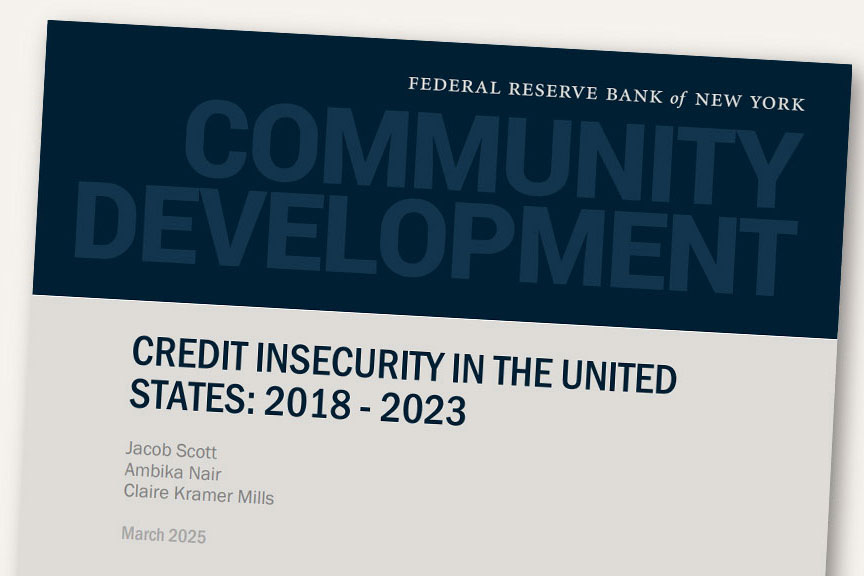
The Credit Insecurity Index is a community-level measure of populations who have never participated in the credit system (credit invisible) and populations who are credit constrained. Credit insecurity impedes a household’s access to credit. Inadequate internet access also limits access to affordable mainstream credit. Community practitioners can use this index to identify communities where limited internet access compounds credit insecurity, particularly in rural areas and banking deserts.
Workshopping the connection
The separation between digital access and financial access work is reinforced by a separation of people and data. Practitioners from both fields rarely have opportunities to collaborate and share information, while the data needed to understand these intersecting challenges are typically collected and maintained in separate systems by different agencies.
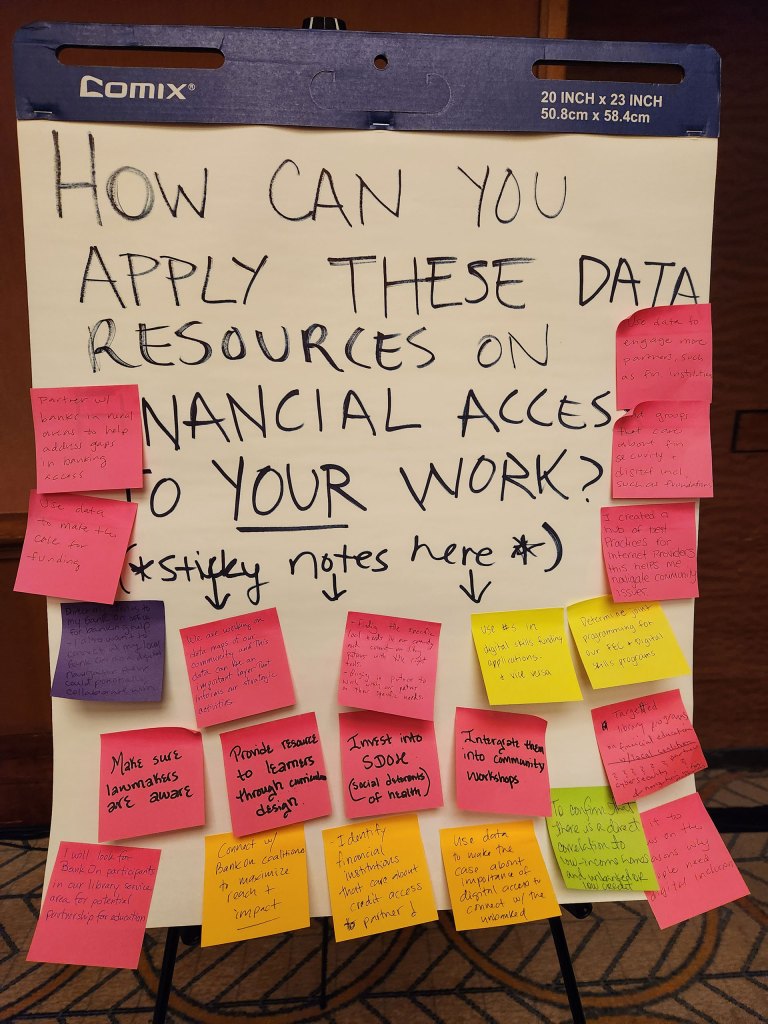
Recognizing this gap and its consequences for vulnerable communities, Venus R. Lockett, founding executive director of Bank On Georgia, collaborated with three Federal Reserve colleagues—Ambika Nair of the Federal Reserve Bank of New York, Alaina Barca of the Federal Reserve Bank of Philadelphia, and Lisa Locke of the Federal Reserve Bank of St. Louis—to design and host a workshop titled “Digital Financial Access Through the Mainstream Banking Access Lens.” The workshop at the National Digital Inclusion Alliance’s Net Inclusion conference aimed to connect community organizations and digital access stakeholders with Fed data tools and research that assess communities’ levels of access to banking and credit. The event also facilitated cross-sector dialogue about integrated solutions bridging digital and financial access as well as attendees’ introductions to Fed staff who can help foster connections to financial service providers and counselors.
Compounding gaps and challenges
For Lockett, the issue is personal. Nearly twenty years ago, she lost her job and began baking to earn money but missed a major catering opportunity due to lacking financial history and banking relationships. Lockett explained, “I was earning income through cash-based work. I didn’t have the savings or banking relationships to demonstrate I could take on the opportunity. Even though I had the skills and customers, I couldn’t access the financing I needed.”
This financial setback led her to reflect and connect with others facing similar barriers. “That could have been a life-changing moment, and I was heartbroken. I never wanted anyone else to feel what I felt.” Through workshops, she met people struggling with debt and limited access to mainstream banking. These experiences inspired her commitment to financial empowerment.
Lockett believes financial access is often missing from digital access conversations, though they are closely linked. “The digital economy is the financial economy,” she said. “You can’t fully participate in one without the other.” Yet these issues remain largely separate. Over half of the workshop’s digital inclusion practitioners said financial access is often overlooked. Sixty-eight percent had never heard of the national Bank On program that incentivizes commercial banks to provide affordable access to basic banking services, highlighting how many resources designed to expand financial access remain largely unknown.
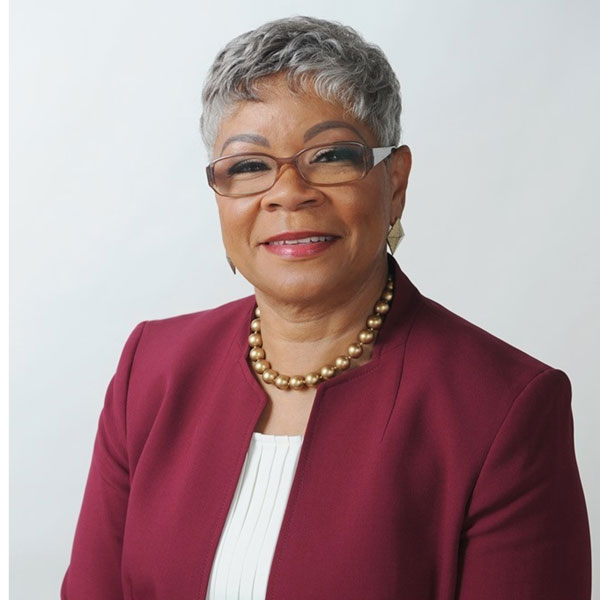
“The digital economy is the financial economy. You can’t fully participate in one without the other.”
– Venus R. Lockett, Bank On Georgia
Lockett pointed out three main gaps driving the persistent disconnect between digital access and financial access:
- Awareness: Many people working in digital inclusion don’t know about financial access tools and resources like Bank On certified accounts.
- Navigation capacity: Staff often aren’t trained to help with both digital and financial needs. Lockett said, “A digital navigator knows how to help someone set up an email account or apply for broadband subsidies. They may not know how to help that same person open a Bank On certified account, understand a credit report, or access mobile banking safely.”
- Supportive handoffs: When organizations refer people to each other, it is often a quick handoff without ongoing support. Lockett explained, “What’s needed is a trusted navigator model that maintains continuity throughout both the digital and financial access journey, rather than handing someone off and trusting things will work out.”
The role of digital navigators
While these gaps persist, there are signs of progress. Some practitioners are beginning to bridge the divide between digital access and financial access—particularly through the expanding role of digital navigators. Digital navigators are trusted guides who help community members with ongoing, individualized support for accessing affordable and appropriate internet access, devices, and digital skills.
David Cooper Moore, director of learning and engagement at the Technology Learning Collaborative (TLC), said the role of a digital navigator goes beyond just getting people online. “Digital navigators now address complex needs, provide device support, help connect people to low-cost internet options, and deliver digital skills training. They also support specific connectivity goals around workforce and financial literacy.”
Kate Rivera, executive director of TLC, added, “Digital navigators are more than tech problem solvers. They are teachers, relationship builders, and connectors. They often meet community members who arrive with a set of complex needs far beyond a single login issue or device question.”
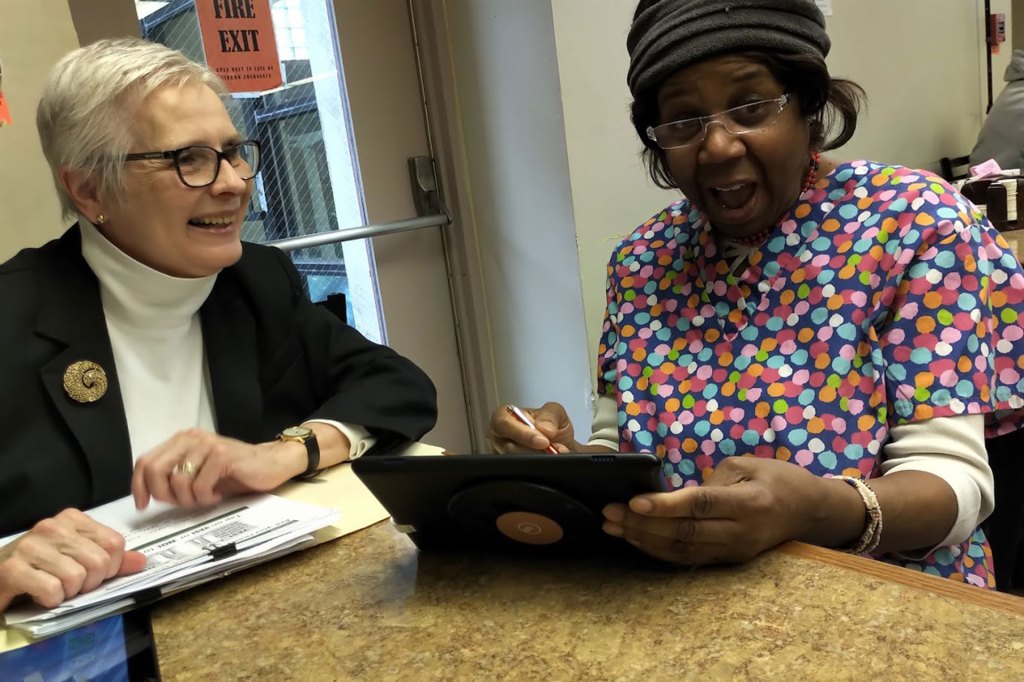
Helping people with financial access is routine for digital navigators. Community members often need help checking bank balances, reviewing deposits, using government websites to access benefits, or understanding online forms. For example, Tobey Dichter, CEO and founder of Generations on Line, said her digital navigators’ clients often ask how to check whether their social security payment got deposited. For older adults in particular, even simple financial tasks can feel overwhelming if they are not accustomed to using technology or if they’re worried about scams.
Older adults are not the only ones who need help. Dichter added, “Younger people may be more comfortable with smartphones but still need support with tasks like opening an account or submitting documents securely.”
Technology and funding barriers
The work of digital navigation is changing as quickly as technology evolves. Artificial intelligence (AI) brings opportunities and risks. Some organizations like Generations on Line are starting to teach AI literacy courses that help people learn to use AI tools safely and spot AI-driven scams.
“The same people who were left behind before get left behind again when new technologies emerge,” Rivera said.

“Digital navigators now address complex needs, provide device support, help connect people to low-cost internet options, and deliver digital skills training. They also support specific connectivity goals around workforce and financial literacy.”
– David Cooper Moore, Technology Learning Collaborative (TLC)

“Younger people may be more comfortable with smartphones but still need support with tasks like opening an account or submitting documents securely.”
– Tobey Dichter, Generations on Line

“The same people who were left behind before get left behind again when new technologies emerge.”
– Kate Rivera, Technology Learning Collaborative (TLC)
Many organizations also face structural challenges, especially in how funding is allocated. The current grant landscape typically treats digital access and financial well-being as separate issues, each with dedicated funding streams. This can make it harder for nonprofits to meet their communities’ needs in a coordinated way.
Rivera gives an example: “Nonprofits are often funded by grants that have a specific focus, and that can lead to a little bit of a silo effect where organizations may be getting funding from a bank or other financial institution focused on financial literacy. And if that funding doesn’t kind of allow for the digital access piece and really explicitly name that, organizations may not be able to integrate services in that way.” As a result, organizations may need separate funding for devices, cybersecurity training, and financial workshops, making it more difficult for an organization to offer a complete set of services.
Rivera wants funders to see that digital financial access is not an add-on, but a fundamental component of financial well-being. She encourages funders to incorporate digital access into other funding streams and acknowledges that digital navigation programs can be integral to achieving positive outcomes in financial literacy and other financial access program areas.
Acknowledgements
Special thank you to Alaina Barca at the Federal Reserve Bank of Philadelphia for contributing expertise to this article.