
“We want to know what our businesses need”: Nevada small business center values Fed’s Small Business Credit Survey insights
The Nevada Small Business Development Center gains useful data and insights into what its small-firm clientele needs thanks to its partnership in the Federal Reserve’s annual Small Business Credit Survey.
By
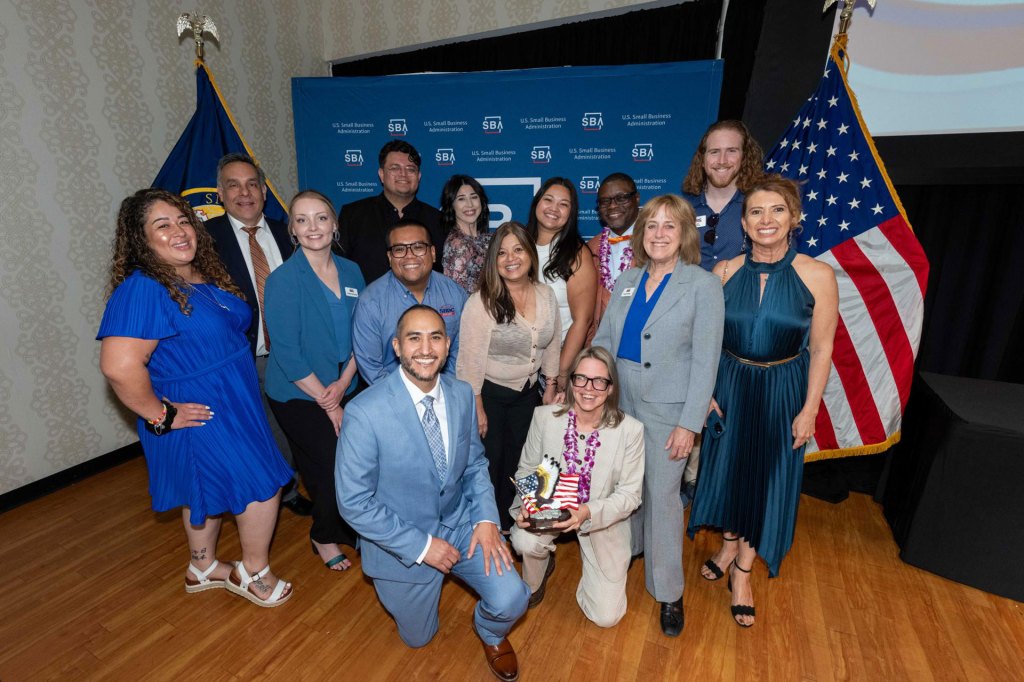
Winnie Dowling, state director of the Nevada Small Business Development Center (SBDC), knows a lot about small businesses.
Dowling holds MBA and undergraduate degrees in computer information systems. She started her career launching a computer consulting and training business, then spent more than 20 years at the Nevada SBDC, becoming its director three years ago. The SBDC, serving 30,000 client firms statewide, is part of the US Small Business Administration’s (SBA) national network of organizations that help small businesses access capital, improve productivity, and foster innovation.
Above all, Dowling knows that small businesses are critical to the economy. According to the SBA, firms with fewer than 500 employees comprise more than 99 percent of employer firms. They account for almost half of private sector employment and drove 88 percent of the nation’s overall job growth from 2023 to 2024.
Her job at the Nevada SBDC is straightforward: “We’re here to help people start and grow businesses. We are interested in existing businesses, because they are especially likely to create jobs and have economic impact.”
In particular, Dowling also wants to know what lies ahead—what businesses require to evolve. To succeed, her organization must remain aware of, and provide resources for, what entrepreneurs and established business owners need to launch, grow, and flourish.
For the past five years, the Nevada SBDC has been a partner to the Fed’s Small Business Credit Survey, an annual survey that gathers business data on thousands of the nation’s small firms.
“Our contact from the San Francisco Fed told me, ‘If you get 50 responses, we can provide a report for the respondents you sent to the survey,’” Dowling recalled. For Dowling, that meant additional data the SBDC could use to assess the reach and impact of its programs and to identify emerging challenges.
“That [prospect of a partner report] incentivized me,” she said. “We want to know what businesses need.”
Dowling couples the Fed’s findings with survey data her organization collects from its clients through their Nevada Small Businesses Challenge Survey. “We ask them, ‘What are your greatest challenges?’ For the newer firms, the top challenge is access to credit,” she said. “For established businesses, it’s finding new customers and securing funding.”

“We’re here to help people start and grow businesses. We are interested in existing businesses, because they are especially likely to create jobs and have economic impact.“
– Winnie Dowling, state director, Nevada Small Business Development Center
She and her colleagues use the collective input to determine whether programs are hitting the mark, the key challenges small businesses face, and where the Nevada SBDC can provide additional support.
“It helps us do more training that aligns with business needs,” she said. If respondents in their network report that they struggle with accessing credit, for example, the SBDC dives into understanding the specific barriers they face—credit scores or lack of good financials, for example—and can design training and advising services to focus on that particular challenge.
“The [Fed survey] data provides additional insights and adds credibility to and validates our own survey results,” Dowling said.
There are bigger advantages to being a partner, too. The first year the Nevada SBDC partnered in the Fed credit survey, the organization successfully used the resulting data to apply for and receive a large technical assistance grant.
Never miss a story.
What is the Small Business Credit Survey?
The survey is conducted annually by the Federal Reserve to capture the experiences of small businesses, defined as fewer than 500 employees. The survey asks questions about firms’ performance, growth expectations, workforce challenges, and issues affecting their industries, such as natural disasters and technology adoption.
To generate responses, the Fed credit survey team recruits organizations across the US to serve as partners to distribute its survey to their members. Partner organizations providing 50 or more responses receive a customized report with analysis of their respondents’ collective input.
The survey team publishes several items based on survey data, including reports on employer and nonemployer firms, trends over time, user-friendly chartbooks, and focused analyses by firm characteristics, such as industry, firm size, and firm age.
Planning ahead helps drive responses, avoid survey fatigue
Dowling says encouraging businesses to take the Fed survey is not time consuming, though having a plan in place helps. The most important step? “Start communicating early,” she said.
Dowling knows people are weary of surveys, and she is careful to avoid conflicts with the SBDC’s own challenges survey and another client-impact survey the group administers. She advertises the Fed’s survey early to their clients. She primarily uses social media and email blasts to encourage respondents to share their input. “We don’t just forward the link;” she said. “We say what we get out of [the survey data] and tell them, ‘Here’s why you should participate.’”
“The more responses we have,” she said, “the more confident we can be that the data are representative of Nevada’s small business community.”
Another Dowling takeaway from her Federal Reserve partnership: a willingness to collaborate. She’s found the Fed’s Community Development team members especially helpful, calling them a “bridge” between communities and “a large institution like the Fed.”
“They’re committed to engaging community stakeholders in understanding economic issues and seeking ways to use research and data to improve communities,” she said.
Benefits of becoming a SBCS partner
The SBCS depends on distribution partners to field our annual survey. Survey distribution partners are organizations that collaborate with the Federal Reserve Banks to send out the survey to the businesses they work with.
- Receive a partner report if your organization recruits at least 50 small businesses to complete the survey. Partner reports (sample) detail the current state of small businesses in your network.
- Ensure the perspectives of the small businesses in your network are included in advocacy and policy discussions.
- Gain trusted data and insights to inform and customize client programming.
- Be recognized on FedSmallBusiness.org.
- The only cost for participation is your time to encourage small businesses to take the survey.