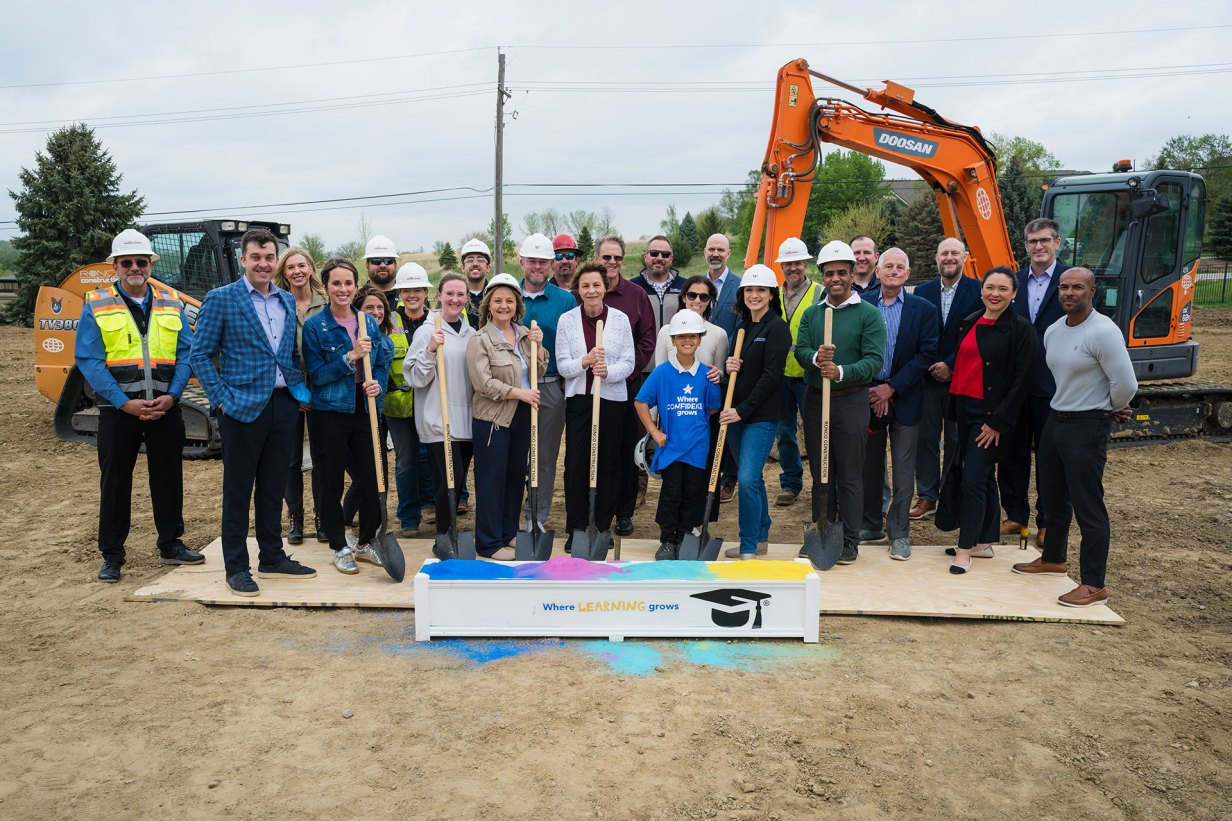
Photo courtesy of Care Access Real Estate / Social Finance
For centuries, impact investing—deploying money in pursuit of measurable societal benefit alongside potential financial return—has helped jumpstart budding American community initiatives and business opportunities that sufficient conventional funding did not reach. The practice reaches back to early community investors, including Benjamin Franklin.
As a young man, Franklin borrowed money through friends to open his printing business in Philadelphia. Recognizing later in life that this foundational loan had been crucial to his future success, Franklin established in his will two revolving loan funds. He stipulated that the funds be lent to young tradesmen to help them start businesses. Borrowers’ repayments into the fund were recycled into new loans.
Franklin realized people may lack a network of close contacts wealthy enough to invest in a new business. It’s a financial limitation that persists for many lower-income communities.
“When a social entrepreneur has an idea, the first capital typically comes from friends and family. But in many poorer communities, that friend and family wealth often doesn’t exist,” said Otho Kerr, director of strategic partnerships and community impact investing at the New York Fed. “Social entrepreneurs and community development leaders need to know what other sources of capital are available. Banks and community foundations are part of it, but impact investment is an equally important tool for turning an idea into an enterprise that delivers results.”
“Social entrepreneurs and community development leaders need to know what other sources of capital are available. Banks and community foundations are part of it, but impact investment is an equally important tool for turning an idea into an enterprise that delivers results.”
– Otho Kerr, director of strategic partnerships and community impact investing at the New York Fed
As competition mounts for the limited funding that traditionally powers local economic initiatives, community leaders look with renewed interest toward impact investment.
Evidence from a growing range of examples demonstrates that certain impact investments can provide the flexible, patient, risk-tolerant capital that some innovative community development initiatives need to get started and grow. These investments also help attract and connect other layers of the larger capital stacks supporting community work. Challenges remain, however, including around how to standardize investments, measure impact, and scale up the field.
Using their unique convening capacity, some Federal Reserve community development teams are bringing together field leaders, impact investors, and communities seeking capital. They’re exploring the idea that investing with intention where conventional funding doesn’t always flow can support more robust employment, infrastructure, and business development across the country.
Antony Bugg-Levine, co-founder of the Global Impact Investing Network and a leader in the field who helped coin the term impact investing in 2007, said this kind of capital can be the missing piece overlooked communities need to act on their plans for economic growth and prosperity. “While the term is new, the basic idea is a deeply American one: Turning opportunity and hard work into progress requires fair financing,” he said.
More community development capital needed as conventional sources stretch thin
Finding new ways to draw in and supplement larger sources of conventional capital is increasingly important for community initiatives. These projects often rely on a complex combination of funding sources such as public program dollars, bank loans including those made under Community Reinvestment Act obligations, community development financial institution (CDFI) capital, and philanthropic grants. Such funds are limited and don’t flow to all communities and initiatives equally.
“There are these missing markets in the middle that commercial capital won’t touch, and traditional philanthropy is insufficient to deal with,” said Tracy Palandjian, chief executive officer and co-founder of Social Finance, a national nonprofit that has partnered with the New York Fed on impact investment convenings. “We’re trying to unlock a new supply of capital, because people need more forms of capital to make their initiatives work.”
Taken together, the largest federal place-based programs that fund community development projects totaled $60.7 billion in 2024, before subsequent reductions in several of these federal programs. CDFI assets totaled $446 billion in 2025. Depending on a project’s location, state- and municipal-level programs can also provide modest public funding. These vital community development capital sources are subject to shifting policy priorities. Researchers find that demand and need consistently outstrip supply.

“There are these missing markets in the middle that commercial capital won’t touch, and traditional philanthropy is insufficient to deal with. We’re trying to unlock a new supply of capital, because people need more forms of capital to make their initiatives work.”
– Tracy Palandjian, CEO and co-founder, Social Finance
Considerably more capital is parked in investments and endowments. In 2024, $68.9 trillion was invested in US capital markets, but community initiatives perceived to be financially risky may struggle to attract conventional private and public capital. Traditional investment managers have a fiduciary responsibility to secure a financial return on investment in the best interests of their clients and to avoid losses. The higher-risk, lower-return nature of some community development projects may not align with that requirement.
Private US foundations held assets totaling $1.9 trillion in 2026. At least five percent of this capital must be dispersed through charitable expenditures, such as grants and donations. In many cases, the remaining 95 percent of foundation assets, known as the corpus, largely is invested in capital markets to sustain and grow the foundation’s endowment. While community development projects may secure some funding through a foundation’s grant allocations, such funding is limited relative to the corpus.
investment spotlight
Blackstar Stability Distressed Debt Fund
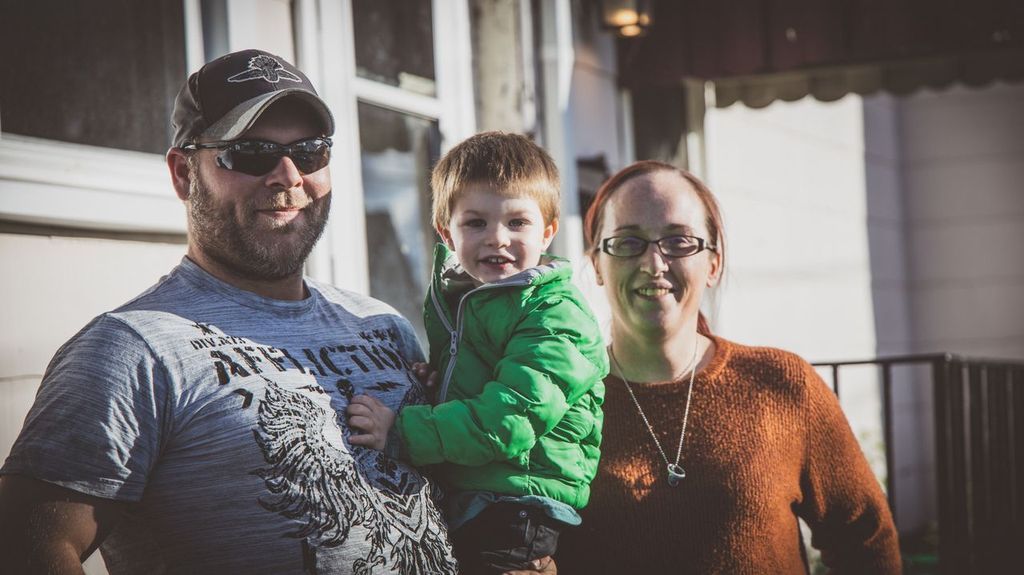
Contracts for deed homeownership agreements can appeal to homebuyers who may be unable to secure a mortgage. These arrangements lack the consumer protections of a traditional mortgage. Under a contract for deed, a buyer can lose their home and their investment in it if they miss just one payment. Seeing the damage to family and community wealth these arrangements can cause, Blackstar Stability launched a $100 million Distressed Debt Fund to purchase the contracts and restructure them, keeping families in their homes and helping them build equity.
Blackstar has helped more than 200 families get out of CFD agreements and into stable mortgages as of 2025. Drawing on impact-first and mission-aligned investments, the Distressed Debt Fund transferred more than $70,000 in equity to each family, for a total of more than $15.6 million.
Investing to prioritize impact and draw in larger capital sources
Proponents see impact investment not as a replacement for more conventional community development finance. Rather, it can be a catalyzing complement.
Impact investments often lie toward the center of a spectrum of capital, with philanthropy and public grants on one end and mainstream investments on the other. This spectrum spreads from concessionary capital, which requires no repayment or below-market-rate return on investment, to commercial capital, which expects a risk-relative return near or at market rate.
“One of the biggest misunderstandings is that impact investing is replacing grantmaking,” said Kseniya Benderskaya, assistant vice president and community affairs officer at the Dallas Fed. “The idea is that these loans are happening side by side with healthy grant giving. In general, grantees understand that grant dollars can take you so far; you can do a lot of capacity building, piloting, and experimenting. But to get work to scale, you need dollars that are beyond that five percent.”
Two distinct types of impact capital, impact-first investing and catalytic capital, may be best positioned to help jumpstart a wide range of community projects. The two terms are sometimes used interchangeably, but the investment types have distinct aims:
- Impact-first investments prioritize measurable social or environmental benefit over financial return. Investors accept concessionary returns and financial tradeoffs in exchange for greater social impact. Early impact-first investments can also help an initiative show that it is not as risky an investment opportunity as may be perceived, thereby attracting larger sources of more conventional capital.
- Catalytic capital resembles impact-first investment, and the two types often overlap. But catalytic capital is explicitly intended to draw in larger, more risk-averse sources of funding. Investors of catalytic capital also consider it a way to establish and grow new markets that might not otherwise take hold.

“One of the biggest misunderstandings is that impact investing is replacing grantmaking. The idea is that these loans are happening side by side with healthy grant giving. In general, grantees understand that grant dollars can take you so far; you can do a lot of capacity building, piloting, and experimenting. But to get work to scale, you need dollars that are beyond that five percent.”
– Kseniya Benderskaya, assistant vice president and community affairs officer, Dallas Fed
Some of this capital comes from a growing number of foundations, including early adopters like the Ford Foundation and the McArthur Foundation, in part through mission-related and program-related impact investments. Such investment builds on six decades of philanthropic work to advance ethical and sustainable outcomes. Both mission-related and program-related investments recover the capital invested or generate a financial return. Program-related investments may count toward a foundation’s five percent minimum charitable payout, while mission-related investments cannot.
In addition to foundations, a range of other investors commit their capital following values-focused investment principles. Some retirement funds, hospital systems, and universities are making impact investments. Family offices and private wealth holders also increasingly seek to make impact-first investments, a trend some advisors think may expand with generational wealth transfers.
“We’re investing to take on what have been long-term, systemic issues and multigenerational barriers,” said Lisa Richter, co-founder and managing partner at registered investment advising firm Avivar Capital. Richter has partnered with the Boston and Dallas Feds on regional impact investment landscape analyses and learning sessions. “We’re trying to make clear pathways for the use of capital to solve problems and unlock opportunity.”
investment spotlight
Invest Appalachia Fund and Catalytic Capital Fund
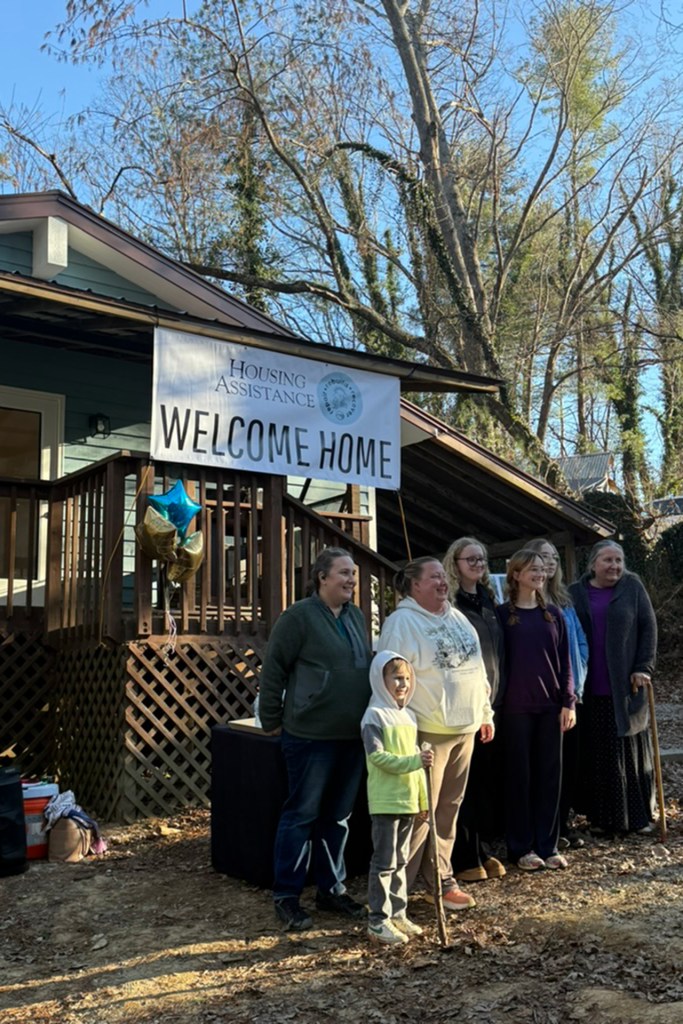
Rural places and small towns often must get creative to attract capital. In the Central Appalachian Region, Invest Appalachia provides risk-tolerant, patient, flexible capital to those seeking to build community wealth and support regional economic growth and resilience. Through its Invest Appalachia Fund and Catalytic Capital Fund, Invest Appalachia invests for impact and leverage into a wide range of rural projects, including a solar energy efficiency upgrade for a community grocery store in Kentucky and a Tennessee CDFI’s community lending program.
“Appalachian communities were in a banking desert and didn’t have the luxury of well-endowed, place-based philanthropy stepping in with impact investing capital,” said the Boston Fed’s Pierre Joseph. “They needed to build an entirely new vehicle with Invest Appalachia to attract national money that then got local money off the sidelines and aimed toward community priorities.”
From its first loan in 2022, the Invest Appalachia Fund deployment totaled $35.5 million by the end of 2025. Invest Appalachia reported that 78 percent of the fund’s 2025 investments would not have occurred without the addition of fund capital.
Flexible, early, patient impact capital built for leverage in the capital stack
The particular characteristics of impact-first investments—which typically take the form of grants, debt, equity, or guarantees—may help them play needed roles in funding community development projects.
Impact-first investments offer flexibility. Some require no repayment of principal. Others provide patient capital that’s vital to kicking off a project but need not be repaid for months or years. Impact-first investments also may be early-stage or first-in capital to help provide proof of concept for a new or untested approach, lessening actual or perceived risk for other funders.
“The fundamental problem is that communities don’t get capital because they’re seen as being risky. The point is to put out capital that then encourages other funders to get in the game. When community groups get this impact-first capital, it de-risks the project and the community, allowing for more capital to flow there.”
– Pierre Joseph, senior manager on the Working Places Team and leader of the Inclusive Economies Initiative, Boston Fed
“The fundamental problem is that communities don’t get capital because they’re seen as being risky,” said Pierre Joseph, senior manager on the Working Places Team and leader of the Inclusive Economies Initiative at the Boston Fed. “The point is to put out capital that then encourages other funders to get in the game. When community groups get this impact-first capital, it de-risks the project and the community, allowing for more capital to flow there.”
Impact-first capital can play an important role in a capital stack—the layered combination of funding sources many community development projects need.
“There are times when a project might be able to access mainstream financing, but at a price that doesn’t enable the project to work,” said Bugg-Levine. “An impact investor can come in and either take higher risk or a lower rate that makes the overall capital stack work.”
Because impact-first investment tolerates greater risk and is less focused on financial return, it often can sit in the junior layers of the capital stack. Securing capital to occupy that crucial, more loss-exposed position can help a community development project attract more risk-averse capital into the larger, senior layer.
Community development financial institution (CDFI) capital often steps into a similar role in the stack to leverage larger funding sources.
“CDFIs are important intermediaries in the impact investing ecosystem. They are the capillaries, getting allocations from banks, philanthropists, and others to then deploy into communities.”
– Brian Walsh, founder and managing director, Human Nature
“CDFIs are important intermediaries in the impact investing ecosystem,” said Brian Walsh, founder and managing director at investment advisory firm Human Nature and a leading expert in impact investing and sustainable finance. “They are the capillaries, getting allocations from banks, philanthropists, and others to then deploy into communities.”
Impact-first funding isn’t a replacement for CDFI funding. There simply isn’t enough CDFI capital to meet the significant demand for it. Some impact-first investments flow through CDFIs deeply familiar with communities’ needs, growing the pool of money CDFIs can direct into promising, community-informed initiatives.
“We believe that we could be a supplier of capital to CDFIs,” said Social Finance’s Palandjian. She added that her organization values CDFIs as key partners in identifying potential impact-first investment opportunities.
investment spotlight
ROC USA National Acquisition Loan Pool
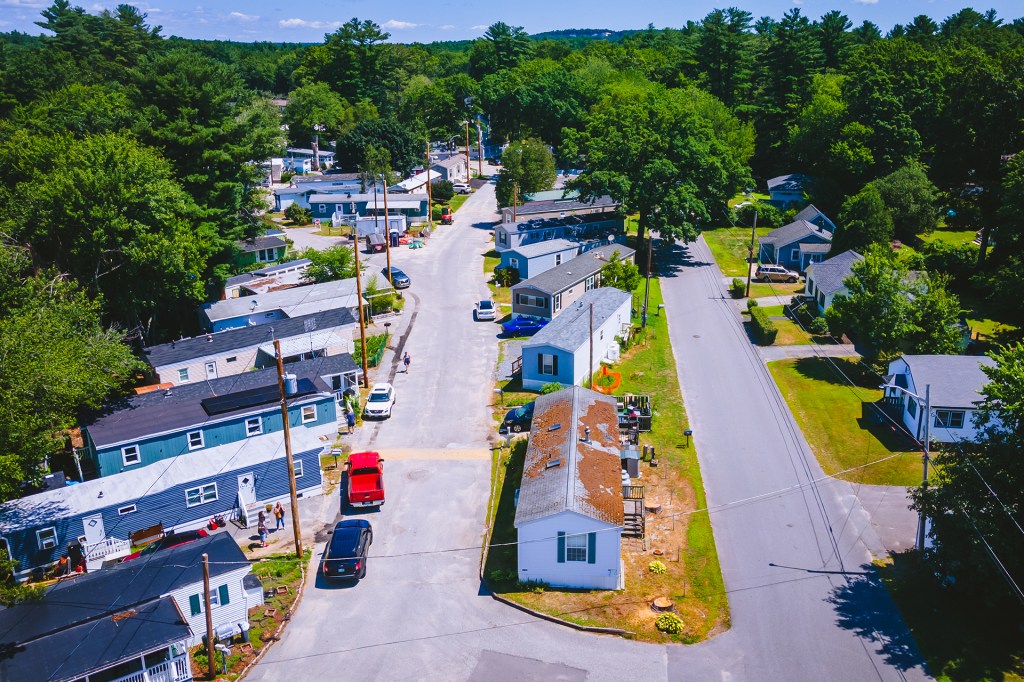
Manufactured homes can offer homeownership at a comparatively low price. But residents also may be vulnerable to the challenges that come with owning your home but not the land it sits on. Beginning in the 1980s under founder Paul Bradley, ROC USA has helped manufactured home residents buy their communities from existing landlords through a cooperative model.
ROC USA continues to extend capital to manufactured-home owners who want to buy their communities as a cooperative. In 2025, the organization announced a $47 million National Acquisition Loan Pool, backed by a combination of investments from banks, foundations, and impact funds, to make the resident-ownership model available to more manufactured home communities.
Within impact investing, impact-first investments lesser known
Research shows impact-first capital can support more sustainable and reverberating positive outcomes than other types of impact investments or traditional grants. But these catalytic deals also can be relatively costly. Beyond the dollars invested, it can be expensive, time-consuming work to perform due diligence and find the right combination of capital for each unique deal. The question becomes whether that cost is worth the greater impact. Some investors remain uncertain.
The Global Impact Investing Network surveyed 429 investors in 2025 and learned that the vast majority of them were targeting market-rate returns with their impact investments. Just 11 percent of investors said they were targeting below-market-rate returns or simply a recovery of the invested capital.
In a Boston Consulting Group survey of 114 investors, three-quarters of respondents said they were “very aware” of impact-first investing, but only 21 percent were allocating the majority of their capital into such investments. Respondents said they needed better clarity on how to source and structure impact-first investments. Nearly two-thirds of investors allocated the majority of their impact capital into grants. Respondents often defaulted to making grants, they said, because grants follow a more familiar, standardized process.
“People generally don’t wake up in the morning and say, ‘I want to invest in impact.’ They need onramps to get them there,” said Brian Walsh. “Experienced impact investors with connections and insights into communities can surface highly-impactful opportunities that could also have a strong financial return.”

investment spotlight
Care Access Real Estate
Finding affordable and accessible child care is a challenge. But for child care providers, most of whom are small business owners, so is affording the cost of a child care facility. Care Access Real Estate (CARE) is a real estate investment fund that covers the cost of purchasing and renovating homes, turning them into child care-compliant facilities that are then leased out to experienced, licensed child care providers.
The CARE fund is managed by impact investing firm Mission Driven Finance. Impact investors have contributed more than $14 million to CARE, including a $2 million investment from Social Finance’s Impact First Fund to help prove the concept and attract additional capital.
Challenges of growth, measurement, and connecting demand and supply
Potential investors also seek stronger evidence of what impact means and concrete ways to quantify that impact through trackable, comparable results.
“To make this market scale, we need data and insights about where there are investable opportunities, and reporting systems and clear norms,” Walsh said. “If we’re saying that impact investing is about intention to generate non-financial returns, how do we measure that easily? I think that’s a big piece of what’s holding it back.”
In response to this demand for more consistent ways to standardize and measure impact, newer tools like IRIS+ and Impact Frontiers aim to provide investors and advisors with comparable definitions and metrics.
The field also lacks a central clearinghouse of searchable impact-first investment opportunities.
“One of the biggest challenges is that it’s a highly fragmented marketplace,” Bugg-Levine said. “I can’t send someone to a single place where they can type in all the details of their project and it spits out four of the highest potential leads. That makes it really hard for the people who have projects that need financing to find investors.”
Impact-first investing is still relatively new. Further establishing the field will require learning and skill-building opportunities for both investors and capital recipients.
“One of the biggest challenges is that it’s a highly fragmented marketplace. I can’t send someone to a single place where they can type in all the details of their project and it spits out four of the highest potential leads. That makes it really hard for the people who have projects that need financing to find investors.”
– Antony Bugg-Levine, co-founder, Global Impact Investing Network
“Organizations need to have the right talent to even take in this kind of money,” said Social Finance’s Palandjian. “If their usual sources of capital are federal money and traditional grants, they need to build the muscle to take on a program-related investment or a guarantee.”
“We need more outreach to help would-be investees understand how they can get access to this capital, and it’s critically important that that outreach be grant-funded activity,” added Avivar’s Richter.
Federal Reserve efforts to connect communities with capital

investment spotlight
Los Angeles Wildfires Rebuilding & Renewal Fund
The Palisades and Eaton fires in January 2025 devastated communities in Los Angeles County, damaging or destroying more than 18,300 homes, community buildings, and businesses. In the following weeks, a collaborative of philanthropic organizations, health systems, and banks met with community members in the area’s lower- and middle-income neighborhoods to determine the rebuilding capital needs for homeowners, small business owners, and community organizations.
A year after the catastrophe, the collaborative launched the Los Angeles Wildfires Rebuilding & Renewal Fund, a $100 million impact-first private debt fund. The fund offers community members flexible, often early-stage capital to help leverage additional funding from conventional lenders. Investments from the fund will support rebuilding homes, upgrading wildfire protections for properties, and small business recovery. Drawing on investments from local and national foundations and companies, the fund is managed by registered investment advisor Avivar Capital.
“We firmly believe there are advantages in investing through a fund,” Avivar’s Lisa Richter said. “One of those advantages is to establish mission-driven and place-based funds to respond to needs that aren’t necessarily being addressed by conventional intermediaries.”
Hearing the call from community partners and funders for opportunities to share knowledge, ask questions, and develop new ways to put capital to use, the Federal Reserve is leveraging its convening power to bring stakeholders together.
The New York Fed’s Making Missing Markets initiative convenes community development practitioners and investment innovators with the intention to redeploy capital where they believe it can more efficiently and sustainably address community needs. The theory is that proactively investing in affordable housing, early childhood education, and workforce development, for example, may help avoid the need for expensive solutions to crises of homelessness and unemployment later on. Impact-first investments are one vital tool to help shift capital toward upstream interventions, particularly those that are newer and yet untested.
“It’s not that there aren’t already people investing in upstream, place-based work,” said the New York Fed’s Kerr. “In the Purpose Built Network, for example, community leaders are braiding resources and attracting philanthropic dollars. But we’re trying to uncover business models that can attract more private capital, in part to take the place of some of the public funding that has disappeared.”
As part of the New York Fed’s initiative, 20 design teams are exploring potential challenge areas for investment, including community broadband access, rural development strategies, and building nonprofit capacity. Additional teams are strategizing around interventions in a selection of specific communities and identifying aligned capital sources with which to address them.
At the Boston Fed, connecting communities with capital has been a focus for more than a decade, from the Working Cities Challenge to the 2016 Capital and Collaboration initiative. Today, the Bank’s Working Places initiative is pursuing a regional strategy to help larger, more diverse capital streams reach all of New England’s communities.
“In 2024, we mapped capital flows across all six New England states, and the picture was clear: philanthropic, impact investing, and federal dollars are largely bypassing our small cities and rural communities,” said the Boston Fed’s Joseph. “That’s not a reflection of the quality of ideas in those places. It’s a gap in the plumbing, and it’s one we think can be fixed.”
In 2025, the Boston Fed hosted a regional convening and a series of virtual learning sessions to better understand the disconnection between communities and capital. This year, the team is launching a cohort-based model to work directly with communities on connecting their priorities to capital, starting with small business and housing.
In Texas, the Dallas Fed hosted five “impact investing bootcamp” sessions to help Texas investors, CDFIs, and community organizations understand how these investments work. The team also conducted a landscape analysis of Texas impact investing gaps and opportunities. As in New England, the landscape scan found that smaller and more rural communities in Texas received comparatively little community development initiative funding.
After the fifth training session, 18 funders expressed interest in establishing a statewide collaborative to help align and deploy investment capital to address community-defined needs. They created the Texas Impact Capital Alliance, which launched in summer 2026 as the 20th statewide impact investing coalition in the country. The Dallas Fed serves as the Alliance’s research, learning, and convening partner.
“Investors want to understand the economic development vision of these underserved communities and how funders can help support a whole pipeline of initiatives,” said Benderskaya.
A community-informed approach to investing for impact
These explorations of community-informed investment opportunities focus on understanding regional interests and conditions, helping to ensure capital streams and investment outcomes align with what each community seeks.
“Our investment strategies, processes, and procedures must be built around representation and the voice of the community,” said Avivar Capital’s Richter. “What do communities want? Who speaks for them? Who will steward the dollars once they’re invested in the community? Where will wealth accrue on these dollars invested, and how will we ensure that the communities our dollars hope to support aren’t displaced or undermined?”
Impact-first investing also has the potential to lift communities brimming with ideas for local economic growth but short on the funds to fuel them.
“At the end of the day, communities need more capital to move their most innovative ideas forward,” said Joseph. “Advancing a single project is great. But if you start to understand impact investing as a tool, its use cases, and how it fits into your broader vision for where you want your community to go, you can demonstrate a track record and start buying down risk.”
“Helping communities understand how to draw on all of these tools to invest in a different future and tell a different story about their value,” he said. “That’s the conversation we’re looking to have.”

“Our investment strategies, processes, and procedures must be built around representation and the voice of the community. What do communities want? Who speaks for them? Who will steward the dollars once they’re invested in the community? Where will wealth accrue on these dollars invested, and how will we ensure that the communities our dollars hope to support aren’t displaced or undermined?”
– Lisa Richter, co-founder and managing partner, Avivar Capital

investment spotlight
The Reinvesting in Nursing Education and Workforce (ReNEW) Fund
More than 32,000 new advanced practice registered nurses will be needed each year through 2035 to meet growing demand. For lower-income individuals interested in training for these vital jobs, the education cost can be prohibitive. Western Governors University is partnering with Social Finance and employers to build a $100 million fund that helps cover the cost of the prelicensure Bachelor of Science in Nursing program for lower-income students across 25 states.
Students receive no-interest loans for the last two years of their program. A student borrower is only required to repay the loan in installments after they get a nursing job with an annual salary of $60,000 or more. Partner employers may also help repay the loan for any student they hire into a qualifying position. Repaid loan dollars then cycle back through the fund and out into new loans to other students.
“With a scholarship, you’ve got to write a check every time you want to fund another student’s education,” said Social Finance’s Tracy Palandjian. “With this fund, we only get back the principal, but that money keeps working. You can serve more people than a traditional scholarship.”