

“Coffee is not just a business, it’s also part of our lineage.” – Hrag Kalebjian (left), owner of Henry’s House of Coffee in San Francisco, California, pictured with his father, Henry.
Thriving small businesses are important to a healthy economy. “Small businesses are the economic engine of the US economy and the emotional engine of most communities,” said Thomas M. Sullivan, senior vice president of Small Business Policy with the US Chamber of Commerce.
And data support their importance. Small businesses employ approximately 46 percent of all private sector employees. They are responsible for nearly 44 percent of gross domestic product (GDP) output (the value of the final goods and services produced in the United States). But they are also adjusting to challenges such as inflation, supply chain disruptions, and uncertainty about future economic conditions.
In June, Federal Reserve Banks and the Board of Governors held the “State of Small Business Symposium” in Cleveland, OH. The event brought together small business support organizations, intermediaries, lenders, and local government representatives invested in small business success. The goal was to share best practices, opportunities, and resources that address challenges and barriers that small businesses face.
The symposium also highlighted Federal Reserve research. Speakers and participants discussed how collaboration, coordination, ecosystem building, intentionality, and creativity support small businesses.

“Small businesses are the economic engine of the US economy and the emotional engine of most communities.”
– Thomas M. Sullivan, senior vice president of Small Business Policy, US Chamber of Commerce
Data and stories about the small business experience
The Federal Reserve produces extensive data about small businesses. For example, the annual Small Business Credit Survey (SBCS) collects national data about how small businesses are navigating credit needs and provides multiple analyses and reports each year. The 2026 Report on Employer Firms, based on data collected in the 2025 SBCS, highlighted the mounting strain many businesses are facing. Firms’ optimism declined as the revenue growth expectations index have dropped from 39 to 33 percent. Businesses cited reaching customers and growing sales as their number one challenge (57 percent). Costs are rising for a majority of businesses (77 percent), and over half reported difficulty paying operating expenses (54 percent).
In the face of these conditions, symposium panelists, comprised of small business support organizations, reflected on the current small business landscape. One panelist shared stories of businesses with less than $500,000 in annual revenue growing significantly slower than those with more than $1 million. The panelist called the disparity “Wall Street vs. Main Street.” Building on this, several other panelists in the same session noted that consumers continue to spend, but not enough to offset cost pressures facing the small businesses they serve. They also shared that capital spending has similarly suffered and has hit its lowest levels since 2019. And yet, small businesses remain resilient, aided by communities and organizations that continue to develop new strategies to support small businesses.
“Small businesses drive most new job creation and fuel local economies, making them essential to America’s economic stability. The Federal Reserve studies and supports small businesses because their health shapes employment, financial resilience, and overall economic conditions. And none of this happens in isolation—the impact comes from the collaboration of organizations doing the on‑the‑ground work, strengthening communities from the inside out.”
– David A. Jackson, vice president and community affairs officer, Community Development, External Engagement, Federal Reserve Bank of Cleveland

A new frontier: AI and small business
Artificial intelligence (AI) continues to transform the small business landscape. According to the 2025 SBCS, over 60 percent of small firms are using or plan to use AI, primarily for marketing, writing, and individual productivity tools. Most firms using AI reported they were still experimenting or partially integrating it. The discussions at the symposium also highlighted an AI digital divide, with some describing an economy diverging between adopters and non-adopters. Service providers, ranging from lenders to small business intermediaries, also emphasized the importance of technical assistance and trusted partners to support businesses in navigating AI.
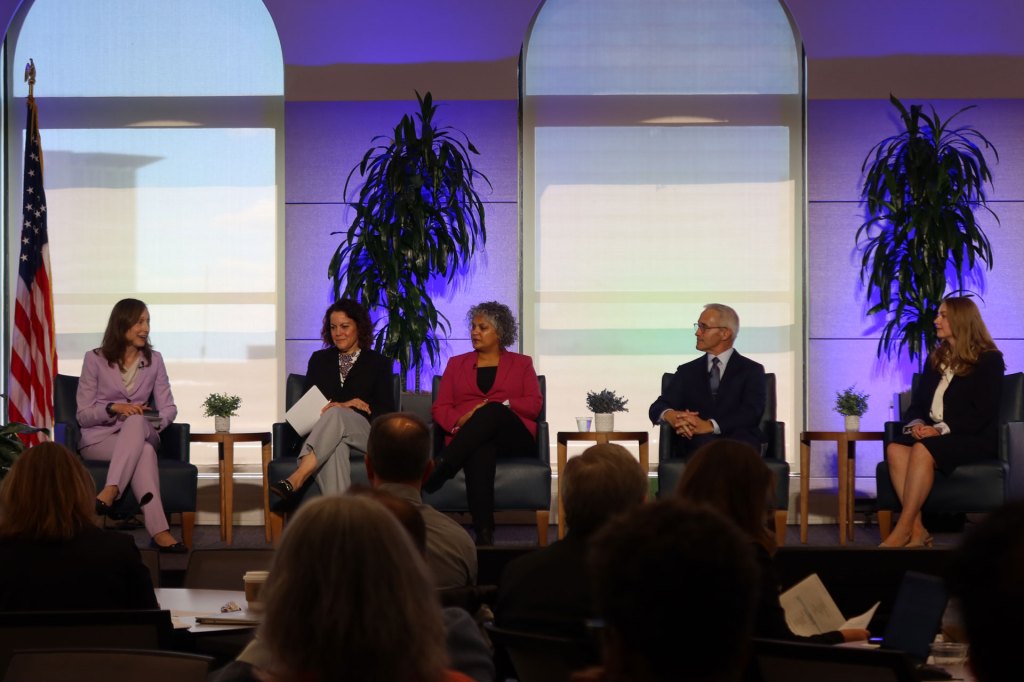
Speakers also discussed how lenders were using AI. Some are starting to integrate AI into their lending decisions, framing AI as both an opportunity and a challenge. AI models can offer innovative opportunities to expand access to credit. They can offer a holistic view of borrower risk beyond traditional credit metrics (i.e., credit score, collateral) and improve speeds in services by automating tasks like underwriting and data analysis. However, speakers also highlighted concerns related to data security, privacy, and accuracy when using AI models. Overall, the consensus among speakers and attendees was that AI will continue to play an important part in small business development.
From AI awareness to implementation
The event highlighted national and local programs intended to support small businesses’ adoption of AI. For example, the US Chamber of Commerce (the US Chamber) and the US Chamber of Commerce Foundation, in collaboration with Google.org, launched Small Business B(AI)sics. The national training initiative is designed to help small businesses leverage AI.
Small businesses can access trainings online or in person through local chambers of commerce across the country. Sullivan noted a gap between AI awareness and implementation. “Small Business B(AI)sics was created to close that gap by providing free, hands-on training that helps business owners understand how to use AI to save time, improve customer service, streamline operations, and identify new growth opportunities,” he said. “The program is designed to make AI education approachable, actionable, and relevant for Main Street businesses.”
Kalebjian also uses AI as an “analytical brain” to figure out the lifetime value of his customers, tracking costs to acquire new customers, and identifying what marketing or discount strategies are appropriate. Through personalized marketing and targeted AI-assisted automations, Kalebjian increased customer retention from the “low teens” to 28 percent, significantly boosting long-term e-commerce revenue.
– Hrag Kalebjian, owner, Henry’s House of Coffee

The US Chamber has seen innovation from small businesses that have utilized this program. For example, Sullivan highlighted how Hrag Kalebjian, owner of Henry’s House of Coffee in San Francisco’s Sunset District, integrates AI into many aspects of his business. For revenue tracking, Kalebjian used AI as a technical assistant to write custom code for a daily sales reporting tool. In operations, Kalebjian used AI to help design an automated water-spritz system that sprays a tiny amount of water on coffee beans right before they hit the grinder. This creative solution efficiently eliminated static electricity during the grinding process and greatly improved bagging operations.
Kalebjian also uses AI as an “analytical brain” to figure out the lifetime value of his customers, tracking costs to acquire new customers, and identifying what marketing or discount strategies are appropriate. Through personalized marketing and targeted AI-assisted automations, Kalebjian increased customer retention from the “low teens” to 28 percent, significantly boosting long-term e-commerce revenue. Kalebjian is not a computer coder or engineer. However, he has used conversational language to instruct AI to create efficiencies in diverse lines of his business.
Leveraging AI to address workforce challenges
During the symposium, Goodwill of the Southern Alleghenies shared how it is using AI to help address regional workforce shortages. In partnership with PA CareerLink® and the Southern Alleghenies Workforce Development Board, Goodwill developed “Kai,” a prompt-based digital assistant that operates within a large language model.
Through a live, staff-guided dialogue, Kai asks employers about repetitive, time-consuming, or error-prone workflows and adapts its follow-up questions based on their responses. Using only non-sensitive business information, Kai identifies potential automation opportunities and produces a customized report with practical recommendations. PA CareerLink® staff review the report before sharing it with the employer.
“We’ve worked with more than 35 employers through the Kai initiative over the past year and a half,” said Carter Cerully, business services coordinator at PA CareerLink® Blair County/Goodwill of the Southern Alleghenies. “The goal is to help employers identify practical ways to reduce manual work so their employees can focus on higher-value or customer- facing responsibilities.” Goodwill of the Southern Alleghenies and its workforce partners are now expanding Kai to provide a deeper, employer-directed process review, compare automation options, and develop a practical roadmap for implementation.

“The goal is to help employers identify practical ways to reduce manual work so their employees can focus on higher-value or customer- facing responsibilities.”
– Carter Cerully, business services coordinator, PA CareerLink® Blair County/Goodwill of the Southern Alleghenies
Technical assistance and wraparound support service for small businesses
Symposium speakers stressed the need for technical assistance, direct business-focused guidance, expertise to improve specific operational capabilities, and skills to support all aspects of small business operations. They also noted that wraparound support (i.e., holistic services that address personal and systemic barriers that impact business success, such as child care, housing, capital, and mental health), particularly in micro-small businesses and startups, is just as important for sustainability. Federal Reserve Bank of Minneapolis’ analysis of loan-level data from one prominent Native Community Development Financial Institution (CDFI) found that its financial counseling was associated with an 82.1 percent reduction in the prospect of bad debt when the borrower lacked a credit score.
Local Initiatives Support Corporation (LISC), a national CDFI, recognized the need for technical assistance. In 2017, they launched a Small Business Lending program. According to Steve Hall, LISC’s vice president and head of small business lending, LISC found that many businesses “were not prepared to receive bank funding or funding from a CDFI without technical assistance.” LISC set out to ensure businesses in their network received the capital they needed to grow and expand.

“This platform will not only include LISC’s offerings, but include our partners [who are] united to improve underinvested communities.”
– Steve Hall, vice president and head of small business lending, Local Initiatives Support Corporation (LISC)
Hall also shared that businesses have taken advantage of LISC’s technical assistance training. Their stories begin similarly, with an opportunity to secure an investment for their business. Hall noted that through this process, the businesses “learned how a CDFI could help with down payment assistance and financial reporting technical assistance, and found ways to improve their business with working capital.” Since their engagement with LISC, each of these businesses has grown to include new staff, customers, and vendors.
To evolve the program, LISC is currently working to integrate its lending and programmatic offerings into a central online platform for small businesses. This change will help LISC to better identify partnership opportunities for technical assistance, lending, or both. As Hall highlighted, “This platform will not only include LISC’s offerings, but include our partners [who are] united to improve underinvested communities.”
Beyond lending, a people-first approach
ACCESS CDFI (ACCESS), the only community loan fund headquartered in Las Vegas, NV, learned early that capital alone cannot solve all the problems a small business owner faces. Operations, technology, bookkeeping, marketing, and business planning are just a few of the functions business owners need for success. Other challenges they may face outside of the business include child care or housing.
Nic Steele, executive director of ACCESS, shared how the organization has integrated technical assistance and wraparound supports into its work. He noted, “We started as a lender focused on providing access to capital, but it became clear very quickly that we needed to look beyond the loan itself and understand the circumstances of the business owner.”
At ACCESS, technical assistance is customized. The CDFI takes a “people first” approach and works to understand what business owners need at each point in their journey. If ACCESS is unable to directly provide the services needed, it connects businesses to a partner who can help meet the need. Technical assistance and wrapround support becomes “part of the infrastructure that allows capital to be used effectively,” said Steele.
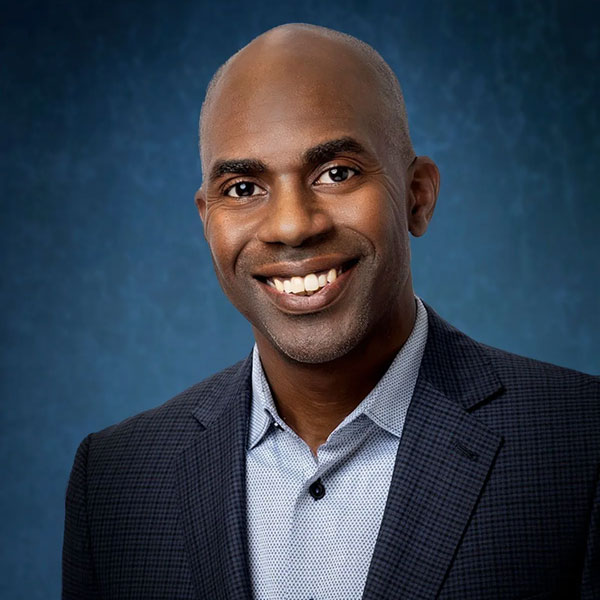
“The important lesson for us is that the growth didn’t come simply from providing a loan. We understood the business, identified the specific barrier preventing the new work, and designed a capital solution that matched the opportunity.”
– Nic Steele, executive director, ACCESS CDFI
For example, a local painting contractor in Nevada had approximately $120,000 in annual revenue. The business secured a contract for a hotel property but did not have the necessary working capital to fulfill the commitment. Rather than apply a traditional underwriting approach, ACCESS developed a contract-financing product around the opportunity the business had secured. ACCESS financed approximately 80 percent of the contract value, giving the company the working capital it needed to purchase inventory and hire employees.
Since then, ACCESS has completed 19 contract-financing transactions with that business, for which annual revenue is projected to hit $8 million this year. “The important lesson for us is that the growth didn’t come simply from providing a loan,” said Steele. “We understood the business, identified the specific barrier preventing the new work, and designed a capital solution that matched the opportunity,” he said. “Technical assistance and a strong relationship with the business allowed us to understand what was needed and respond appropriately.”
Supporting the whole small business through childcare
ACCESS also recognizes how important child care is to small business success. Steele noted that nationwide, 14.8 million children under the age of five whose parents are in the workforce may need access to child care. But only 10.8 million formal spots exist. This leaves a 28 percent gap in child care coverage which has significant implications for labor force participation. ACCESS CDFI’s child care work grew after it recognized that child care was both an essential community resource and an important small business and economic development issue.
As Steele recounts, their work began following the COVID-19 pandemic when the systemic challenges of child care became more prominent. He said it led him and partners across the state of Nevada to ask, “How could we help increase the supply of child care while also helping child care providers build sustainable businesses?” This pursuit was the impetus for the development of the Care Access Real Estate (CARE) Nevada model. Through this partnership ACCESS provides a range of child care resources, including financing and technical assistance.
CARE pairs child care providers with renovated homes so they can operate licensed child care programs in stable residential settings. The model brings together several needs at once. It increases child care capacity and supports small business development. It also expands opportunities for working parents and creates a pathway toward housing stability and homeownership for providers. Since its inception, the program has increased licensed child care capacity in Southern Nevada by 216 seats. Steele emphasized that the model doesn’t just create expanded child care access: “We are helping providers build sustainable businesses that can continue serving families over time,” he said.
Looking ahead
The 2026 State of Small Business Symposium highlighted both challenges and opportunities that small businesses and the support sector currently face. The Federal Reserve System continues its work to understand the evolving needs of the sector and make data accessible to support partners working to build those ecosystems. Discussions and research continue about the topic.
To learn more about the SBCS, including the benefits of partnership, please visit https://www.fedsmallbusiness.org/.
Respond to the Federal Reserve’s Small Business Credit Survey today and contribute to data that directly inform the Fed, federal government agencies, service providers, policymakers, and others—a common good ultimately benefiting your business and others in the community.
- The survey takes 10–12 minutes to complete.
- It’s open to for-profit businesses with fewer than 500 employees.
- Responses are confidential.
- Small-business owners do not need to provide any personal information.