



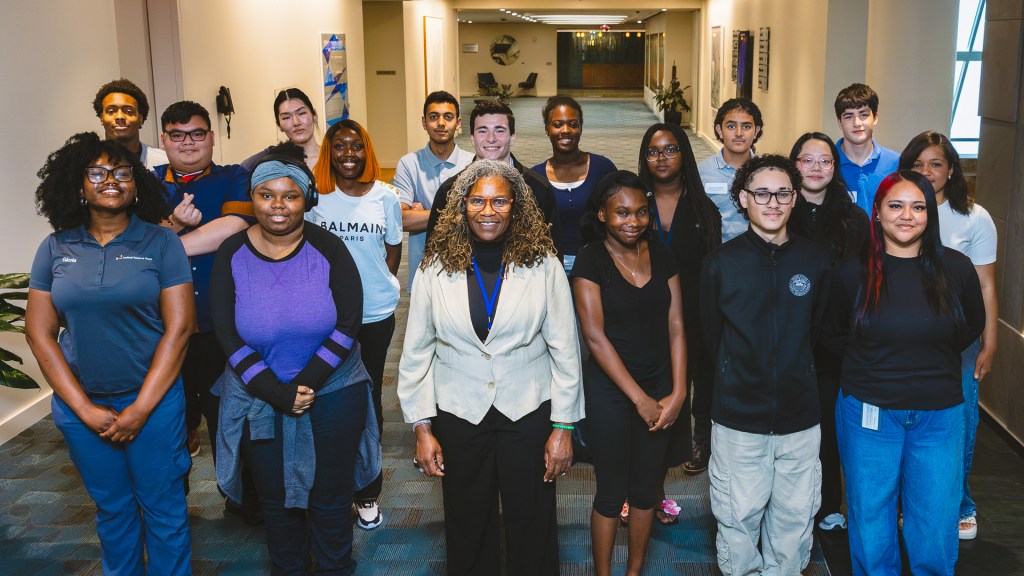
Dawn Hicks with 2026 TIP interns (standing directly behind Dawn is TIP Sr. Youth Development Fellow Quinn Fay; back row, second from left is TIP Youth Development Fellow Stacy Tran)
Photo courtesy of: Steve Osemwenkhae
Soft skills, strong futures: Preparing young workers for today’s labor market
By Suzanne Cummings

I want to do things like social work and help people both emotionally and mentally, especially children and youth. For that, communication skills are a big thing I’m going to need.
– Javi Matta
Photo courtesy of: Steve Osemwenkhae
Javi Matta
Communication: Speaking and Listening and Attitude Is Everything. Those are the names of two trainings Javierlianis “Javi” Matta is teaching her first-year-intern peers at work. Together, those words could also be her mantra.
Javi is in her second year of the Federal Reserve Bank of Boston’s Today’s Interns, Tomorrow’s Professionals (TIP) program. TIP is a paid internship for Boston public high school students that combines employment opportunities with research-based workforce and life-skills training. Interns who do well can remain in the program through their first year of college. Javi credits the program’s workshops in soft skills such as time management, goalsetting, and especially public speaking for the personal growth she’s experiencing.

Photo by: Steve Osemwenkhae
“Public speaking was one of my big fears,” says Javi. “TIP interns receive Toastmasters training and have to present to their peers and Bank staff. Doing that has helped me get over my fear, communicate with confidence, and advocate for myself, both in the workplace and in my personal life.” She now teaches what she learned about communicating to first-year interns, as she was taught by her predecessors. The more she teaches those skills, the more rooted those skills become.
A college freshman at the University of Massachusetts Boston this fall, Javi plans to major in psychology and aspires to become a psychiatrist. “I want to do things like social work and help people both emotionally and mentally, especially children and youth. For that, communication skills are a big thing I’m going to need.” Even though her responsibilities in the Boston Fed’s Supervision, Regulation & Credit department don’t align with her career track, she’s learning so much that she’ll take with her. “The experience has helped me understand that I enjoy coming into an office every day, and that I love working with people.”
TIP-ping the scales for better workforce and life outcomes
As part of the nation’s central bank, the Boston Fed works in a variety of ways to promote a strong, vibrant economy that works for all. Helping to prepare local youth for success in our regional workforce is just one way to support economic opportunity in New England. TIP’s curriculum utilizes diverse learning opportunities and data-backed approaches for addressing persistent barriers to the economic stability and potential of local youth. Many TIP interns from Boston public schools come from low- to moderate-income families. For example, in the 2025-26 school year, 68.3% of enrolled BPS students fit that category.
Boston Fed Senior Program Manager Dawn Hicks has been nurturing, adapting, and expanding the TIP program since 2015. The program itself has been around in some form for over four decades, though it has undergone multiple evolutions, even persisting through COVID. Hicks identifies one constant: “TIP is largely about access and opportunity for local youth. Research shows that young adults who have exposure to careers, employer networks, summer jobs, and internships have stronger employment outcomes down the road. In this professional setting, students can learn what they need to be marketable and begin their journey toward becoming sustainable-wage-earning young adults.”
“TIP is largely about access and opportunity for local youth. Research shows that young adults who have exposure to careers, employer networks, summer jobs, and internships have stronger employment outcomes down the road.”
– Dawn Hicks, senior program manager, Boston Fed

Hicks acknowledges that soft skills are essential for today’s workers. “Employers generally prefer applicants to show up with these skills rather than having to teach them at work. Therefore, it’s important that we arm our interns with those tools, so they can not only get the job but keep it.”
What data says about youth workforce development and soft skills

Photo courtesy of: Steve Osemwenkhae
Boston’s TIP program is founded on academic research into how youth workforce development efforts impact students’ employment and life outcomes. For example, a study from the University of Rhode Island discusses the importance of soft-skills development. It also emphasizes the need for workers to have these before they enter the labor market. American Economic Association research on the effects of private-sector employment experiences on high school academic outcomes found these experiences significantly increased student attendance. They also reduced course failures and raised proficiency on statewide exams. And participants were more likely to take the SAT and enroll in college, with a shift from two-year to four-year institutions. Another policy brief from Northeastern University describes a Boston-specific study identifying the personal and economic implications of successful summer youth employment programs. It promotes the development of these efforts as “social investment opportunities with significant long-term financial returns for communities.”
Students who participate in these programs share positive feedback, too. A survey of recent TIP alumni found the program’s benefits lasted beyond the internship and contributed to shaping participants’ educational and professional paths. TIP plans to expand the survey to future intern cohorts as it seeks more data on outcomes.
Reserve Banks also explore workforce development topics. A recent Cleveland Fed story investigates the soft-skills gap and training to address it. Chapter 1 highlights the Occupational Mobility Explorer, a tool developed by the Philadelphia and Cleveland Feds that workers can use to map out careers in numerous fields. Workforce development practitioners can also use it to help participants understand skill requirements and earning potential for different occupations.
Youth workforce development at other Reserve Banks
About six years ago, Cleveland Fed Assistant Vice President Khaz Finley was tasked by his Bank’s then-President Loretta Mester to create a youth workforce development program. To start, Finley looked into what programs already existed at other Reserve Banks and found Boston’s TIP. After speaking with Hicks about the program’s soft- and technical-skills components, he decided to do something similar in Cleveland. The result was the Fed Future Professionals Program (Fed Futures), an opportunity for regional high school students to explore careers in the financial industry. The program soon expanded to include other industry sectors.

“Other Reserve Banks contributed to developing some of the soft-skills content. This includes training in communication and presentation skills, collaboration, teamwork, LinkedIn and personal branding, and how to apply to college and look for scholarships.”
– Davonta Milbry, outreach coordinator, Cleveland Fed
Cleveland Fed Outreach Coordinator Davonta Milbry describes the program. “During the school year, students participate in biweekly development sessions focused on building soft skills, with one-on-one touchpoints on opposite weeks. This is followed by the eight-week summer job opportunity in participating Bank departments for training in specific technical skills. Then in late summer, interns dive into financial literacy resources at their own pace on the Federal Reserve’s economic and personal finance education portal, FRE.org.”
Milbry continues: “Other Reserve Banks contributed to developing some of the soft-skills content. This includes training in communication and presentation skills, collaboration, teamwork, LinkedIn and personal branding, and how to apply to college and look for scholarships.”
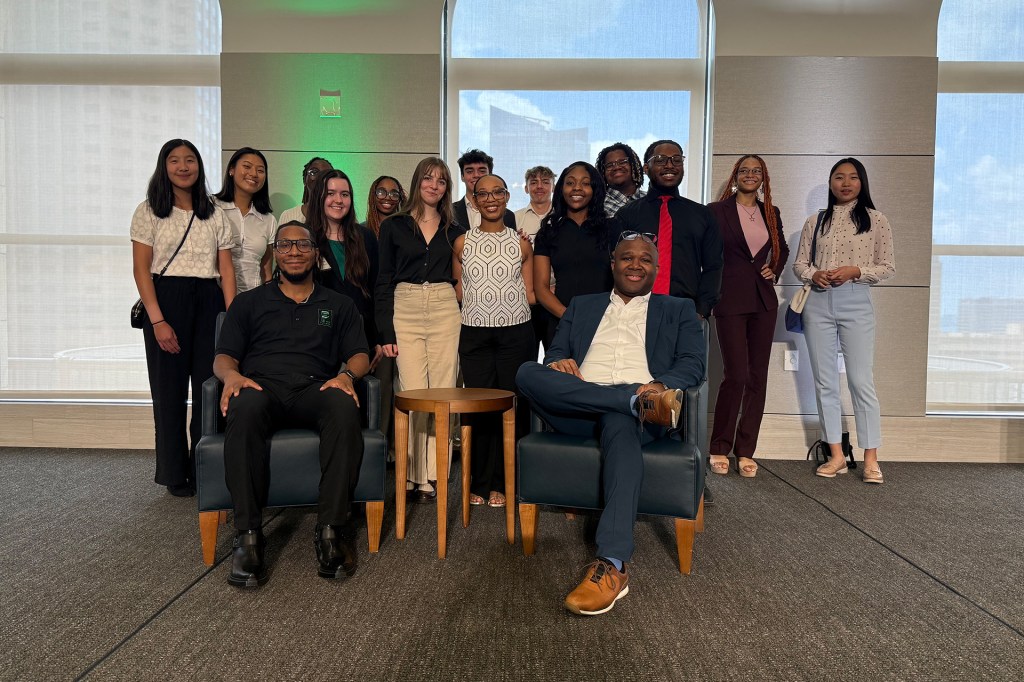
Photo courtesy of The Federal Reserve Bank of Cleveland

I think the program set me up for success in ways that I genuinely wouldn’t have had otherwise.
–Ellie Flinchum
Photo courtesy of The Federal Reserve Bank of Cleveland
Ellie Flinchum
“I’ve never met a stranger in general,” says Ellie Flinchum, a recent Fed Futures graduate and current college intern at the Cleveland Fed. “I’m just comfortable talking to anybody—I think I’m predisposed to that.”
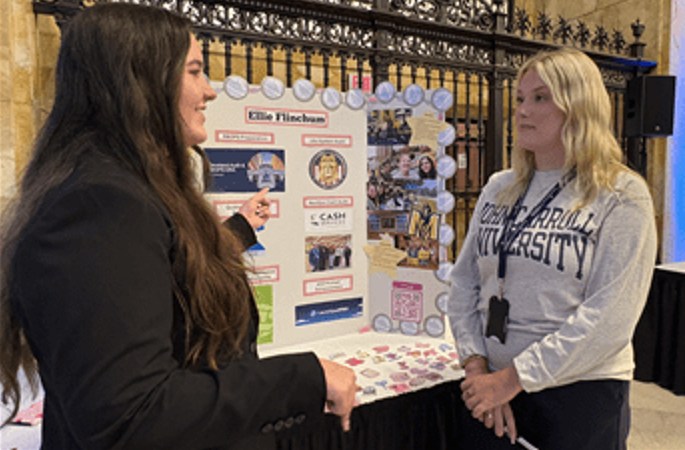
Photo courtesy of The Federal Reserve Bank of Cleveland
A self-described “bubbly spirit” on campus at Murray State University, Ellie says she used to be shy. But because she went through the Fed Futures program and has been around leaders since she was 16, her confidence and outgoing nature are now inherent. People notice her leadership qualities.
Ellie is double-majoring in accounting and economics and currently interns in Cleveland’s Internal Audit area. Ultimately, she wants to be in banking. “So, the Fed would be a good place to end up if it happens.” she says. In particular, she thinks Fed Futures helped her develop important soft skills like how to communicate and not be afraid to ask questions. She notes that it’s helped her be comfortable talking to professionals. And it showed her how to network on LinkedIn, a critical tool for learning about job opportunities and building a personal brand.
Ellie recalls how Finley and Milbry set goals for her. “’You’re going to network with 10 people who are accounting majors at the Fed. Go find them and email them!’ They showed me how to schedule meetings on Teams with my new connections and helped me prepare questions to ask.” These activities helped her practice her elevator pitch and get used to connecting with people—valuable skills that transfer to any job. “I think the program set me up for success in ways that I genuinely wouldn’t have had otherwise.”
What role can employers and community partners play in preparing young workers?
Preparing the next generation for the labor force requires collaboration among educators, community partners, and employers. For Boston’s TIP program, a key partner of more than 40 years is the Boston Private Industry Council (PIC). PIC’s Employer Engagement Team is led by Director Josh Bruno and Assistant Director Nicole Driscoll. Together they guide PIC’s engagement staff in forging partnerships with local employers in multiple industry sectors. These employers hire, train, and provide career exploration opportunities to Boston public high school students.
Everyone has a first job. Boston Fed Vice President and PIC Clerk and board member Jeanne MacNevin reinforces the need for local partners to help prepare youth for work. “Employers have an important role to play in helping our young people build the skills that will carry them throughout their careers. Through our partnership with PIC, TIP gives students meaningful work experience while helping them strengthen communication, teamwork, and problem-solving—all skills that matter in any workplace.”
“PIC has about 68 anchor employer-partners like the Boston Fed, and we always welcome more,” says Bruno. “These include small, medium, and large companies covering sectors such as financial services, healthcare, IT, and STEM, to name just a few.” Driscoll adds, “PIC also convenes the Employer Network several times per year, which is a community of practice to support companies who hire young people. In addition, we have career specialists embedded in each of our public high schools,” Driscoll says. “They run workshops to help students who struggle with communication, self-advocacy, etc.”
Bruno and Driscoll agree that some common steps of the pre-employment process can be barriers for many students. “For example, how do you interview and onboard for a job if you’ve never had one?” Driscoll asks. “There’s also a large percentage of students from immigrant families and those who are English-language learners. It can be intimidating having to produce your I-9 documents to be able to work. Or to undergo a background check or drug screening, as many companies require.” Bruno adds, “In Boston, if a young person doesn’t have a family member or mentor to help them navigate employment or college, PIC can serve that function.”
“Employers have an important role to play in helping our young people build the skills that will carry them throughout their careers.”
– Jeanne MacNevin, vice president and PIC clerk and board member, Boston Fed

“How do you interview and onboard for a job if you’ve never had one? It can be intimidating having to produce your I-9 documents to be able to work. Or to undergo a background check or drug screening, as many companies require.”
– Nicole Driscoll, assistant director of PIC’s Employer Engagement Team

“In Boston, if a young person doesn’t have a family member or mentor to help them navigate employment or college, PIC can serve that function.”
– Josh Bruno, director of PIC’s Employer Engagement Team

Yes, soft skills really are that important
“We at PIC have pivoted away from calling them soft skills, as that implies they don’t matter,” says Bruno. “We call them transferable skills, because most of these translate across sectors.” According to PIC’s Employer Network, workers with these skills are in demand. These are qualities that may take years to develop if not ingrained early on but are valued in the business world. They include knowing how to look people in the eye and communicate confidently and effectively and working in a team to solve problems.
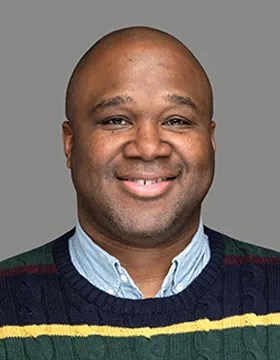
“As we work more with community development financial institutions and nonprofits, they’re saying that people re-entering the workforce after COVID are having a difficult time with that skillset. They’re asking us to connect them with research on how soft skills are relevant.”
– Khaz Finley, assistant vice president, Cleveland Fed
The Cleveland Fed’s Finley recalls one workforce development conference where he had a conversation with the CEO of a large asset management firm. “He told me he needed to find someone with essential soft skills, rather than technical skills that you can always teach on the job. Someone who could talk to him,” he shares. “As we work more with community development financial institutions and nonprofits, they’re saying that people re-entering the workforce after COVID are having a difficult time with that skillset. They’re asking us to connect them with research on how soft skills are relevant. Overlaying that in everything we do with our interns has become our objective.”
Teddy Domonique
“To be honest, when I first started the program, my mindset was just to make money. But as I did the different activities in the program, I would say it really helped shape me for my future.”
Tedroy “Teddy” Domonique is an alum of the Boston Fed’s TIP internship program. He is one of 19 alumni who have been hired by the Bank as permanent employees since 2010. Teddy can’t speak highly enough about the program. “TIP really helps, whether you want to continue working here at the Bank or elsewhere. It prepares you for the world of work. And it even helps you with school,” he says. He praises program enrichment like the College Success Game for showing him how to navigate college, and the Bean Game for how to budget expenses. “The program teaches interns how to be better adults,” Teddy adds. “How to be productive, punctual, and how to carry yourself professionally.” Skills he struggled with as a student and now has in his pocket.
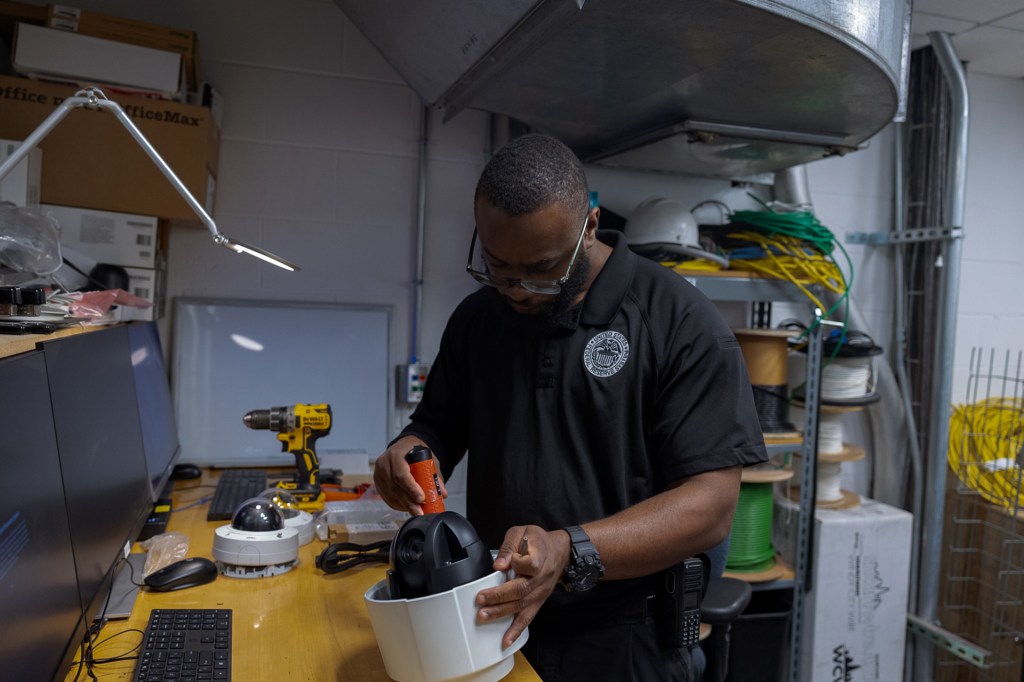
Photo courtesy of: Steve Osemwenkhae
Teddy discovered his career interest while he interned in Boston’s IT department. When his internship was almost over, his supervisor told him about a full-time position that had opened in IT. “He said that he liked the way I work, that I’m a respectful person, and I already had the knowledge to qualify for that position,” says Teddy. “So I applied and got the job.”
Teddy has now been a Bank employee for almost five years. He currently uses his skillset to maintain and troubleshoot some of the Bank’s security systems. He also took advantage of the Bank’s tuition reimbursement program to get his degree in IT. He sees his future in that field and plans to move up as higher-level opportunities arise.
“Being in TIP changed me,” says Teddy. “Because I was just looking for a summer job and didn’t really have a plan. This opportunity helped me map out my future and get to where I am now. It helped me mature in many ways too—in my thinking, public speaking, customer service—all those areas.”
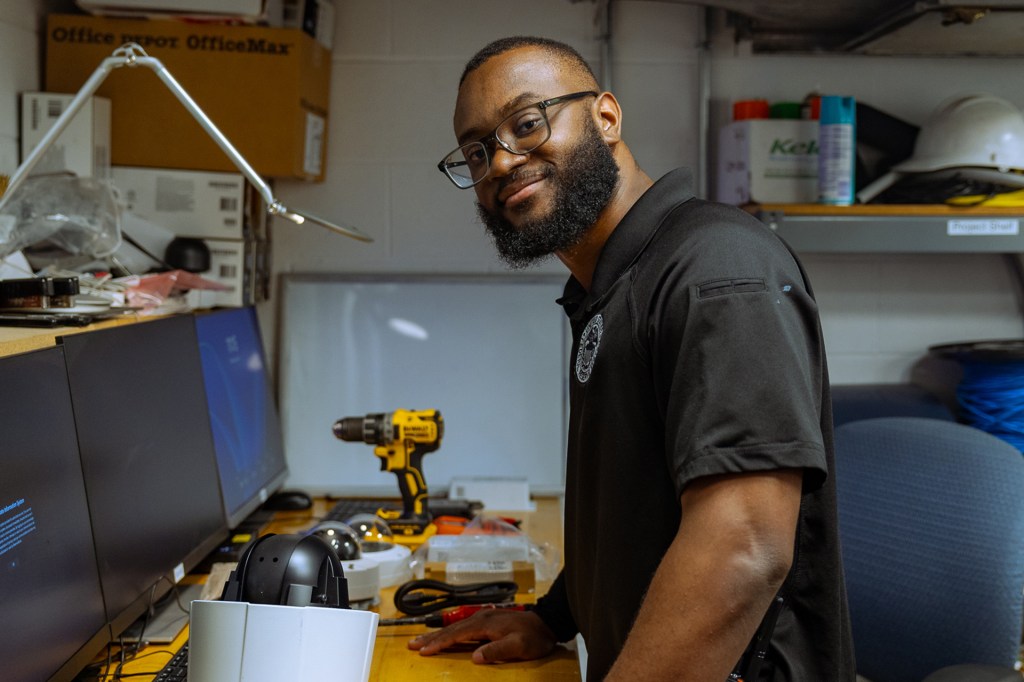
Being in TIP changed me because I was just looking for a summer job and didn’t really have a plan. This opportunity helped me map out my future and get to where I am now.
– Teddy Domonique
Photo courtesy of: Steve Osemwenkhae
Continuing to prepare young workers for stronger futures
The work of preparing young people to enter the labor market is critically important—for youth, employers, the economy, and society in general. “I would love to see more programs with TIP’s combination of soft and technical skills, mentoring, mental wellness resources, and case management support in other New England communities and in Federal Reserve Banks across the country,” Hicks asserts.
“TIP is developing a scorecard called the Compass to help more closely align youth workforce outcomes and programming with the latest youth employment research,” she adds. When completed, Hicks hopes to share this assessment tool publicly with both employers and other Reserve Banks who are interested in creating these programs.
Hicks concludes, “Many believe high schoolers are too young and inexperienced to be helpful in the workplace. I say that young people are teachable, and I have seen many TIP interns surprise their supervisors. By giving them the transferrable skills that hiring managers want and tools for managing life outside their job—along with basic technical skills—we can set young people up for success. Both in their professional journeys and for overall strong futures.”
By giving them the transferrable skills that hiring managers want and tools for managing life outside their job—along with basic technical skills—we can set young people up for success.
– Dawn Hicks
The views expressed herein are solely those of the author and interviewees and should not be reported as representing the views of the Federal Reserve Banks of Boston or Cleveland, the principals of the Board of Governors, or the Federal Reserve System.
