



Research
-

Small business strategies for supporting employee child care needs
Small businesses employ nearly half of private-sector workers but often have limited resources to offer benefits like child care. This article examines the prevalence of employer-supported child care and the practical strategies small businesses employ to support working parents.
-

LIHTC affordability requirement expirations and their implications on the supply of guaranteed affordable housing
Research conducted by the Chicago Fed explains how the exit of guaranteed affordable rental units from the Low-Income Housing Tax Credit program will affect the long-term supply of affordable housing.
-

Fostering maximum employment: Why the Federal Reserve studies investments in America’s workforce
The Federal Reserve’s dual mandate includes promoting maximum employment. This article features examples of the various ways Fed research, outreach, and partnerships contribute to achieving this optimal state of the labor market.
-
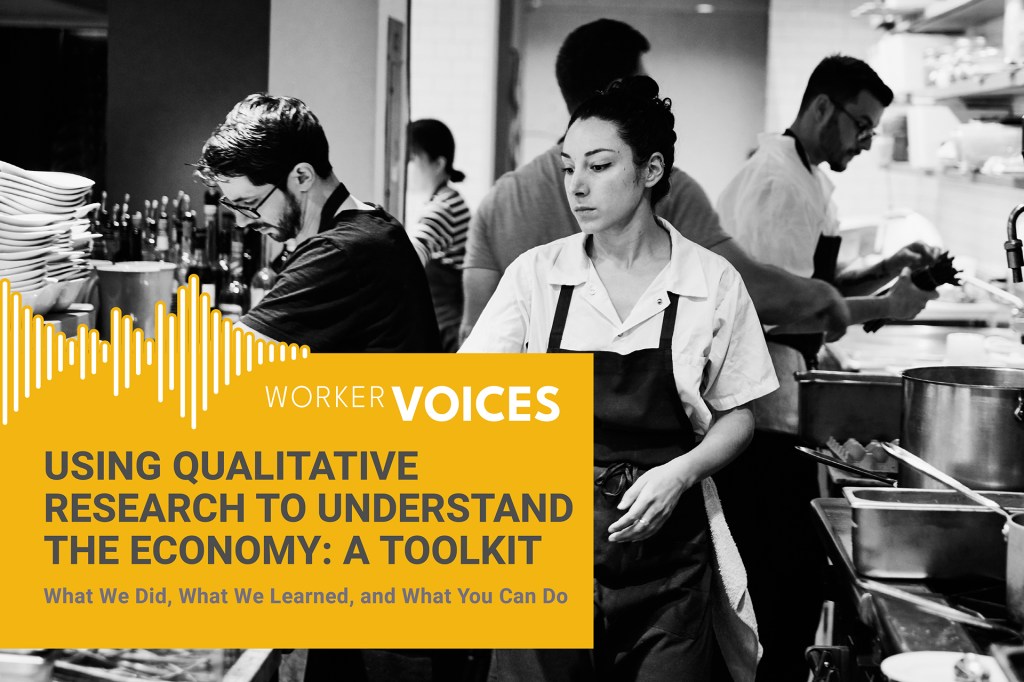
Using Qualitative Research to Understand the Economy: A Toolkit
The toolkit offers insights on using community-engaged qualitative research practices gleaned from the Federal Reserve’s Worker Voices Project and shows how others can use these methods in their own work. This toolkit is for researchers, policymakers, employers, and workforce organizations interested in partnering with the populations they serve and elevating community perspectives.
-
Worker Voices Special Brief: Self-Employment, Dreams Versus Reality
Worker Voices participants described weighing the tradeoffs of self-employment from the independence it gave to its income generation potential. This research found that participants were pushed or pulled into self-employment for a variety of factors and their experiences did not align with their expectations of this work.
-
Worker Voices: Shifting Perspectives and Expectations on Employment
Worker Voices provides a unique view into how job seekers and workers in lower-wage roles navigated the labor market at the onset of the COVID-19 pandemic and through recovery—and how it changed what they expect from a job.