



Author: Merissa Piazza
-
2026 Worker Perspectives Executive Summary
2025 focus groups with low- to moderate-income workers reveal concerns about rising costs, stagnant wages, financial stress, and limited job options. Despite these challenges, participants remain optimistic and pursue better pay, stability, and work-life balance. Find out more.
-
Worker Perspectives: Economic context and methodology
The Federal Reserve Bank of Atlanta, in partnership with several other Federal Reserve Banks, and Ipsos, studied workers with lower and moderate income in the labor market. This study better informs policies on employment and price stability. The research focused on views about jobs, financial security, and employment expectations.
-

Worker Perspectives: When every dollar counts: Inside the economic struggles of workers who earn low to moderate incomes
For many lower and moderate income workers and job seekers, survival is replacing economic mobility. This research explores how individuals navigate tight budgets and a challenging job market. Despite these obstacles, many spoke of their perseverance in the face of challenges and remained confident in their ability to navigate uncertainty.
-
2026 Worker Perspectives Report: When every dollar counts: Inside the economic struggles of workers who earn low to moderate incomes
The Worker Perspectives Report explores how workers are navigating rising costs, limited opportunities, and a challenging job market. To navigate these obstacles they are adapting finances and career plans, while also speaking hopefully about their personal ability to manage uncertainty. In their employment, they prioritize flexibility, work-life balance, and fair pay. Here’s what workers are…
-
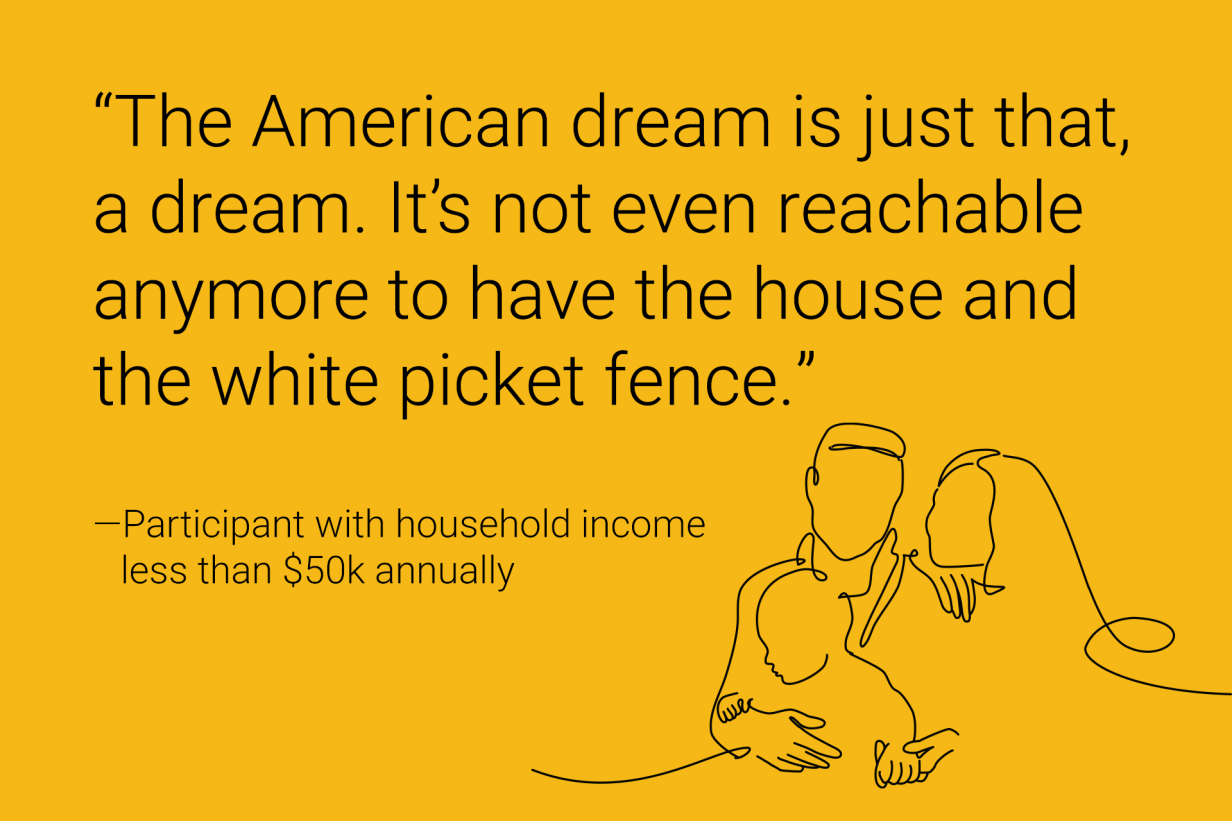
Worker Perspectives: Key Themes
The 2026 Worker Perspectives Report shows workers face financial instability from rising costs and inadequate wages. This instability limits their economic mobility. They struggle to find quality jobs amid new barriers, yet maintain personal confidence in their ability to persevere in the face of economic challenge despite low faith in the broader economy.
-
Worker Voices Special Brief: Self-Employment, Dreams Versus Reality
Worker Voices participants described weighing the tradeoffs of self-employment from the independence it gave to its income generation potential. This research found that participants were pushed or pulled into self-employment for a variety of factors and their experiences did not align with their expectations of this work.
-
Worker Voices: Shifting Perspectives and Expectations on Employment
Worker Voices provides a unique view into how job seekers and workers in lower-wage roles navigated the labor market at the onset of the COVID-19 pandemic and through recovery—and how it changed what they expect from a job.
-
Worker Voices: Shifting Perspectives and Expectations on Employment—Executive Summary
The Federal Reserve held focus groups with workers and job seekers with less than a bachelor’s degree, seeking to understand their perspectives and expectations on employment. Here’s what we heard.
-
Worker Voices: Shifting Perspectives and Expectations on Employment [2023]
How did workers in lower-wage jobs experience employment during the pandemic? The Federal Reserve held focus groups with workers and job seekers aged 20–55 years with less than a bachelor’s degree to find out.
-
Worker Voices: Shifting Perspectives and Expectations on Employment—Methodology
Have questions about Worker Voices? Get to know the methodology, coding approach, community-based participatory research principles employed, and limitations; statistics on participant demographics; and the facilitation guide questions used.