







Economic context and methodology
When every dollar counts: Inside the economic struggles of workers who earn low to moderate incomes
By Sarah Miller, Merissa Piazza, Elizabeth Bogue Simpson, Kristen Broady

Appendix A: Economic context
Changes in conditions from post-pandemic to today
In February 2020, monthly economic activity in the United States peaked, marking the end of a 128-month economic expansion, the longest in US history (National Bureau of Economic Research 2020). This expansion, which began in June 2009 following the Great Recession, was abruptly halted by the sudden public health crisis of the COVID-19 pandemic.
The economic recoveries following the Great Recession of 2007 to 2009 and the COVID-19 Recession, however, were very different. The Great Recession weakened household financial stability, restricted credit accessibility, dampened consumer spending, slowed business investment (Bernanke 2018), and resulted in elevated unemployment that persisted for years (Labonte and Weinstock 2022). The pandemic recovery period was much shorter in comparison, and today, six years after the onset of the pandemic shocks, macroeconomic trends are strong by historical standards where unemployment remains low (US Bureau of Labor Statistics n.d.a) and inflation has cooled from its 2022 peak (US Bureau of Labor Statistics 2022).
However, the recovery from the pandemic has had different effects on different parts of the economy and workers within it.
Rise of the K-shaped recovery
While the Great Recession recovery was slow for all segments of the population, regardless of income, the economic recovery era post-pandemic has resulted in a sharply bifurcated recovery between high-income and low- or moderate-income (LMI) populations. Beneath strong aggregate economic indicators, the pandemic recovery has been uneven, giving rise to a national debate on whether the US is experiencing what is commonly described as a K-shaped recovery, or a K-shaped economy, in which two different segments of the economy experience fundamentally different recovery paths at the same time (Dalton et al. 2021; Delavaga et al. 2022; Horwich 2026).
Pandemic recovery job gains were concentrated in higher-wage sectors while lower-wage sectors lagged, reinforcing a pattern of unequal recovery (Khattar and Roberts 2023). While aggregate employment levels broadly recovered, disparities also persisted along demographic and educational lines. Workers without a bachelor’s degree, younger workers, and workers of color encountered larger and more persistent labor market disruptions from the pandemic than workers with higher education credentials, reflecting structural differences in job characteristics and exposure to pandemic risks (Beland et al. 2023).
For workers in lower-income roles, many face job instability, precarious employment where work is uncertain, unstable, and insecure (Kallenberg and Vallas 2018) and economic hardships. In surveys with nationally representative samples, researchers found that just over a quarter reported stable and secure jobs (Despard, et al. 2026), and almost a third of low-income households reported month-to-month volatility in their income, compared to roughly one quarter of higher-income households (Bauer, et al. 2025). A survey of over 2,500 workers in retail, food service, and hospitality industries found that workers felt “deep economic hardship and insecurity,” feeling like they were falling behind, and sought stability rather than economic mobility (O’Herron and Schneider 2023, 1). How these workers navigate economic stability or instability as the recovery progresses has been a key question this research aims to understand.
In 2025 and into the present, the economy is operating in a different environment compared to the immediate post-pandemic recovery period of 2020-2022, but many of the distributional effects of the K-shaped recovery remain. Currently, the labor market remains relatively tight but shows a steady hold in a “low-hire, low-fire” trend with low unemployment and moderate job growth and job turnover (Brave, et al. 2026). As of January 2026, quit rates hovered around 2%, the lowest they have been since 2016. Job openings are at the lowest number they have been since the peak of the pandemic recession in the summer of 2020 (US Bureau of Labor Statistics, n.d.b), and hiring is the slowest it has been since 2013 (US Bureau of Labor Statistics, n.d.c). These data trends indicate there are fewer employment opportunities and less job movement. Historically, increased employment opportunities and job movement support greater economic mobility for low- and moderate-income workers (Federal Reserve Bank of Atlanta n.d.). Additionally, there is much anecdotal data collected by the Federal Reserve system that underpins data trends and provides evidence to suggest a K-shaped economy (Powell 2025). Taken together, these economic conditions and labor market dynamics can affect how workers navigate employment retention and job opportunities.


Inflation and wage pressures on the cost of living
Inflation, which surged in 2021 and 2022, has moderated, with the Consumer Price Index rising 2.4 percent over the 12-month period ending in January 2026 (US Bureau of Labor Statistics 2026). However, over the past 60 years inflation on prices for household necessities like food have risen much faster than other goods and services (Fuhrer 2024). The effects of these increased prices are not evenly distributed: Food prices rose faster in low-income neighborhoods, and the BLS estimates that from 2005 to 2020, low-income households experienced an average annual inflation rate that was 0.29% higher than high-income households (Klick and Stockburger 2022). The cumulative effect of these price increases is that a growing share of households are experiencing persistent financial strain, particularly lower-income households who spend a greater share of their budgets on necessities like rent, food, and medical care (Kim and Navarrete 2025). These issues have fueled a national discussion on the affordability debate for many American households including a third of middle-class families who struggle to afford basic necessities of food, housing, and child care (Stephens and Perry 2025).
When looking at wage trends, some data indicates that low-income households experienced higher-than-average wage and job growth following the pandemic (Gould et al. 2024; Luduvice, et al. 2025), but focusing only on these data points may be deceiving. Recent analysis by the Federal Reserve Bank of Cleveland shows that for workers in the bottom half of the wage distribution, the current levels of real wages are below where one would expect them to be based on trends from 2015 to 2020 (Fee 2026).
Rising costs and stagnant wages have caused LMI households to change their spending and consumer behavior as a result. Trends of “trading down” (buying cheaper products) or spending less overall have been consistently noted over the past year, particularly when looking at spending patterns of lower-income consumers (Deighton 2025; Khan 2025). But the consequences of costs outpacing wages extend beyond immediate consumption constraints. The financial stress this causes can generate lasting “scarring effects” such as underemployment and limited wage potential, widen skills mismatches, and heighten vulnerability to job displacement associated with automation and artificial intelligence (Malmendier and Shen 2024).
Economic recovery impacts on job quality
In the immediate post-pandemic recovery through 2022, workers may have had more influence on setting their wages and empowered job switching to enable greater economic mobility as a result of the larger number of available jobs per worker (Tran 2022). Historically, job switching helps to enable wage increases at a higher rate than those who remain in their jobs (Federal Reserve Bank of Atlanta n.d.). In the current low-hire, low-fire job market there are fewer job openings and more availability of labor, creating competition for jobs which may cause workers to stay in their jobs and focus more on income stability than on pursuing a career move or change (Mongey and Horwich 2024). This shift of workers staying in their current employment has been widely discussed in popular media, with headlines like “Job hugging is replacing job hopping” (Grant 2025, Kelley 2025, Iacurci 2025). Coupled with lower levels of hiring rates, workers could be further influenced to stay in their roles even if that job falls short of an ideal employment environment. Compared to the job market in 2022, indicators suggest market power has shifted (Zimmerman 2025), which may affect worker behavior related to staying in or switching jobs based on their perceptions of quality.
The ability to work remotely, or “telework,” was one example of how the pandemic shifted how people thought about work life balance and what they prioritized in their employment decisions. The COVID-19 pandemic accelerated the digital transformation of workplaces, expanding reliance on online meeting platforms, cloud-based systems, digital payment technologies, and online contracting (European Bank for Reconstruction and Development 2021). At the height of the pandemic, the US Bureau of Labor Statistics estimated that 44% of workers had the capacity to work from home during the early months of the crisis (Dalton and Groen 2022). Although access to telework varied across educational attainment levels, ages, and race of workers, many workers and employers benefitted from teleworking (Khaund 2023). Today, the job market has moderated in terms of job openings and wage growth, but also in work environments, with widespread return to office policies being implemented.

Additional research corroborated that the effects of the public health crisis broadly “unsettled” worker priorities, such that non-financial priorities became a part of what individuals seek in employment (Cech and Hiltner 2022). These priorities, financial and non-financial, reflect characteristics of job quality. While there is no single definition of job quality, there are common elements. These include a priority on compensation as a foundational need, but overall job quality is far more than a measure of compensation alone. Job quality also touches on economic stability, mobility, treatment, agency, flexibility, and meaning or purpose in work (Dunne and Wardrip 2023).
These characteristics are meaningful to more than workers. Employers use them to assess their practices and policies to become an “employer of choice” (Culina, et al. 2025) as a strategy to increase their competitive advantage in the labor market and positively affect employee recruitment, attraction, and retention. Still, a 2025 survey of American workers found that 60% of workers reported they lack quality jobs—meaning positions in which their basic financial needs were met, they felt safe and respected, and they could grow their skills, have a voice in decisions that affect them, and exercise some control over their time and work (Gallup and Jobs For the Future 2025).

Future impacts of technological disruptions on the job market
Layered onto shifts in the labor market previously discussed is rapid progress in automation and artificial intelligence (AI). These technological advancements have the potential to alter the structure of work and the organization of production, but the long-term effects on jobs, the composition of skills needed for future jobs, and potential worker displacement are unknown. Research conducted by Frey and Osborne in 2017 found that of 700 US occupations, nearly half of jobs faced a high risk of automation within the following five to ten years. Since that time, technical capabilities have advanced significantly (Broady et al. 2025) with progress in robotics, large language models, and generative AI reducing many of the technical constraints previously limiting automation. These developments indicate that automation risk is no longer confined to narrowly defined routine or manual tasks, and that a growing set of occupations across the wage and skill distribution may be restructured, augmented, or displaced by AI (Tomlinson et al. 2025).

Through 2025, economic growth was increasingly tied to investment in advanced technologies like AI, alongside continued demand for highly skilled workers in professional, technical, and healthcare fields. These forces tend to benefit workers with postsecondary education and specialized skills, while workers in lower-wage service occupations face greater exposure to automation, scheduling volatility, and slower wage growth (Kneebone and Holmes 2025). As a result of these technological disruptions, combined with other demographic and education level shifts in the labor market (Smith et al. 2025), the K-shaped recovery could transition from a short-term post-pandemic phenomenon into a more structural pattern of divergence in this economy that could challenge traditional notions of labor supply and demand.

ECONOMIC COntEXt References
Bauer, Lauren, Chloe N. East, and Olivia Howard. January 9, 2025. ”Low-Income Workers Experience—by Far—the Most Earnings and Work Hours Instability.” Hamilton Project https://www.hamiltonproject.org/publication/post/low-income-workers-experience-by-far-the-most-earnings-and-work-hours-instability/.
Beland, Louis-Philippe, Abel Brodeur, and Taylor Wright. March 15, 2023. ”The Short-Term Economic Consequences of COVID-19: Exposure to Disease, Remote Work and Government Response.” PLOS ONE 18, no. 3: e0270341. https://doi.org/10.1371/journal.pone.0270341.
Bernanke, Ben S. 2018. ”The Real Effects of Disrupted Credit: Evidence from the Global Financial Crisis.” Brookings Papers on Economic Activity. https://www.brookings.edu/wp-content/uploads/2018/09/Bernanke_final-draft.pdf.
Brave, Scott A., Ben Henken, Ezra Karger, and Aryan Safi. March 2026. ”A Closer Look at the ‘Low-Hire, Low-Fire’ Labor Market with the Chicago Fed Labor Market Indicators.” Chicago Fed Insights. https://www.chicagofed.org/publications/chicago-fed-insights/2026/low-hire-low-fire-chicago-fed-labor-market-indicators.
Broady, Kristen E., Darlene Booth-Bell, Anthony Barr, and Aisha Meeks. 2025. ”Automation, Artificial Intelligence, and Job Displacement in the US, 2019–22.” Labor History (2025): 1–17. https://doi.org/10.1080/0023656X.2025.2477153.
Cech, Erin A., and Sofia Hiltner. 2022. “Unsettled Employment, Reshuffled Priorities? Career Prioritization among College-Educated Workers Facing Employment Instability during COVID-19.” Socius 8 (2022). https://doi.org/10.1177/23780231211068660.
Culina, Jeran, and Amanda Bergson-Shilcock, with Brooke Valle. October 2025. ”Big Insights from Small and Mid-Sized Businesses.” National Skills Coalition. https://nationalskillscoalition.org/wp-content/uploads/2025/10/BLU_BigInsights_Oct_2025.pdf.
Dalton, Michael, and Jeffrey A. Groen. March 2022. ”Telework during the COVID-19 pandemic: estimates using the 2021 Business Response Survey.” Monthly Labor Review, U.S. Bureau of Labor Statistics. https://doi.org/10.21916/mlr.2022.8.
Dalton, Michael, Jeffrey A. Groen, Mark A. Loewenstein, David S. Piccone, and Anne E. Polivka. August 23, 2021. “The K-Shaped Recovery: Examining the Diverging Fortunes of Workers in the Recovery from the COVID-19 Pandemic Using Business and Household Survey Microdata.” The Journal of Economic Inequality 19, no. 3: 527–50. https://doi.org/10.1007/s10888-021-09506-6.
Deighton, Katie. December 23, 2025. ”The Weird and Wonderful Consumer Trends Steering Brands into 2026.” Wall Street Journal. https://www.wsj.com/articles/the-weird-and-wonderful-consumer-trends-steering-brands-into-2026-342f0183.
Delavega, E., J. Meiman, C. C. Malone, M. Hirschi, A. L. Hunter, and S. L. Neely-Barnes. 2022. “The Two Pandemics: The Disparate Impact of the COVID-19 Pandemic and the K-Shaped Recovery.” Journal of Policy Practice and Research 3, no. 1: 36–51. https://doi.org/10.1007/s42972-022-00048-3.
Despard, Mathieu, Stephen Roll, Kristian Fuzi, Adele Atkinson, and Louise Overton. 2026. ”Workforce Economic Inclusion and Stability in the United States and United Kingdom: Summary Findings.” CSD Research Summary No. 26-06. Washington University, Center for Social Development. https://openscholarship.wustl.edu/csd_research/992/.
Dunne, Theresa, and Keith Wardrip. 2023. “Worker Voices Special Brief: Perspectives on Job Quality.” Fed Communities. https://doi.org/10.59695/20230925.
European Bank for Reconstruction and Development. November 2021. ”The EBRD’s Approach to Accelerating the Digital Transition, 2021-25.” https://www.ebrd.com/content/dam/ebrd_dxp/assets/pdfs/digitalisation/EBRD-digital-approach-2021-25.pdf.
Federal Reserve Bank of Atlanta. n.d. ”Wage Growth Tracker.” Center for Human Capital Studies. Accessed April 1, 2026, https://www.atlantafed.org/research-and-data/data/wage-growth-tracker#panel=1.
Fee, Kyle D. 2026. ”Dollars and Cents: Real Hourly Wage Growth across the Lower Half of the Wage Distribution.” Federal Reserve Bank of Cleveland, Community Development Reports. https://doi.org/10.26509/frbc-cd-20260218.
Frey, Carl Benedikt, and Michael A. Osborne. 2017. ”The Future of Employment: How Susceptible Are Jobs to Computerisation?” Technological Forecasting and Social Change 114: 254–80. https://doi.org/10.1016/j.techfore.2016.08.019.
Fuhrer, Jeffrey C. July 29, 2024. ”The Cost of Being Poor Is Rising, and It’s Worse for Poor Families of Color.” Brookings Institution. https://www.brookings.edu/articles/the-cost-of-being-poor-is-rising-and-its-worse-for-poor-families-of-color/.
Gallup and Jobs For the Future. October 2025. ”The American Job Quality Report.” https://www.jff.org/wp-content/uploads/2025/10/AmericanJobQualityReport_Final_10142025.pdf.
Gould, Elise, Katherine deCourcy, Joe Fast, and Ben Zipperer. March 24, 2025. ”Strong Wage Growth for Low-Wage Workers Bucks the Historic Trend.” Economic Policy Institute. https://www.epi.org/publication/strong-wage-growth-for-low-wage-workers-bucks-the-historic-trend/.
Grant, Conor. September 10, 2025. ”Job Hugging Is Replacing Job Hopping.” Wall Street Journal. https://www.wsj.com/lifestyle/careers/job-hugging-is-replacing-job-hopping-28be4c1d.
Horwich, Jeff. March 20, 2026. ”Have US Consumers Gone K-Shaped? A Review of the Data.” Federal Reserve Bank of Minneapolis. https://www.minneapolisfed.org/article/2026/have-us-consumers-gone-k-shaped-a-review-of-the-data.
Iacurci, Greg. August 18, 2025. ”‘Job Hugging’ Has Replaced Job-Hopping, Consultants Say, as Workers Cling to Current Roles.” CNBC. https://www.cnbc.com/2025/08/18/job-hugging-job-hopping.html.
Kalleberg, Arne L., and Steven P. Vallas, eds. 2018. “Precarious Work.” Research in the Sociology of Work, vol. 31. Bingley, UK: Emerald Publishing. https://arnekalleberg.web.unc.edu/wp-content/uploads/sites/7550/2017/12/Precarious-Work.RSW_.pdf
Kelley, Lora. October 10, 2025. ”Have You Hugged Your Job Today?” New York Times. https://www.nytimes.com/2025/10/10/business/job-hugging-labor-market.html.
Khattar, Rose, and Lily Roberts. November 2, 2023. ”5 Reasons Why the Labor Market Recovery Was Historic.” Center for American Progress. https://www.americanprogress.org/article/5-reasons-why-the-labor-market-recovery-was-historic/.
Khan, Natasha. October 27, 2025. ”The Lengths Americans Are Willing to Go to Make Every Penny Count.” Wall Street Journal. https://www.wsj.com/economy/consumers/the-lengths-americans-are-willing-to-go-to-make-every-penny-count-a79501fd.
Khaund, Neil. August 3, 2023. ”Six Reasons Why Remote Work Is Good For Employees And Your Bottom Line.” Forbes. Accessed April 2, 2026. https://www.forbes.com/councils/forbesbusinesscouncil/2023/08/03/six-reasons-why-remote-work-is-good-for-employees-and-your-bottom-line/.
Kim, Seula, and Michael A. Navarrete. 2025. ”Geospatial Heterogeneity in Inflation: A Market Concentration Story.” Federal Reserve Bank of Atlanta Working Paper 2025-15. https://doi.org/10.29338/wp2025-15.
Klick, Joshua, and Anya Stockburger. December 2022. ”Inflation Experiences for Lower and Higher Income Households.” US Bureau of Labor Statistics. https://www.bls.gov/spotlight/2022/inflation-experiences-for-lower-and-higher-income-households/home.htm.
Kneebone, Elizabeth, and Natalie Holmes. 2025. “On-the-Job Exposure to AI Among Lower-Income Workers.” Federal Reserve Bank of San Francisco Community Development Research Brief 2025-03. https://doi.org/10.24148/cdrb2025-03.
Labonte, Marc, and Lida R. Weinstock. 2022. “US Economic Recovery in the Wake of COVID19: Successes and Challenges.” Report No. R47115. Congressional Research Service. https://www.congress.gov/crs-product/R47115
Luduvice, André Victor D., Anaya Truss-Williams, and Christopher J. Walker. 2025. ”Did Inflation Affect Households Differently? A Look at the Postpandemic Inflation and Wage Growth Dynamics.” Federal Reserve Bank of Cleveland, Economic Commentary 2025-11. https://doi.org/10.26509/frbc-ec-202511.
Malmendier, Ulrike, and Leslie Sheng Shen. 2024. ”Scarred Consumption.” American Economic Journal: Macroeconomics 16 (1): 322–55. https://doi.org/10.1257/mac.20210387.
Mongey, Simon, and Jeff Horwich. 2024. ”Fewer Openings, Harder to Get Hired: US Labor Market Likely Softer Than It Appears.” Federal Reserve Bank of Minneapolis. https://www.minneapolisfed.org/article/2024/fewer-openings-harder-to-get-hired-us-labor-market-likely-softer-than-it-appears.
National Bureau of Economic Research. June 8, 2020. ”Business Cycle Dating Committee Announcement June 8, 2020.” https://www.nber.org/news/business-cycle-dating-committee-announcement-june-8-2020.
O’Herron, Charlotte, and Daniel Schneider. June 2023.” Dreams Deferred: Downward Mobility and Making Ends Meet in the Service Sector.” Shift Project Research Project. https://www.hks.harvard.edu/publications/dreams-deferred-downward-mobility-and-making-ends-meet-service-sector.
Powell, Jerome. October 29, 2025. ”Transcript of Chair Powell’s Press Conference.” Board of Governors of the Federal Reserve System. https://www.federalreserve.gov/mediacenter/files/FOMCpresconf20251029.pdf.
Smith, Nicole, Martin Van Der Werf, Madeleine Adelson, and Jeff Strohl. 2025. “Falling Behind: How Skills Shortages Threaten Future Jobs.” Georgetown University Center on Education and the Workforce, 2025. https://cew.georgetown.edu/skills-shortages.
Stephens, Hannah, and Andre M. Perry. December 2, 2025. “In Every Corner of the Country, the Middle Class Struggles with Affordability.” Brookings Institution. https://www.brookings.edu/articles/in-every-corner-of-the-country-the-middle-class-struggles-with-affordability.
Tomlinson, Kiran, Sonia Jaffe, Will Wang, Scott Counts, and Siddharth Suri. 2025. ”Working with AI: Measuring the Applicability of Generative AI to Occupations.” https://doi.org/10.48550/arXiv.2507.07935.
Tran, Tu-Uyen. February 7, 2022. ”In This Tight Labor Market, What Do Workers Want?” Federal Reserve Bank of Minneapolis. https://www.minneapolisfed.org/article/2022/in-this-tight-labor-market-what-do-workers-want.
US Bureau of Labor Statistics. February 13, 2026. ”Consumer Price Index Summary.” Accessed February 17, 2026. https://www.bls.gov/news.release/archives/cpi_02132026.htm.
US Bureau of Labor Statistics. July 18, 2022. “Consumer prices up 9.1 percent over the year ended June 2022, largest increase in 40 years,” The Economics Daily. Accessed April 1, 2026. https://www.bls.gov/opub/ted/2022/consumer-prices-up-9-1-percent-over-the-year-ended-june-2022-largest-increase-in-40-years.htm.
US Bureau of Labor Statistics. n.d.a “Unemployment Level [LNU03000000],” retrieved from FRED, Federal Reserve Bank of St. Louis. Accessed February 18, 2026. https://fred.stlouisfed.org/series/LNU03000000.
US Bureau of Labor Statistics. n.d.b “Quits: Total Nonfarm [JTSQUR],” retrieved from FRED, Federal Reserve Bank of St. Louis. Accessed March 17, 2026. https://fred.stlouisfed.org/series/JTSQUR
US Bureau of Labor Statistics. n.d.c “Job Openings and Labor Turnover Survey, Total US job openings.” Accessed March 17, 2026. https://data.bls.gov/timeseries/JTS000000000000000JOL.
Appendix B: Methodology

This research was designed to identify insights into worker perspectives on the economy, examining key elements such as employment challenges, financial security, and career outlooks. By focusing on individual worker experiences, this research provides critical qualitative data that aligns with current economic indicators and helps identify both trends in workforce dynamics and also insights on consumption and labor market behavior. National macro insights on worker and job seeker sentiment, particularly those individuals who have marginal labor market attachment, does not capture the breadth of individual lived experiences navigating economic shocks and structural barriers to employment that affect labor market participation. The insights identified through this research enhance the Federal Reserve’s understanding of the labor market and broader economic conditions to support its dual mandate of full employment and price stability.

Research team
The Federal Reserve Bank of Atlanta led the project and partnered with the Federal Reserve Banks of Chicago, Cleveland, Minneapolis, and Philadelphia, with support from the Federal Reserve Board of Governors, to conduct this research. The Atlanta Fed enlisted Ipsos, a global market research consulting company, to support distinct aims of this research, including recruiting a representative sample from the general population (a departure from the convenience sample methodology used in the first iteration of this research in 2022), managing personally identifiable information of panel participants, and coordinating logistics of the focus groups.
The Federal Reserve research team consisted of a project lead, subject matter experts, and qualitative research analysts. The project protocols and methodology design were informed and guided by a Project Advisory Committee made up of various subject matter experts from a subset of the Federal Reserve Banks. Members of this group included community affairs officers, outreach specialists, labor economists, and qualitative research experts.
Qualitative research design
This research sought to investigate workers’ experiences and perspectives via research questions in four distinct areas:
- Labor market experiences — What are workers’ experiences with employment, job searches, and financial household decisions during economic ups and downs, and how do those experiences impact labor market attachment? What are workers’ and job seekers’ perspectives on drivers of and barriers to economic stability and mobility? How much is technology disrupting employment opportunities or employment behavior of the low- to moderate-income population?
- Employment expectations — Are workers changing what they expect from a job? How do these changing expectations inform the choices they make around work, career, education, caregiving, etc.? How does their decision making affect their participation in the labor market?
- Financial security and costs – Do workers and job seekers consider themselves to be economically or financially stable? Have they noticed significant changes in pricing or costs for their household needs? Do they have enough savings to cover an emergency?
- Labor market confidence – How confident are workers and job seekers in their ability to get a job now, if they needed to? What is their confidence in the economy more broadly?
Focus groups served as the qualitative data collection method to understand the nuanced perspectives of job seekers and workers, especially those earning low or moderate incomes, as they navigate economic ups and downs. Qualitative analysis methods were used to identify experiences, attitudes, and perceptions that influence worker behavior, as well as barriers to and motivators for behavioral change. An inductive approach was used to ask questions, identify themes, and find conclusions.
During these sessions, participants were asked semi-structured questions from a facilitation guide centered around their experience with the labor market and broader economy. Semi-structured design of the focus group discussions included a core set of standard questions which allowed for consistency across all conversations while allowing session facilitators liberty to ask follow-up questions based on participant responses and group discussions. The creation of the facilitation guide was an iterative process informed by advisory committee insights, pilot focus group sessions, and the project team.

The facilitation guide design, participant recruitment, and participant engagement all followed “do no harm” expectations of ethical research standards. Participants were required to agree to the informed consent before being placed in the candidate pool. An example facilitation guide can be found in Appendix D. This guide was translated for the facilitators conducting focus groups in Spanish.
A total of 11 virtual focus groups were conducted over the fall and winter of 2025. A final validation session was held in April of 2026 to confirm findings and descriptive language used in the research. Focus groups were conducted virtually via Microsoft Teams, with a phone-in option, both to facilitate broad geographic diversity of the participants and to minimize the travel burden for the research team and the research participants. Ipsos staff provided technical support for the participants and Federal Reserve Bank staff moderated all of the focus groups.
Focus groups were held both in the afternoon and after traditional working hours to minimize potential conflicts for participants. Each focus group was 90 minutes in length. Additionally, two of the 11 sessions were conducted exclusively in Spanish to reach Latin and Hispanic subgroups of the population.
Participants’ comments included in this research reflect personal perspectives and do not necessarily reflect those of the Federal Reserve System or the Board of Governors of the Federal Reserve. Similarly, the research presented are those of the authors; their views do not necessarily reflect those of the Federal Reserve Banks or the Federal Reserve System or the Board of Governors of the Federal Reserve.

Participant recruitment and selection
Sample definition
Because of the project’s goal to speak to workers and job seekers in lower-wage roles, all participants identified for this project resided in the United States. Additionally, they all were:
- Of working age, defined as over 18
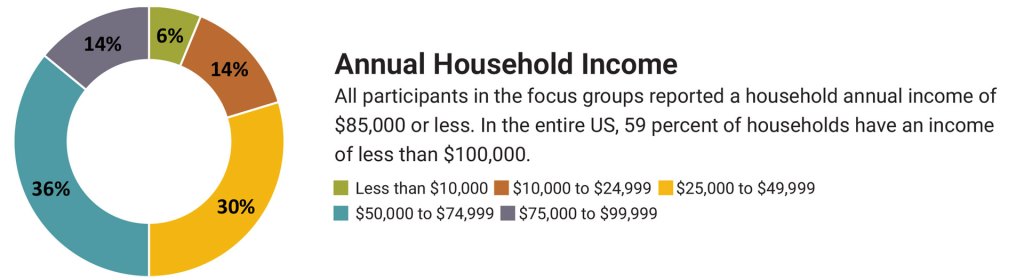
- A member of a low- or moderate-income household, defined as having annual income of $85,000 or less
- Working or looking for work (defined by not unemployed due to retirement, disability, or “other”)
The $85,000 income threshold was chosen to identify participants from low- to moderate-income households. According to the US Census Bureau, in 2024 the median annual household income in the United States was $83,730, meaning that half of the population makes that amount or less. Additionally, the research team chose this definition of low-to-moderate income, rather than the definition in the Community Reinvestment Act (which refers to individuals or geographic census tracts with incomes below 80% of the area median family income), because we did not receive enough geographic information about participants to correctly identify the area median family income for their respective locations.
Participant outreach, incentives, and selection
Recruitment for participation in focus groups was conducted via Ipsos’s Knowledge Panel.i Selected panel members (based on the criteria above) received an email invitation to complete the recruitment survey at their earliest convenience. According to Ipsos, the survey was sent to 1,128 panel members, had a 63 percent completion rate, and a 25 percent qualification rate. Once qualified, sample data was provided via Excel spreadsheets containing Case ID numbers and demographic information, but no personal identifiable information was shared with the Federal Reserve Bank of Atlanta to utilize in the selection of invited attendees. invited attendees.
Initially, the Federal Reserve conducted analysis on the qualified sample for each focus group date, for which an afternoon and evening session was offered. The analysis used participant gender, race/ethnicity, age, educational attainment, household income, and geographic location to determine if the afternoon or evening session (1) had more available participants, and (2) was more diverse based upon the dimensions analyzed.

The qualification survey had an initial pilot launch in English on October 1, 2025. Complete launch invitations in both English and Spanish were distributed on October 15. To supplement the participant pool, follow-up invitations were issued on November 25 (English version) and December 2 (Spanish version). Data collection concluded on December 18 following the completion of all scheduled sessions. Email prompts were dispatched to non-participants three days after the initial invitation was sent; a subsequent prompt followed three days later; and a closing prompt was sent after an additional three-day interval.
Selected participants received an email inviting them to the session, as well as reminder emails, and a reminder call on the day of the focus group session. A total of 183 individuals were invited to the 11 focus groups. Both evening and afternoon sessions were offered to accommodate a variety of work schedules. Of those invited, a total of 63 individuals participated in focus group sessions. After each session, panelists received remuneration from Ipsos for their participation.
Data file deliverables and descriptions
Following each session, Ipsos supplied a record of attendees and a transcript. In one instance, a participant’s identity could not be matched due to a discrepancy in the name they gave and their premature exit from the session. Consequently, we were unable to associate them with a CaseID number, making their demographic and questionnaire information inaccessible. Upon completion of the focus groups, Ipsos provided a comprehensive file of all individuals sampled for the survey, including their panel and questionnaire information where available. Ipsos also provided the Federal Reserve with cleaned transcripts with all personally identifiable information removed.
Focus group transcript coding and analysis
To analyze the qualitative data, the coding team updated the codebook used by the initial Worker Perspectives research team from 2023 with the current questionnaire. Next, they used an iterative approach to define specific codes for the final codebook as they reviewed focus group transcripts.
The codebook was developed by Federal Reserve System analysts from the transcripts to include broad themes, definitions, examples, and relevant subcodes. Themes derived from the transcript data and included in the codebook as high-level (“parent”) codes include (1) employment status, (2) negative/poor job qualities, (3) preferred/positive job qualities, (4) barriers to employment, (5) education and training, (6) personal finances, and (7) perceptions of economic conditions.
A larger number of subcodes (“child” codes) were developed to further analyze content pertaining to secondary themes. Using the codebook, two coding team members reviewed each transcript independently and then jointly reviewed their input to validate codes and increase intercoder reliability. In addition to transcripts, analysts and coders had access to video and audio recordings of the sessions. An analysis of all transcripts was conducted by the authors of this report, the coding team, and the research team. The coding team, report authors, and analysts then worked directly with the code transcripts to examine overlap of codes, quotes within individual codes, and language used to describe themes.
When talking about themes in this report, “most” participants refers to 51 percent of participants or more, “many” refers to less than 51 percent but more than 10 participants, and “a few” refers to fewer than 10 participants.
Community-based participatory research principles
Workers were engaged throughout the research design and implementation process. Workers offered insights to help iterate the facilitation guide used in each focus group and to validate research findings to ensure that framing and language use resonated. Pilot focus groups were organized to enhance facilitation techniques, optimize the sequence and organization of questions, and eliminate procedural obstacles from the screening survey while improving instructions for accessing the online focus group platform.
To validate findings from this research, one additional focus group was held in April of 2026 with a subset of workers initially engaged. During this validation session, research findings and summary of key themes from data coding, data analysis, and research framing language were shared to confirm that the qualitative processes resulted in an accurate reflection of participant sentiment and perspectives from the 2025 discussions. These conversations allowed for confirmation of findings and ensured language used throughout the research publication was accurately reflective of their perspectives and respectful of the participants’ circumstances.
Limitations
Utilizing online focus groups means this study has constraints regarding capturing perspectives from workers or job seekers facing challenges with internet connectivity or electronic device access, as an email account was necessary to complete the demographic survey, obtain the personalized session access link, and collect the participation stipend. This data collection and distribution approach excluded people without email accounts, creating response bias within the sample. When necessary, participants received a telephone number to join the session and take part in the focus group.
Additionally, conducting qualitative research involves accepting tradeoffs, such as gaining detailed understanding of the topic while understanding these outcomes may not apply universally to the wider population. The research team recognizes these constraints. At the same time, qualitative research methodologies and analysis can identify overarching patterns.


Appendix C: Demographics
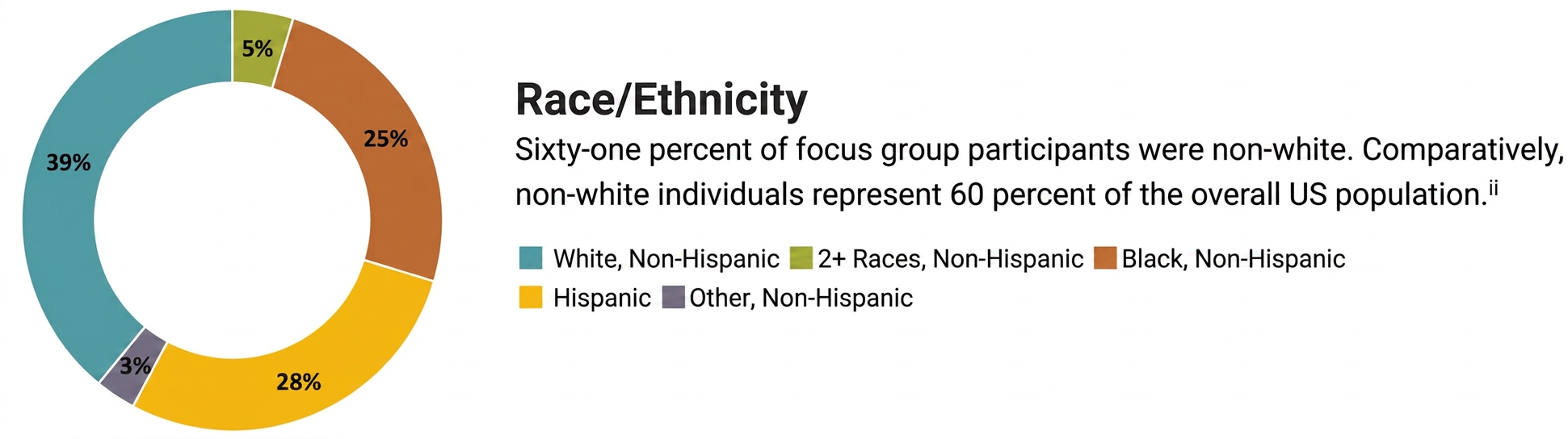
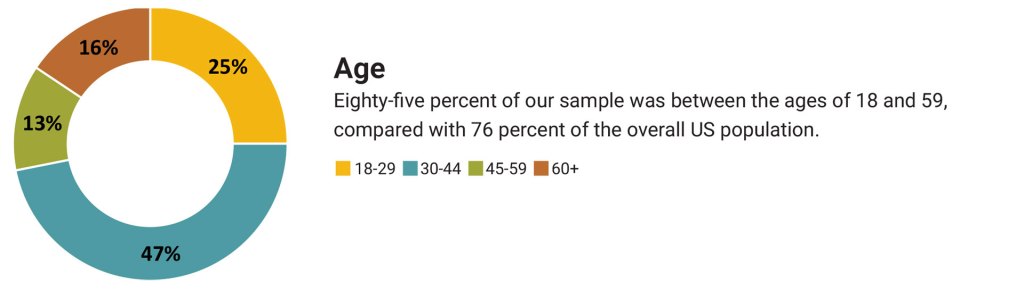
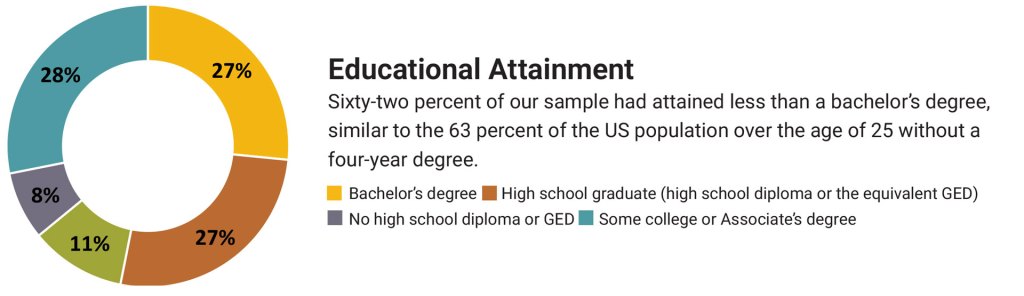
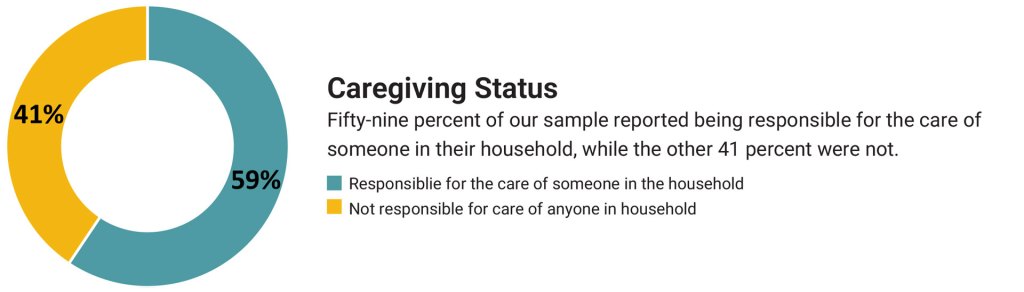
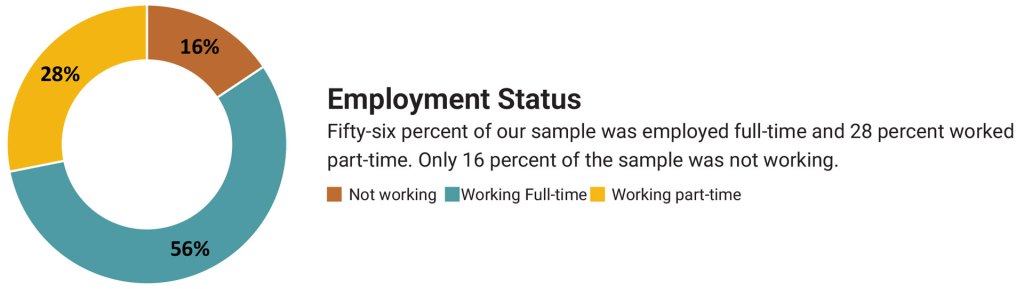
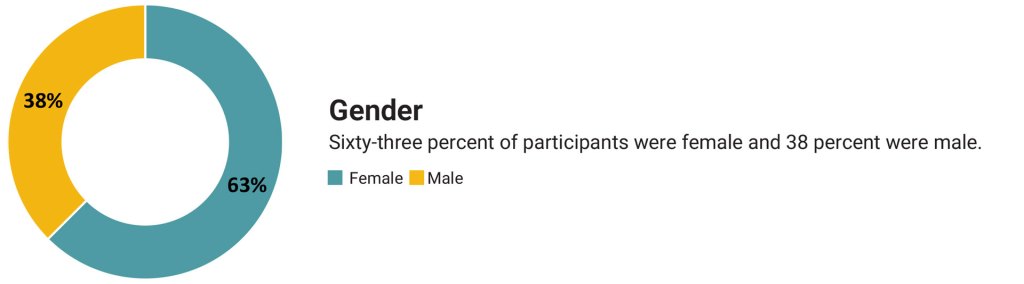
This research includes insights from 11 focus groups conducted from October 8, 2025 – December 17, 2025, including two conducted in Spanish. A total of 63 individuals* from 26 states participated in the focus groups.
*One focus group participant could not be associated with a KnowledgePanel member ID, and therefore there is no demographic information available for this participant.
Appendix D: Example Facilitation Questions

Employment Status
- How would you describe your employment history in the last year?
- Is anyone working less hours than they want right now?
- Based on your current or recent job, was your income able to cover your household costs?
- If you have discretionary income (meaning more money than what’s needed to cover bills), is that steady or periodic?
- Has your household financial situation improved or worsened over the past 6 months?
- Do you consider yourself to be economically or financially stable? When you hear the term “economic stability,” what does that mean to you?
Inflation and Household Costs
- Have you noticed significant changes in pricing or costs for your household needs? If so, where have you experienced changes? Either increases or decreases.
- Has your income been consistent? Meaning your wages or salary has been steady?
- If you’ve experienced an increase in your costs of living, how are you managing that?
Job Change and Looking for Work
- Is anyone planning to look for another job in the next three months? If so, what is the reason you’re looking for another job?
- When you look for a new job, are you looking for something specific?
- For those who have changed jobs in the last year, please tell us more about why you changed jobs?
- What tools do you use to help your job search?
- Has anyone considered relocating to find a new or better job? Why or why not?
- If you are in a new job, is the employment experience better than your last job? Why or why not?
- Is anyone not working and not looking for work right now? What are some factors that have caused you not to look for work?
- For those who are working and NOT looking for a new job, tell us about your experience working at your job? Why are you staying in that role?
Opportunities and Challenges in Employment
- Is there anything that you would consider a barrier or a challenge in finding and maintaining employment?
- We talked about challenges because they are easy to discuss, but let’s talk about what is going well. Where have you seen positive changes in the job market – either in your current or most recent job or through your job search?
Additional or Self-Employment
- Did anyone engage in a second job, this could be a “side-hustle,” any type of gig work, or something that supplements your income? For example, does anyone drive for Lyft/Uber, do any food or package delivery, sell things on online marketplaces like Etsy, content creation?
- If you did enter into this type of employment or business, why did you do this?
- Has anyone ever considered or has plans to own their own business?
Education and Skill Development
- Has anyone enrolled in or completed an education/skills training program within the last year?
- Did this training or degree/certificate help your job search or with your current job?
- Have you utilized any career services or career placement services? Were those services helpful? Why or why not?
Defining Job Quality
- When you think about a quality job, what does that mean to you?
- How do you prioritize these factors? What’s necessary for you, meaning it has to be there vs. what’s nice to have but not necessary?
- How willing are you to look for new jobs if your current job doesn’t meet your definition of quality?
Shifting Recruiting Requirements
- For those in an active or recent job search, tell us about that experience. What has been working and what has been a challenge?
- As you have been looking for jobs, have you noticed any changes in what employers are asking for from job candidates?
Technology Changes
- We all hear a lot about changing technology. Artificial Intelligence, or “AI,” is a term we hear every day now, far more than a year ago. When you hear about AI how does that make you react when you think about its use in relation to your job in particular or employment in general?
- What role has AI or other advanced technologies played in your current or most recent job(s)?
- What role has AI or other advanced technologies played in your current or most recent job search?
Confidence in the Labor Market
- In thinking ahead to next year, are you more or less confident about the job market? More directly put, how are you feeling about the job market?
- If you wanted to or needed to find another job right now, how confident are you that you could find one?
- For those that want to stay at their current job, do you have a sense of stability in that role? Has that stability increased or decreased over the last 6 months?
Participants’ comments included in this research reflect personal perspectives and do not necessarily reflect those of the Federal Reserve System or the Board of Governors of the Federal Reserve. Participants’ comments included in this research reflect personal perspectives and do not necessarily reflect those of the Federal Reserve System, Fed Communities, or the Board of Governors of the Federal Reserve.
Similarly, the research presented are those of the authors; their views do not necessarily reflect those of the Federal Reserve Banks or the Federal Reserve System, Fed Communities, or the Board of Governors of the Federal Reserve.
Endnotes
i Ipsos. “KnowledgePanel: A Methodological Overview.” Accessed June 1, 2026. https://www.ipsos.com/sites/default/files/ipsosknowledgepanelmethodology.pdf.
ii US population references are according to the US Census Bureau’s 2024 American Community Survey 1-year estimates.