






2026 Worker Perspectives Report
When every dollar counts: Inside the economic struggles of workers who earn low to moderate incomes
By Sarah Miller, Merissa Piazza, Elizabeth Bogue Simpson, Kristen Broady

“I don’t think anybody [in this focus group] makes enough to be comfortable. We make enough just to live.”
—Participant with household income less than $50k annually




Introduction: Gathering worker perspectives

What does it mean to ‘tighten your belt’ when you’ve already run out of notches? Managing every dollar has become the economic reality for many low- to moderate-income (LMI) Americans who have been “tightening their belts” and “buying less” (Powell 2025). While there have been broad wage gains across the labor market since 2020, wage rates for low- to moderate-income workers did not markedly increase until 2023 and have not kept pace with inflation, suggesting that the positive rising economic tide may not lift all boats for workers and job seekers (Rodgers 2025). Households make financial decisions every day, but when income falls short of the cost of living, these decisions often involve hard tradeoffs. Daily decisions between groceries and rent, medication and utilities, economic survival and employment mobility are a commonplace calculus for many workers. These realities are difficult to see in aggregate data alone.
This research aims to capture perspectives and lived experiences of these workers in low- to moderate-income circumstances. The insights from workers with less economic stability provide a unique window into the barriers they must navigate and hard choices many households have to make. These insights can help to better inform policies and practices that affect economic stability and resilience. Understanding these ground-level realities strengthens the Federal Reserve’s ability to monitor labor market dynamics tied to its dual mandate.
The Worker Perspectives Project was designed to speak directly with workers and job seekers from low- to moderate-income (LMI) households to shed light on the “why,” “what,” and “how” behind economic and labor market trends represented by quantitative data. Initially launched in 2022, this qualitative research allows for a meaningful way to study the economic decisions and labor market behavior of individuals. Yet, such methods are relatively scarce in economic research (Lenger 2019).
For this project, Federal Reserve researchers worked with Ipsos (Ipsos 2026), a market research company, to recruit participants from across the United States. This study represents analysis of qualitative data from 63 participants in 11 focus groups, including Spanish language sessions, conducted in late 2025. All of the participants were in households of various sizes with an income of $85,000i or less. This income level was chosen as the threshold for inclusion because it represents the income level for approximately 50% of US households (King 2025). Participants’ comments reflect personal perspectives and are not intended as policy analysis; their views are their own and do not necessarily reflect those of the Federal Reserve System. (For more details, see Appendix B: Methodology).

A lot has changed in the macroeconomy since the initial Worker Perspectives research was conducted in 2022. When the most recent iteration of the research collected data in 2025, unemployment remained low by historical standards, but job growth remained flat (US Bureau of Labor Statistics 2026). Despite strong aggregate economic trends through the pandemic recovery period, the recovery has been uneven across income levels. This unevenness has given rise to discussion on whether the economy is experiencing a K-shaped recovery in which two different segments of the population experience fundamentally different recovery paths at the same time (Dalton et al. 2021).
Notably, at the time of the focus groups between October and December of 2025, inflation remained somewhat elevated (Board of Governors 2026), putting pressures on costs of living and household essentials while, at the same time, real wage growth had moderated (Rodgers 2025). Additionally, navigating the labor market is complicated by the impacts, both present and future, of technological advancements in hiring, job structure, and potential worker displacement. Changing conditions of the economy, the discussion around a K-shaped recovery, inflation, and wage pressures on costs of living, job quality considerations, and future impacts of technical disruptions to the job market are covered in more detail in Appendix A: Economic context of this report.
Because of these shifts in the economy and the labor market, we renewed our research by hosting focus groups in 2025 with LMI workers and job seekers. We wanted to learn how they encountered these economic shifts in costs and employment opportunities, and how those experiences influenced their household choices and labor market behaviors. Our research questions included, for example, how are workers in LMI households faring with fewer openings in the job market and persistent cost of living pricing pressures? Have they changed their consumption behavior to account for these issues? What is driving their employment decisions? And, what is their confidence in the future of the economy or their employment opportunities?
Overview of research findings
Throughout the focus group discussions, the overall tone from research participants was somber. Workers and job seekers described daily anxieties about cost pressures, stagnant wages, and limited economic mobility. Financial concerns participants raised during these conversations were more pressing than concerns raised in conversations held in 2022. Participants in both 2022 and 2025 described how they lived paycheck to paycheck, but the conversations in 2025 reflected participants’ increasing concern for their ability to make ends meet.
The 2025 participants across all focus groups and income levels recalled daily lives filled with “distress” over decisions they had to make, an increased focus on “survival” as opposed to success, and managing “overwhelming financial stress.” These circumstances may weaken workforce participation, reduce long-term purchasing power, heighten credit default risks, threaten housing stability, and exacerbate food insecurity. Given that LMI populations comprise a substantial share of the national population (King 2025), these outcomes can carry significant implications for the broader economy.
Overall, their perspectives and experiences center around four major themes:ii
Stuck in survival mode: Participants in this research noted financial instability due to recent rising cost pressures and wages falling short of household budgets. They shared how already strained budgets were adjusted through changes in their consumer behavior, credit extension, and reliance on formal and informal social safety nets to make ends meet.
(Not so) upward mobility: Most participants were focused on economic survival, which slowed or halted their ability to pursue avenues for economic mobility like education and skill-building due to constrained income, limited capital, and the rising cost of living. Among participants who were employed, most noted they were thankful for their income and job, even if that job did not meet their needs. Those in unstable jobs or experiencing unemployment shared significant concerns for their future employment opportunities and financial stability.
Searching for jobs and job quality: Almost all participants noted an active or passive job search but struggled to connect with new job opportunities. They encountered new barriers to job matching with the prevalence of artificial intelligence in job screening, and they reported experiencing job scams. Workers reported that they still prioritize flexibility, work-life balance, and upward career mobility, but adequate compensation is the most critical component of a quality job from their perspectives. Discussions of job quality characteristics were framed as something aspirational or nice to have in their employment journey, as opposed to an expectation that would affect their employment choices and behavior in the job market.
Perseverance in the face of challenges: Almost all participants expressed low overall confidence in the macroeconomy and labor market, which they deemed to be forces outside of their control. At the same time, their confidence in their own ability to find employment was high, even if that employment fell short of their needs. These sentiments conveyed how participants sought to persevere in times of difficulty, and some shared how “positive thinking” was foundational to their ability to tackle difficult economic conditions.



“You know, my rent’s never gone down. I’ve never had a bill go down, but I’ve had my salary stay the same for years.”
–Participant with household income less than $50k annually
Stuck in survival mode: Dollars and sense of making ends meet
The K-shaped economic recovery (Horwich 2026) and the affordability debate (Stephens and Perry 2025) have been dominant in national news. This debate posits that LMI households are experiencing economic discomfort and financial instability due to rising costs of living and moderating wages, while other segments of the economy do not experience the same economic and financial stress (Fuhrer 2024; Kim and Navarrete 2025). With rising costs, LMI households spend a greater share of their budgets on essentials like food, rent, medical care (ibid, Klick and Stockburger 2022). Even with real wage growth across the income spectrum during the initial pandemic recovery, recent analysis revealed that the current levels of real wages are below where 2015-2020 trends would have projected for workers in the bottom half of the wage distribution (Fee 2026). Instead, when looking at dollars and cents rather than percentage increases, this group has experienced essentially no wage growth given the inflationary effects on household budgets (ibid).
For households represented in this research, then, how are they managing their financial circumstances when their dollars do not stretch as far as they used to? We sought to understand some of these issues by asking focus group participants, was your income enough to cover costs of living? What were your biggest financial pain points? How did you ultimately make ends meet (or not)?
Cost pressures and wages falling short

“It’s not so easy for wages to go up… Sometimes when you get a job, salaries are frozen for 2 or 3 years. Meanwhile, expenses keep rising, and you keep chasing the same salary for a while.”
–Participant with household income between $60k–$75k annually

Every participant spoke about rising costs of living. Many shared specific challenges in covering costs and the concerns they had about their ability to make ends meet in the short- and long-term. The financial experiences of focus group participants included some who had enough to pay the bills but were still living paycheck to paycheck and many who expressed concerns of long-term economic survival should costs remain elevated while wages stay flat. Participants across the income distribution — including those at the upper bounds in households earning up to $85k annually — and household size, ranging from single person to four-plus members, all reported struggling with costs of living given their income.
“The cost of living has [gone] up tremendously. And everyday food and essentials, household essentials, everything is going up in price… I’m living like paycheck to paycheck. It’s enough to cover some bills, but sometimes it’s not enough to cover all of them. I can pay some bills and then I may run behind, so I will have to play catch up.”
–Participant with household income between $50k–$60k annually
“I definitely get some supplemental income and help from my partner and my dad as well. I feel like it’s hard right now to just have one job and feel completely sufficient, unfortunately.”
–Participant with household income between $75k–$85k annually
Most participants noted that the rising cost of living and rising cost of goods and materials was a pervasive issue affecting not just consumers, but also industry. One shared their experience of businesses citing these rising costs as a reason to reduce compensation, even in light of strong profits. This participant lamented the downstream pressure that such action puts on employees’ financial stability:
“[T]he owner will say profits are great and then complain, you know, we can’t do bonuses because the rent’s gone up and the cost of goods has gone up. But it also affects every employee you have. So, while we raise prices and pass it to [the] consumer, I’m like, you know, the employees’ lives are not stagnant [in costs] either.”
–Participant with household income less than $50k annually
In general, these findings on cost pressures are consistent with recent insights from the Federal Reserve Board of Governors Survey of Household Economics and Decisionmaking (SHED),iii which found that almost all households making less than $100k annually ($15k more than any Worker Perspective participant household) reported increases in expenses being a concern (authors’ calculation of data from SHED 2025).
Overall, the focus group conversations about cost pressures and wages were tense. Comments reflected the anxiety and “distress” participants were feeling in their daily lives as they navigated how to pay for basic household needs while their wages fell short of those expenses.

Tightening budgets and trading down
Participants across income levels shared a variety of strategies they employed to align their monthly costs and income. In order to manage tight household budgets, participants said that they are buying cheaper or fewer products (also referred to as “trading down”). Most discussed bargain shopping and low-price hunting to fulfill grocery needs within their budgets. Several participants mentioned visiting multiple grocery stores weekly, while others said they were forgoing animal-based protein by opting for cheaper dietary alternatives. Almost all noted they had already eliminated or were eliminating dining out. Ultimately, these varied budgeting strategies were consistent across income levels:
“When you’re doing your groceries, you have to look at every sale, maybe go to a couple stores. And like with a family, there’s not a whole lot of leeway to change the budget when it comes to the household needs and groceries.”
–Participant with household income between $75k–$85k annually
“You know, it used to be, you could get like a cheap cut of meat and you’d be fine, but there is no such thing as a cheap cut of meat anymore…You have to try to be smart, but it’s a lot more work to be smart. It’s not just clipping coupons anymore. It’s trying to figure out the sales, and it’s not unusual to go to five or six different grocery stores to complete one list within a reasonable budget. So it takes a lot more of my recreational time just to do the basics.”
–Participant with household income between $50k–$60k annually
Other focus group members shared more extreme strategies they used to make ends meet. For example, one participant noted reliance on salvage grocery stores that sell expired food and medicine, at the same time noting that these stores were still “somewhat expensive” for them. Two others noted donating their plasma for extra income, and roughly one in five discussed delaying or forgoing medical care or declining employer or marketplace medical insurance due to the cost.

Filling the budget gap: Savings, credit, and safety nets
To fill the budget gap between their income and monthly costs, participants used a range of strategies, including exhausting savings, utilizing credit cards or payday loans, and leveraging public safety nets as well as resources from family and friends. Very few in the Worker Perspectives focus groups indicated they had enough discretionary money or savings to cover a financial emergency. This aligns with recent SHED findings, which noted 19% of respondents earning under $100k annually would not be able to cover a $400 emergency expense at all. Of those that could cover the expense, slightly more than half would cover the expense through credit repayment over time, payday lending services, borrowing from a friend or family member, or by selling something to obtain the funds (authors’ calculation of data from SHED 2025).
Focus group participants who did have savings reported they would not be able to confidently cover multiple financial emergencies in succession or concurrently. Many discussed having to dip into emergency funds to pay for household essentials like rent. Others referenced their reliance on credit cards and payday loans to make it from one month to the next. Participants from all income levels within our sample shared similar financial approaches:
“I do the… I guess it’s payday loans. All the cards, payday credit cards. They’re offering me credit cards and I’ll accept them. I know it’s another bill, but I need the money.”
–Participant with household income between $75k–$85k annually
“I also have credit card issues. I’ve been using my credit card and now I’m like maxed out. I’m like every time I turn around I have to pay my credit card bill and they keep calling me. I’m just like, y’all gonna get it when I get it.”
–Participant with household income less than $50k annually
For a majority of participants, their realities were one of financial struggle and increasingly overwhelming financial stress over the past year. Some noted they did have enough money at the end of the month; however, while these participants were not, as one put it, “struggling to put food on the table,” several noted they were not spending extravagantly and were still implementing cost-saving measures.
Additionally, participants noted rising concerns about food insecurity and the perceived erosion of the formal social safety net.iv Several participants shared they recently turned to food banks for the first time in their lives. Participants across income levels expressed anxiety about potential or actual changes to healthcare, food assistance, and other public programs. Others discussed uncertainty about potential effects of government agencies’ reducing the availability of supplemental nutrition programs or modifications in work requirements, changes which could affect their ability to receive social safety net benefits, as these two participants shared:
“Right now I’m one in [a] million who relies on SNAP benefits for food. It’s been tough, but thank God it’s been programs in my community that help keep food in my home. Sorry I’m emotional about it. I have two small children. I’m not currently working, so it’s been a struggle.”
–Participant with unknown incomev
“I got the notice for the work requirements, which I was like, all right, well, that’ll be nice because I am working. But then when I upload my income, I was like, oh, this is probably going to be disqualifying and get me kicked off of it anyway. I’m happy to be making enough money to get kicked off of it, I suppose. But you know, the bar is low.”
–Participant with household income less than $50k annually
Beyond the safety net provided by nonprofits and government programs, many participants discussed the importance of personal and family financial support to keep them afloat. One participant described their “lucky” situation with below-market rental costs, noting that without a significant price break on housing they “would definitely not be able to make ends meet.” Several other participants referenced the need to leverage financial support from family members to cover their costs. Others noted they live with friends or family in order to make ends meet. Absent these supports, they would not be able to survive given recent rising costs of living. Others noted that continued financial stress would likely force a change in their living situation, as these two participants shared:
“Everything has gone up in prices. I don’t understand why they say that inflation is not a thing, because it is a thing. I don’t know what I would be doing right now if I wasn’t living with my mom, I wouldn’t be surviving. I’d probably have to go on welfare or something.”
–Participant with household income less than $50k annually
“I’ve basically blown through my life savings. There’s not much left in there at this point. My mother is helping me make ends meet. And I got a few months until it’s really kind of all right, you know, back to my childhood bedroom type situation.”
–Participant with household income less than $50k annually
True cost of survival

“Life is kind of like always been a struggle for me. So, it’s just like I’m always in survival mode…looking for ways to make money or get by or feed myself.”
–Participant with household income between $50k–$60k annually
When asked directly if they considered themselves to be economically stable, most participants said they did not, citing cost of living increases, unemployment, underemployment, or unexpected expenses. This financial strain can impact much more than household balance sheets; it can also lower earnings, impact the labor supply, and reduce productivity, all of which impact the broader economy (Sergeyev et al. 2023). One participant reflected how their economic circumstance influenced their perception of the economy:
“I say no [to being economically stable], just because the outlook for the future seems like we’re going in a direction that we can’t keep up with.”
–Participant with household income between $75k–85k annually
Participants’ financial stresses and employment situations impacted their ability to think long-term about economic mobility. Most were instead in survival mode, forced to focus on getting from one day to the next. One participant described that due to rising financial insecurity, “alarm bells are ringing for a lot of people,” and another participant shared their reality of working multiple jobs to barely get by, highlighting sentiments that echoed through all of the focus groups:
“Sometimes I do fall behind just with basics like food and things of that nature…but now I work two jobs and I have a family of five. So, I do have to make things stretch throughout the month and things of that nature, but I do make enough to survive. However, it’s barely working.”
–Participant with household income between $50k–$60k annually
These survival realities impacted participants’ ability to pursue different employment opportunities or focus on economic mobility. Instead, their primary objective was to meet the needs they have today. One participant summarized their struggles as a young family and the long-term, generational effects they portend for their children given their need to focus on day-to-day survival:
“It is very hard as a young family trying to build…not only a life for us to enjoy now, but a life for our kids to enjoy in the future and…help set them up as far as them having their own savings account or being able to put money aside…We’re not able to do things like that because we’re having to use that money to live off of.”
–Participant with household income between $75k–$85k annually


“The American dream is just that, a dream. It’s not even reachable anymore to have the house and the white picket fence.”
–Participant with household income less than $50k annually
(Not so) upward movement: Roadblocks to stability and mobility
Compared to focus group discussions in 2022, where many participants discussed strategies to pursue economic mobilityvi, in 2025 the sentiment was much more focused on “survival” rather than “success.” In 2022, most participants were leveraging the tight labor market by being more willing to leave a job or forgo employment opportunities that put them in a financial shortfall position. Further, a number of these participants were pursuing credentials-building skills to better their economic mobility (Horton and Simpson 2024).
In 2025, while most participants were in either an active or passive job search, they expressed dampened confidence that better employment opportunities were achievable. Employed participants expressed thankfulness for income they did have, and overall conveyed they were less likely to risk trying new job opportunities. Those participants who were unemployed at the time of the focus groups expressed deep concerns about finding employment that would bring them financial stability. Few were pursuing education, noting their belief that either the cost of education was too expensive to consider or their investment would not result in better employment.
Job instability, unemployment, and side hustles
Many participants noted unstable work histories that included experiences with unemployment, underemployment, taking temporary work, or being laid off, which are often perpetual realities for workers in low-wage roles (Miller et al. 2023; Despard et al. 2026). This instability in continued employment also impacts workers’ ability to look for career progression in their jobs or pursue economic mobility, having to focus instead on job stability.
One participant mentioned that they had been out of work for a year, had spent all of their savings, and currently were living with a relative to make ends meet. A few participants noted that they were working in temporary roles, mainly without any benefits, while looking for a permanent position. They described the burden of unstable employment, particularly on their mental health and well-being. Many described the struggle they experienced in either remaining employed or looking for stable employment, as two participants shared:


“I’m not very confident, as we’ve been very disposable lately. Something happens, and they fire you as if it were nothing.”
–Participant with household income less than $50k annually
“I’m in between assignments, so it’s a struggle and it feels unstable and not having the consistent work, it’s uncomfortable.”
–Participant with household income less than $50k annually
Some participants in the 2025 focus groups discussed doing formal gig work like driving or delivering food for an app-based company, while others engaged in informal work such as making plates of food to sell on the side, helping fix cars or household items, and taking surveys or serving as a secret shopper. Of the participants who reported engaging in informal “side hustle” work, they noted these employment decisions were necessary to generate enough income to cover their costs, rather than a path towards long-term self-employment. These conversations reflect a marked difference from worker conversations in 2022, in which many sought self-employment and gig work as a means of agency in their working lives (Piazza and Putnam 2024). Here are some examples of how participants talked about side hustles during periods of unemployment:
“It is very hard right now. I kind of struggle a little bit…I do little side jobs to make money. Just to keep on going until I get a job again.”
–Participant with household income between $50k–$60k annually
“I do not have steady employment….I consider myself unemployed because what I end up doing now is a lot of gig work… It’s [a] highly variable [schedule]. So I consider myself unemployed because I have no steady income.”
–Participant with household income between $60k–$75k annually
Others who were employed noted the supplemental income provided by “side hustles” offered a buffer to what is normally a paycheck-to-paycheck financial situation, as this participant shared:
“So thankfully I’m comfortable, but let’s just say on thin ice, there’s definitely like one or two paychecks away from not being, you know, in the right place… I do landscaping on the side, I do rental businesses and stuff like that, just to at least have that ease of stress.”
–Participant with household income between $60k–$75k annually

Staying put in employment
Employed participants noted a propensity to stay in their jobs, even if those roles did not fully meet their expectations. Many expressed being “thankful” for “at least having a job,” while also sharing concern over the difficulty of finding different employment with equivalent compensation or other positive attributes. Given a moderated pace of hiring in 2025, it stands to reason that most were holding onto their jobs as opposed to accepting new opportunities (Kelley 2025), a position sometimes referred to as “job hugging.” As this participant discussed their decision to work in less-than-ideal circumstances:
“Sometimes you just have to look at it and say, ‘Hey, I need to work.’ So in order to work, there are some things I’m going to have to deal with [on the job] that I would not ordinarily deal with.”
–Participant with household income between $60k–$75k annually
Participants who described “staying put” in their jobs consistently cited uncertainty in the job market as the main factor for holding onto their employment. Their comments indicated that to maintain their current levels of income, they would only be willing to leave their known circumstances for higher compensation or other favorable job-quality characteristics, as this participant noted:
“I have a lot of stability where I am now. I would need an offer for a higher salary to feel motivated to leave.”
–Participant with household income less than $50k annually
In more than one session, participants engaged in cross-commentary with individuals lamenting their employment circumstances only to be advised by other participants to stay where you are given the state of the job market.
Education and skill-building
“You definitely have to have like a bachelor’s degree or something, associate’s degree …[even] for like the most simple positions and you’re definitely qualified for them, but if you don’t have that [degree], then you don’t have a chance. It’s difficult.”
–Participant with household income less than $50k annually

Many participants acknowledged that not having a four-year degree had a negative effect on their job prospects. Some saw their lack of a bachelor’s degree a barrier to better jobs. Several expressed having lower confidence in their ability to navigate the market, keeping them in their current jobs. Most who expressed having ambitions of further education also dismissed this possibility as out of reach because of challenges balancing work and school, the costs of childcare, and the hefty price tag of postsecondary education. For those who did have postsecondary degrees, some referenced the financial hardship and “trauma” from their student loan debt. Other participants questioned whether getting a degree or credential would yield a return on their investment, as these participants noted:
“I can’t afford to go to college…if I did night classes and whatever [I] would be so strung out that the amount of time it would take me to get there would not benefit what I would finally make upon retirement age.”
–Participant with household income less than $50k annually
“I don’t know that going back to school would make a difference for the expense, you know, the time commitment.”
–Participant with household income less than $50k annually
One participant noted it would be difficult to balance a formal degree program while working the jobs necessary to cover their costs of living:
“I am thinking about going back to school for another degree, but…I know there’s some degrees where you’re not able to work, so being able to work would be like a priority for me for whatever degree I want while I get it.”
–Participant with household income between $60k–$75k annually
Overall, the majority of participants had to focus on their month-over-month realities of working and maintaining household necessities versus being able to focus on longer-arc investments to their career pathways and other employment strategies to improve their economic opportunities in the future.

“We live in [a] society where it costs a lot to live, to survive, to eat, to [do] anything and you don’t wanna take something where you [are] overworking yourself and getting the minimum pay.”
–Participant with household income less than $50k annually
Searching for job quality: Persistent job search and job quality tradeoffs
Job quality has long been a discussion in workforce development. While there is not one single definition (for an overview of the literature, see Dunne and Wardrip 2023), job quality is far more than compensation; it is also a measure of economic stability, economic mobility, treatment, agency, flexibility, and meaning or purpose in work. One objective of this research was to understand how participants’ thoughts about job quality, or employment decisions based on job quality factors, shift as the job market changes.
Given almost every participant was in a job search, either actively sending applications or more passively being “on the lookout” in the job market, they shared ideals they were looking for in those new roles. When they discussed how job quality factored into their employment ideals, participants cited pay and benefits as foundational to cover their costs, but they also noted that wage rates are an important indicator they were being compensated according to their skill levels. Many also discussed the importance of flexibility in their jobs to manage caregiving responsibilities or improve their work–life balance. A few noted they wanted a better workplace culture or employment advancement opportunities.
While participants’ descriptions of job quality attributes did not substantively change from focus groups in 2022 to those held in 2025, how these job quality attributes were influencing job market behavior did change. In 2022, job quality attributes were noted as expectations of employment and when absent in a job, the participant would leave the role or not take the job. In 2025, workers described these elements as more aspirational and “nice to have” rather than realistic job conditions that could influence their job market behavior.
Compensation is foundational
Discussions on job quality elements began with the need to have compensation that allowed respondents to meet their minimum household needs. While participants prioritized good pay and benefits, notably, not a single participant discussed compensation in terms of wealth-building. A consistent refrain from participants was that they wanted compensation that allowed them to “get by,” not become wealthy or rich.
When compensation was discussed, participants all shared their desire to secure income that would be enough to just make ends meet and give them some breathing room. Most talked about their hope of maintaining income that would be sufficient to pay all of their bills without falling behind, or to maintain enough to build some modicum of a financial cushion, as this participant explained:

“Definitely money is an issue…I don’t need to be rich. I don’t need to be on the high end. You know, just comfortable enough to where I’m not crying every day when the new bill comes in.”
–Participant with household income less than $50k annually
Higher wages resonated with all participants, and for many, “good pay” outweighed other measures of job quality. However, compensation was not a standalone factor in their job-quality priorities.



Tradeoffs for job quality
Workers discussed job-quality tradeoffs they had made or would be willing to make in terms of their employment situations and based on their individual and family needs. Overall, the main motivations noted for job quality were higher compensation and work–life balance. The latter took many forms. Some expressed it as a job characteristic that would enhance their quality of life or the flexibility to manage other caretaking responsibilities. Others noted this flexibility meant having the time to spend with friends and family or on self-care. Participants in this research noted a tradeoff calculation between compensation and work–life balance. Few participants openly expressed they were willing to switch jobs based on pay alone, for example. Others noted they would be unlikely to sacrifice any work–life balance for a marginal increase in pay.
The desire for flexibility in their workday and work environment was a consistent trend among the focus group participants, especially for participants who identified as caregivers. All prioritized a work–life balance regardless of their household composition, as these two participants shared their perspectives:
“Like everybody said, good pay and benefits, you know, and decent health insurance, that’s probably top of the list. And yeah, and like I said though, the work–life balance so you have more time for family and for self-care, for exercise, for getting outside.”
–Participant with household income less than $50k annually
“I largely share the view of [other focus group participants] on flexible schedules. Sometimes you spend 10 hours at work and feel like you live at work. You get home tired and you don’t have time to spend with your family. So it’s practically just getting ready for bed and then doing the same thing the next day, right? That would primarily be scheduling flexibility.”
–Participant with household income between $75k–$85k annually
A few noted their desire for upward mobility and advancement in roles and wanted to find employment where they would be invested in as an employee and have the potential to gain greater economic security long-term. Others talked about general workplace culture, with a few people noting they were willing to take less money to have more satisfaction in their job, as one participant shared:
“I’m OK with less money and less prestige if I can go home at the end of the day being happy and fulfilled.”
–Participant with household income less than $50k annually
Their comments reflect how non-financial employment attributes remain important, even in times of considerable financial pressures. Participants’ comments about labor market opportunities also revealed that regardless of their ideals of job quality characteristics, they would need to take what they could get in terms of employment, hoping to find better opportunities in the future.
Complications in a modern job search
Job search experiences raised both persistent and new barriers for workers to navigate. For most participants in a job search, the most noted and persistent source of frustration was lack of any response from a job application. This was also the case for 2022 participants. This lack of follow-up created great uncertainty and left participants wondering whether they were qualified for the role or not, leaving them unsure how they could improve their competitiveness in the job market and, in some cases, questioning whether the job posting was something the employer truly planned to fill.
In addition, participants in the 2025 focus groups faced new frustrations from the perceived prevalence of technology and artificial intelligence (AI) interaction with the job market and job screening processes. Most participants in an active job search felt AI was screening them out of consideration for roles. Some described feeling that interfacing with AI during interview processes put them at a disadvantage in an already competitive job market. One participant shared their perception of AI in their job search:
“So [employers are] saying, ‘I’m panicking because I can’t find somebody good.’ Well, AI is weeding out good people. And if you had an actual person there to be able to go through it, you would have the [employee] that you need. But you’re not getting that because you’re trying to save money with AI. So it’s the snake eating its own tail.”
–Participant with household income less than $50k annually
A few participants shared their experiences with job scams, either through receiving job solicitations that seemed “too good to be true” or through experiences that aimed to extract information or money as a part of the application process. Some noted they recognized the “opportunities” as scams. One participant described their personal experience navigating what they thought was a legitimate job opportunity:
“There were actually two job offers alleging they would provide equipment and there was a bonus included and they would send a check. And it would be through [the employer]. And then I went to go try to get cash and deposit it. And the first place said that you need to try another place. The second place said that the check is not real. So it was like shocking because it seemed very legit, very professional.”
–Participant with household income between $50k–$60k annually
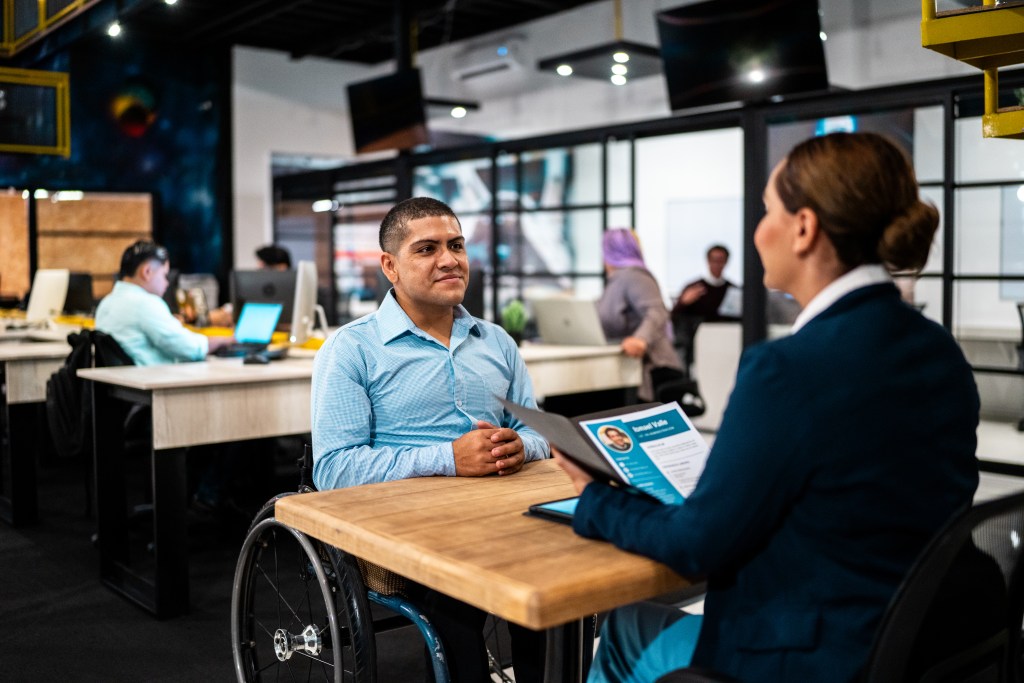
These experiences compounded concerns many participants raised about the impact of artificial intelligence on job opportunities in the future. Whether in relation to AI’s future impact on job opportunities or its use during the job search process, some participants expressed that these conditions have affected their overall confidence in the job market.

“Everything out there is very uncertain… I wouldn’t want to use the word scary, but it’s getting there.”
–Participant with household income less than $50k annually
Perseverance in the face of challenges
Making it from one day to the next in the face of self-described dire financial circumstances requires considerable perseverance and confidence in one’s personal fortitude. The concept of ‘pulling yourself up by your bootstraps’ is built into the ethos of the American Dream, the idea being that no matter your situation, you can overcome challenges through hard work and determination (Wolak and Peterson 2020). While this is a highly debated economic reality, especially for lower-income populations (Chetty et al. 2014, 2017; Pfeffer et al. 2019; Shanahan and Wilson 2024), it was perhaps through this expectation of agency and the need to make it from one day to the next that many participants offered a dichotomous view of increasingly low confidence in the economy and job market on the one hand versus high confidence in their own ability to manage through tough financial times on the other.
Low confidence in the economy overall
Overall, participants noted that their confidence in the economy and the job market had been trending downward over the past year. A few participants shared hopeful or optimistic views of the economy and job market, though they were in the minority. For the most part, participants who shared a low sense of economic confidence cited as driving factors business closures, personal or family and friends’ experiences with unemployment, changing economic policies, and rising prices putting increasingly overwhelming stress on their budgets.

“I don’t feel like industry is growing. I think everybody’s kind of in a standstill with the tariffs, the cost of materials, importing, the cost of labor, and interest rates and there’s really no end in sight. So I don’t see anything growing in the next six months to a year. Hopefully we don’t go backwards.”
–Participant with household income between $75k–$85k annually

Personal optimism and necessity of positive thinking
Most participants spoke about their lack of confidence in the economy as something beyond their control, while conversely speaking with high confidence, optimism, and a sense of conviction about their ability to navigate financial and economic hardship. Some, like this participant, noted their lack of concern about the job market and described their confidence in finding a new job as driven by necessity:
“I’m not worried about the job market. I’m worried about what I need, and I’m going to have to go for what I need regardless of my confidence or not. You know, I need to do what I need to do. I feel confident that I can get something. But I don’t. I don’t think it relies on my confidence. I think it relies on my necessity.”
–Participant with household income less than $50k annually
Overall, when participants were asked whether they had confidence in finding a new job if they needed to, most asserted they did. However, participants noted an important caveat: While they were confident in their ability to find a new job, that role would likely represent another version of “trading down” and might not meet their minimum basic needs, either financial or personal. Participants’ comments reflected a general sentiment that, “yes, I could find another job, but it will not be a great job.”
Most shared their personal optimism was fueled by the necessity of positive thinking during hard times. Even while noting overwhelming financial stress, their confidence in themselves needed to remain high to help them navigate day-to-day economic uncertainty, as this participant stated:
“I just feel like staying positive and just kind of having that resilience that things will work through. I don’t know. I know that’s not how everybody thinks, but that’s just how I kind of delude myself into thinking that it’s just gonna work out.”
–Participant with household income less than $50k annually

Conclusion and future research
Economic trends emerge from millions of data points that provide a 10,000-foot view of how the economy and people within it are faring. For workers earning low to moderate incomes in the economy, however, these trends may not reflect accurate realities of stretched budgets, difficult tradeoffs, and limited employment choices. The lived experiences of workers earning low or moderate incomes offer a nuanced picture of the gap between macroeconomic data and household impact. While this research is a sampling of experiences of workers in low- to moderate-income households, there may be significant implications for the economy through weakened labor force participation, increased credit and debt obligations, and heightened housing and food insecurity if these conditions persist and exacerbate for this portion of the population.
The tone of these focus groups was a somber shift from the optimistic tone of 2022. Participants in 2025 described daily anxieties about cost pressures, stagnant wages, and limited mobility that reflected a sense of being in survival mode. Persistent and “unrelenting” financial stress dominated discussions; participants described stretching already constrained household budgets to “survive.” Rising costs of living, a challenging job market, and new complications in job searches have prevented participants from gaining any economic mobility.
Beyond this, most participants believed their future prospects for career advancement were eroding. Compensation remained a foundational attribute of job quality, but flexibility and work–life balance were still prioritized, if even described as more of an aspirational job trait in 2025 compared to 2022. Overall, most shared they had low confidence in the economy and the job market, while retaining personal optimism and “positive thinking” to help them persevere into the unknown future.
Prior to finalizing this research, a validation focus group session was held with a subset of 2025 research participants to ensure themes raised in this paper accurately reflected their perspectives and experiences. This session not only affirmed key findings included in this research, but it also led participants to encourage the inclusion of stronger descriptive language to illustrate their circumstances. References to reaching “desperation,” “distress,” and dealing with an “impossible balancing act” were statements participants made to convey their realities and to make clear that, while their financial circumstances may have always been tough, recent trends have them approaching a more dire and palpable state of financial insecurity. This language has been included throughout this research report to honor their comments and lived experiences.

There is much more to learn about how workers navigate household financial decisions, how and why employment choices may affect labor market behavior, and what the long-term effects of market shifts on economic mobility for workers in low- to moderate-income households will be. Looking to future iterations of this research, a few questions will be important to answer:
- Will a K-shaped economy definitively emerge? If so, what long-term effects will that have for LMI household financial stability and to what degree will that impact aggregate economic and labor market trends?
- What effects will business conditions have on the job market, elements of job quality, and individuals’ opportunities for economic mobility?
- To what extent will artificial intelligence disrupt job opportunities and how will these disruptions impact labor market attachment and navigation?
Answers to these questions require research that is anchored to both data and lived experiences. Perspectives from individuals navigating challenging decisions is essential, not supplementary, for understanding labor markets, informing effective policy, and guiding strategic practice to create greater economic security for workers and to meet future employer demands. Worker perspectives bring a nuance and humanity that can inform more effective policies and practices that take these realities into account. By illustrating issues low- to moderate-income households face every day, this research can help to inform labor market policies and practices that aim to increase financial stability and economic resilience.
The views expressed in this report are those of the authors and are not necessarily those of the Federal Reserve System, Fed Communities or the Board of Governors of the Federal Reserve.
Please cite this report as: Miller, Sarah, Merissa Piazza, Elizabeth Bogue Simpson, and Kristen Broady. 2026. Worker Perspectives: When every dollar counts: Inside the economic struggles of workers who earn low to moderate incomes. https://doi.org/10.59695/20260624.
Media inquiries: Contact Monique Broughton Knight, Atlanta Fed or Chuck Soder, Cleveland Fed.
Research: Please direct inquiries about the research, data, and methodology in this report to Sarah Miller, Merissa Piazza, Elizabeth Bogue Simpson, and Kristen Broady.
Acknowledgments
The Worker Perspectives research is made possible through collaborations with the Federal Reserve Banks of the Federal Reserve System, external partners, and the research participants. The authors would like to thank Ipsos for their partnership in both recruiting research participants across the country and ensuring data quality and data privacy. Most important, we would like to extend its sincere thanks to the 63 individuals who participated in the focus groups. This research would not be possible without their candor and generosity in sharing their experiences.
This research would not be possible without the time and thoughtfulness of colleagues on the full research team. Thank you to Heidi Kaplan, Jennifer Fernandez, and Marysol McGee from the Board of Governors, Sergio Galeano from the Atlanta Fed, Erick Garcia Luna from the Minneapolis Fed, and Ashley Putnam from the Philadelphia Fed for their support of this project through research question refinement, facilitation of focus groups, and data coding and analysis of findings.
The team appreciates the thoughtful comments and guidance in developing this research report from the following Federal Reserve System colleagues: Karen Leone de Nie and Alex Ruder, Atlanta Fed; Kyle Fee, David Jackson, and Lisa Nelson, Cleveland Fed; William M. Rodgers III, St. Louis Fed, and Heidi Kaplan, Board of Governors.
Design and production of this report was made possible by the entire team at Fed Communities and with support from the public affairs teams at the Federal Reserve Banks of Atlanta and Cleveland. Thank you to the public affairs support from the Atlanta, Chicago, and Cleveland Federal Reserve Banks (Lisa Fogarty and Lauren Offenberg, Atlanta Fed; Dani Carlson, Cleveland Fed, and Micah Ragland, Chicago Fed). Special thanks to Gregory Johnson, Nathalie McClune, and Natalie Karrs with the Cleveland Fed for design support, and especially to Fed Communities for hosting and championing this research through their platform (Whitney Felder, Crystal Flynn, Anne O’Shaughnessy, and Allison Ulman).
References
Board of Governors of the Federal Reserve System. March 18, 2026. “Federal Reserve Issues FOMC Statement.” https://www.federalreserve.gov/newsevents/pressreleases/monetary20260318a.htm.
Board of Governors of the Federal Reserve System. n.d. “Survey of Household Economics and Decisionmaking.” Accessed May 13, 2025, https://www.federalreserve.gov/consumerscommunities/shed.htm.
Chetty, Raj, David Grusky, Maximilian Hell, Nathaniel Hendren, Robert Manduca, and Jimmy Narang. 2017. “The Fading American Dream: Trends in Absolute Income Mobility since 1940.” Science 356 (6336): 398–406. https://www.science.org/doi/10.1126/science.aal4617.
Chetty, Raj, Nathaniel Hendren, Patrick Kline, Emmanuel Saez, and Nicholas Turner. 2014. “Is the United States Still a Land of Opportunity? Recent Trends in Intergenerational Mobility.” American Economic Review 104 (5): 141–47. https://www.aeaweb.org/articles?id=10.1257/aer.104.5.141.
Dalton, M., J. A. Groen, M. A. Loewenstein, et al. 2021. “The K-Shaped Recovery: Examining the Diverging Fortunes of Workers in the Recovery from the COVID-19 Pandemic Using Business and Household Survey Microdata.” Journal of Economic Inequality 19: 527–550. https://doi.org/10.1007/s10888-021-09506-6.
Despard, M., S. Roll, K. Fuzi, A. Atkinson, and L. Overton. 2026. “Workforce Economic Inclusion and Stability in the United States and United Kingdom: Summary Findings.” CSD Research Summary No. 26-06. Washington University, Center for Social Development. https://openscholarship.wustl.edu/csd_research/992
Dunne, Theresa, and Keith Wardrip. 2023. “Worker Voices Special Brief: Perspectives on Job Quality.” Fed Communities. https://doi.org/10.59695/20230925.
Fee, Kyle D. 2026. “Dollars and Cents: Real Hourly Wage Growth across the Lower Half of the Wage Distribution.” Federal Reserve Bank of Cleveland, Community Development Reports. https://doi.org/10.26509/frbc-cd-20260218.
Fuhrer, Jeffrey C. July 29, 2024. “The Cost of Being Poor Is Rising, and It’s Worse for Poor Families of Color.” Brookings Institution. https://www.brookings.edu/articles/the-cost-of-being-poor-is-rising-and-its-worse-for-poor-families-of-color/.
Horton, Tiffani, and Elizabeth Bogue Simpson. 2024. “Worker Voices Special Brief: Pursuing Advancement through Personal Investment.” Fed Communities. https://doi.org/10.59695/20240110.
Horwich, Jeff. March 20, 2026. “Have US Consumers Gone K-Shaped? A Review of the Data.” Federal Reserve Bank of Minneapolis. https://www.minneapolisfed.org/article/2026/have-us-consumers-gone-k-shaped-a-review-of-the-data.
Ipsos. 2026. “KnowledgePanel A Methodological Overview. ”https://www.ipsos.com/sites/default/files/ipsosknowledgepanelmethodology.pdf
Kelley, Lora. October 10, 2025. “Have You Hugged Your Job Today?” New York Times, https://www.nytimes.com/2025/10/10/business/job-hugging-labor-market.html.
Kim, Seula, and Michael A. Navarrete. 2025 “Geospatial Heterogeneity in Inflation: A Market Concentration Story.” Federal Reserve Bank of Atlanta Working Paper 2025-15. https://doi.org/10.29338/wp2025-15.
King, Michael D. September 9, 2025. “No Significant Change in Estimated U.S. Median Household Income.” US Census Bureau. https://www.census.gov/library/stories/2025/09/median-household-income.html.
Klick, Joshua, and Anya Stockburger. December 2022. “Inflation Experiences for Lower and Higher Income Households.” US Bureau of Labor Statistics. https://www.bls.gov/spotlight/2022/inflation-experiences-for-lower-and-higher-income-households/home.htm.
Lenger, Alexander. 2019. “The Rejection of Qualitative Research Methods in Economics.” Journal of Economic Issues 53 (4): 946–65. https://doi.org/10.1080/00213624.2019.1657748.
Miller, Sarah, Merissa Piazza, Ashley Putnam, and Kristen Broady. 2023. “Worker Voices: Shifting Perspectives and Expectations on Employment.” Fed Communities. https://doi.org/10.59695/20230524.
Pfeffer, Fabian, T. and Alexandra Killewald. 2019. Intergenerational Wealth Mobility and Racial Inequality. Socius: Sociological Research for a Dynamic World, 5. https://doi.org/10.1177/2378023119831799.
Piazza, Merissa, and Ashley Putnam. 2024. Worker Voices Special Brief: Self-Employment, Dreams Versus Reality. Fed Communities. https://doi.org/10.59695/20240411.
Powell, Jerome. 2025. Transcript of Chair Powell’s Press Conference December 10, 2025. Federal Reserve Board of Governors. https://www.federalreserve.gov/mediacenter/files/FOMCpresconf20251210.pdf.
Rodgers, William M., III. June 26, 2025. “Economic Sentiment and the Role of the Labor Market.” Federal Reserve Bank of St. Louis. On the Economy. https://www.stlouisfed.org/on-the-economy/2025/jun/economic-sentiment-role-labor-market.
Sergeyev, Dmytro, Chen Lian, and Yuriy Gorodnichenko. May 2023. “The Economics of Financial Stress.” Working Paper 31285. National Bureau of Economic Research. https://www.nber.org/system/files/working_papers/w31285/w31285.pdf.
Shanahan, Erin and Anne E. Wilson. 2025. Barriers and Bootstraps? The Role of Attributions for Social Mobility Success and Failure in Policy Support and Faith in the American Dream. Journal of Applied Social Psychology, 55:322–342 https://doi.org/10.1111/jasp.13093.
Stephens, Hannah, and Andre M. Perry. 2025. “In Every Corner of the Country, the Middle Class Struggles with Affordability.” Brookings Institution. https://www.brookings.edu/articles/in-every-corner-of-the-country-the-middle-class-struggles-with-affordability.
US Bureau of Labor Statistics. February 11, 2026. “The Employment Situation – January 2026.” https://www.bls.gov/news.release/archives/empsit_02112026.htm.
Wolak, J. and Peterson, D.A.M. 2020. The Dynamic American Dream. American Journal of Political Science, 64: 968-981. https://doi.org/10.1111/ajps.12522
Endnotes
i According to the US Census Bureau, in 2024 the median household income was $83,730, meaning 50% of the population had a household income of this amount or less (King, 2025). We chose this definition of LMI, rather than the definition in the Community Reinvestment Act which refers to individuals or geographic census tracts with incomes below 80% of the area median family income, because we did not receive enough geographic information about participants to correctly identify the area median family income for their location.
ii When talking about themes throughout this report, the use of “most” participants refers to 51% of participants or more, “many” refers to less than 51% but more than 10 participants, and “a few” refers to fewer than 10 participants.
iii Since 2013, the Federal Reserve Board has conducted the Survey of Household Economics and Decisionmaking (SHED), which measures the economic well-being of US households and identifies potential risks to their finances. The survey includes modules on a range of topics of current relevance to financial well-being, including credit access and behaviors, savings, retirement, economic fragility, and education and student loans.
iv As a note on timing, five of the 11 focus groups were conducted during the federal government shutdown from October 1 through November 12, 2025, with two of those sessions conducted on the precipice of a potential lapse in Supplemental Nutrition Assistance Program (SNAP) funding that would have resulted from a continuation of the shutdown.
v This participant is the only member of the 63-person sample that could not be reidentified and associated to a member of Ipsos’s KnowledgePanel; therefore, researchers do not have demographic information for this participant.
vi It is important to note changes in the project’s sampling strategy may influence this finding. In 2022, participants were recruited via workforce development and other partner organizations of the 12 Federal Reserve Banks. Therefore, there was previously bias in the sample toward individuals who were seeking to improve their employment outcomes. For the 2025 focus groups, participants were recruited via Ipsos and were not necessarily engaged with the workforce system. However, as illustrated above, at least some are interested in pursuing additional education and skill building but are unable to do so due to current economic conditions.